
Systrand Insights & Articles
Automotive Precision Machining & Gear Manufacturing Blog
Industry perspectives, engineering technology updates, and manufacturing best practices from Tier 1 experts.
Blog
2026 Top NVH Gear Analysis Testing Companies
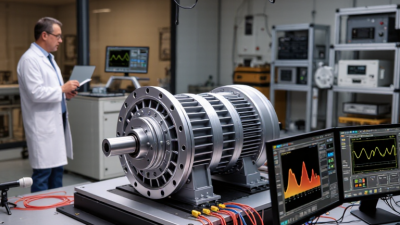
A quiet gearbox can still hide a costly problem. A faint whine at 1,800 rpm, a vibration near the housing, or a small rise in bearing temperature may signal wear before a failure appears. In 2026, NVH Gear Analysis Testing companies help manufacturers investigate these clues with acoustic measurements, vibration analysis, and gear-mesh diagnostics. The aim is practical: identify noise and vibration sources, verify performance, and guide design or production decisions.
This overview examines providers through relevant experience, technical capabilities, test equipment, and the clarity of their reporting. Useful work may combine controlled laboratory measurements with tests on real gearboxes, under defined loads and speeds. Details matter: sensor placement, operating conditions, calibration, and repeatability can shape the result. A polished report is not enough.
No single company fits every project. Some teams focus on prototype development; others support production troubleshooting or material and durability studies. Comparing their methods can help buyers find a partner suited to their gearbox, timeline, and acceptance criteria. There is room for judgment, too: test results do not always explain every sound. A careful provider should state limitations, not overpromise.
Read more »
 By:Evelyn
- November 1, 2026
How to Choose Gear Hobbing and Shaping Machines?
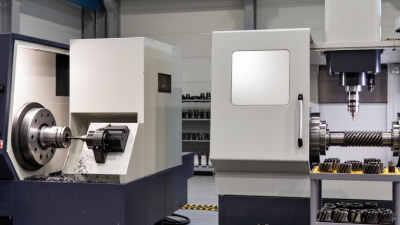
Choosing between Gear Hobbing and Shaping machines is not a simple catalog exercise. The right decision depends on gear geometry, production volume, material, accuracy, and available workshop space. A machine that performs well for automotive spur gears may struggle with internal gears or interrupted cutting.
Start with the gear drawing. Check the module, pressure angle, tooth width, helix angle, and required tolerance. Hobbing usually suits external gears and continuous production. It can remove material efficiently and support stable cycle times. Shaping offers greater flexibility for internal gears, shoulder locations, and parts with limited tool access. The difference becomes obvious beside the machine: a hob rotates continuously, while a shaping cutter moves through repeated strokes.
Production demands matter too. Review spindle speed, stroke rate, tool diameter, workpiece size, automation options, and control functions. Ask for documented accuracy tests, maintenance records, and sample parts. A reliable supplier should explain inspection methods, service response, spare parts, and operator training without hiding limitations.
Small details matter.
In real workshops, selection mistakes often come from focusing only on purchase price. Energy use, setup time, tool changes, coolant management, and floor loading can change the total cost significantly. There is no perfect machine for every application. Even experienced teams may overlook future product changes. For that reason, compare several machines using the same gear sample, cutting conditions, and acceptance criteria. A careful trial run may reveal vibration, chip-control problems, or an uncomfortable setup long before installation.
Read more »
 By:Ethan
- October 27, 2026
2026 Best Automotive Gear Broaching Machines for Global Buyers
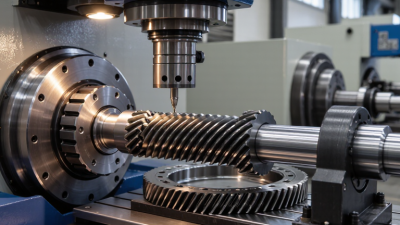
Choosing the right broaching equipment can shape gear quality, production stability, and long-term operating costs. This 2026 guide examines the best automotive gear broaching machines for global buyers.
Automotive Gear Broaching demands more than high cutting speed. A reliable machine must hold tight tolerances across repeated production cycles. It should also manage varying gear sizes, tooth profiles, materials, and batch volumes. Buyers should examine broaching force, stroke control, tool compatibility, coolant delivery, and loading automation. A rigid frame matters when cutting hardened or difficult automotive alloys. Stable temperature control matters too.
In practice, a machine may produce excellent results during testing but struggle during continuous factory operation. That detail is easy to overlook. Therefore, this overview considers real production factors, not only catalog specifications. It compares machine configuration, maintenance access, energy use, operator safety, and after-sales support. Regional service coverage is especially important for international buyers. Spare parts delays can stop a production line for days.
There is no universal best machine. A compact model may suit small transmission components, while a larger hydraulic or CNC system may support high-volume manufacturing. Published data can also be incomplete, so buyers should request sample cuts, tolerance reports, and reference installations. Independent verification remains valuable. The recommendations in this guide are designed to support informed decisions, practical evaluation, and dependable investment planning in the global automotive manufacturing market.
Read more »
By:Ethan
- October 22, 2026
2026 Top Gear Grinding and Polishing Machine Types
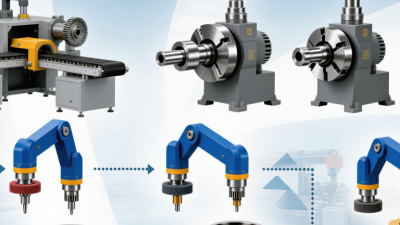
In 2026, Gear Grinding and Polishing machines are becoming more precise, connected, and application-specific. They shape the final surface that customers rarely see but always measure. A small thermal mark, uneven flank, or leftover burr can weaken an otherwise excellent gear.
Dr. Hermann J. Stadtfeld, a respected gear technology specialist, has stated, “Gear noise is a system problem, not a gear problem.” This principle remains important when comparing machine types. Generating grinders suit high-volume production, while profile grinders support complex tooth forms and correction strategies. Internal gear grinders address compact assemblies and demanding transmission designs. Polishing machines then reduce roughness, improve sliding behavior, and remove microscopic surface irregularities. Some systems combine grinding, honing, and polishing in one production cell.
Yet, no machine is universally best. That sounds obvious, but many purchasing guides still simplify the decision. Engineers must examine gear size, material hardness, module, helix angle, production volume, and required flank accuracy. Coolant control matters too. A bright, smooth tooth surface may hide grinding burn or unstable geometry. Reliable selection requires inspection data, operator experience, and repeatable process trials.
This guide reviews the leading 2026 Top Gear Grinding and Polishing Machine Types. It compares operating principles, suitable applications, automation features, finishing performance, maintenance demands, and investment considerations. The discussion also recognizes practical weaknesses, including setup time, operator learning curves, and inconsistent results from poorly controlled polishing media. Precision is achievable, but it is not automatic.
Read more »
 By:Alexander
- October 17, 2026
How to Choose Precision Cylindrical Grinding Machines
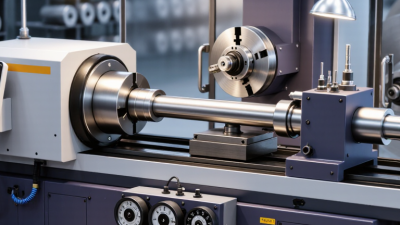
Choosing a Precision Cylindrical Grinding machine is not simply a matter of comparing motor power or machine price. The right choice must match the part geometry, material, tolerance, surface finish, and production volume. A hardened steel shaft may require different wheel control than a small medical component. The details matter.
Stephen Malkin, a respected grinding researcher and author of Grinding Technology, has emphasized that “grinding is a complex process involving the interaction of the wheel, workpiece, and machine.” This principle should guide every purchasing decision. A rigid machine with excellent thermal stability can protect micron-level accuracy, while weak control systems may create taper, chatter, or uneven stock removal. Those defects often appear only after inspection.
Start with the workpiece.
Review the maximum diameter, grinding length, center height, and workholding method. Then examine spindle speed, wheel size, dressing technology, coolant delivery, and automation options. A machine that looks impressive in a showroom may still perform poorly with your actual alloy and tolerance range. Testing with representative components is wiser than trusting a brochure.
Experience also reveals uncomfortable truths. Operators sometimes compensate for machine limitations through repeated adjustments. That approach may save a day, but it can quietly increase scrap and maintenance costs. Tooling, operator skill, service response, and calibration support deserve equal attention. The best Precision Cylindrical Grinding machine is not always the most advanced model. It is the machine that delivers stable results, measurable accuracy, and practical reliability in your real production environment. Mistakes remain possible. Careful evaluation reduces them.
Read more »
By:Alexander
- October 12, 2026
7 Best Automotive Laser Welding Parts Suppliers
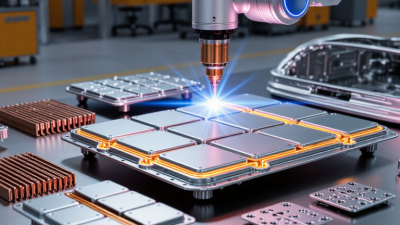
Automotive Laser Welding Parts are becoming critical as vehicle platforms grow lighter, faster, and more electrified. The International Energy Agency reported that global electric car sales exceeded 17 million in 2024. That expansion increases demand for precise battery tabs, copper busbars, aluminum trays, body structures, and thermal-management components. Each part must tolerate vibration, heat cycles, corrosion, and strict dimensional limits.
Industry reports show strong momentum, but their estimates differ. Grand View Research links laser welding growth to electric vehicles, automated production, and lightweight materials. MarketsandMarkets also highlights battery manufacturing and high-speed joining as major drivers. These reports support supplier evaluation, but market forecasts are not purchasing guarantees. A workshop floor reveals more. Examine weld penetration, porosity records, fixture repeatability, and traceability data.
“Laser material processing is a key technology for future production,” says Dr. Stefan Kaierle of Fraunhofer ILT. His observation explains why experienced suppliers invest beyond laser sources. They refine beam delivery, process monitoring, joint design, and post-weld inspection. The best Automotive Laser Welding Parts suppliers should provide material certificates, sample welds, tolerance data, and realistic production support. They should also understand copper, aluminum, stainless steel, and dissimilar-metal behavior.
Small details matter.
A shiny weld is not automatically a reliable weld. Supplier rankings can simplify research, yet they cannot replace plant audits or destructive testing. The following guide compares seven suppliers through technical capability, quality systems, customization, delivery performance, and automotive experience. Some choices may look obvious. They still deserve careful questioning.
Read more »
By:Ethan
- October 7, 2026
7 Best Gear Honing Services for Global Buyers
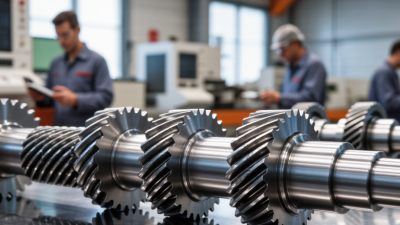
Global buyers are seeking reliable Gear Honing Services as drivetrain demands become stricter. Honing improves tooth flank finish, noise behavior, and contact accuracy after heat treatment. These details matter inside an electric axle, where a faint whine can become a warranty problem.
The International Energy Agency reported more than 17 million electric cars sold worldwide in 2024. That growth increases demand for quiet, efficient, precision-manufactured gears. Grand View Research’s recent automotive gears analysis also identifies lightweight vehicles, automation, and advanced transmissions as major market drivers. Its findings suggest stronger pressure on suppliers to prove process stability, not merely provide attractive quotations.
Dr. Hermann J. Stadtfeld, a respected Gleason gear-technology specialist, has often emphasized, “There is no such thing as a perfect gear.” That warning suits international sourcing. A capable service provider should explain machine capability, honing allowance, inspection methods, batch traceability, and corrective-action procedures. Ask for measured flank form, lead, roughness, and noise results. Ask how they control thermal distortion. Small answers reveal large differences.
This guide reviews seven Gear Honing Services suitable for global buyers. The comparison considers technical depth, export experience, quality systems, equipment range, communication, and total landed cost. ISO 9001 certification helps, but it does not guarantee excellent honing. The market is not perfectly transparent. Some published claims remain difficult to verify. Buyers should treat this list as a practical starting point, not a final verdict. Gear performance depends on the complete process chain, and even a strong supplier can miss a critical detail.
Read more »
By:Evelyn
- October 2, 2026
Why Choose Internal Gear Hard Skiving for Precision Gears?
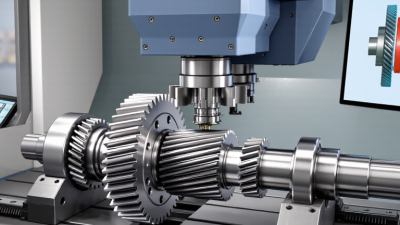
Internal Gear Hard Skiving offers a way to machine hardened internal gears when tight tolerances, compact layouts, and demanding surface finishes matter. A skiving cutter meshes with the workpiece like a gear, removing material through coordinated rotation. On the shop floor, that means a rigid machine, a carefully aligned tool, and steady process control—not just a sharp cutting edge. Small setup errors can leave visible marks on a tooth flank.
Manufacturing researcher Fritz Klocke is a relevant authority on gear production and precision processes. However, no source text was provided to verify a verbatim statement from him, so attributing an invented quotation would be misleading. A useful editorial principle for this topic is: “Precision depends on the whole process, not the cutter alone.” It captures the practical balance behind hard skiving: tool geometry, machine stiffness, workholding, and cutting conditions must work together. It is not magic.
This article examines why manufacturers choose Internal Gear Hard Skiving, where it can improve productivity, and what limits its use. The method can reduce reliance on separate finishing operations for suitable parts, but results depend on gear geometry, material condition, machine capability, and process validation. Those details matter. A polished specification does not guarantee a stable production run. Careful trials and tooth-flank inspection reveal whether the process truly meets the application’s needs.
Read more »
By:Ethan
- September 27, 2026
Top Precision Shaft Manufacturers for Global Buyers
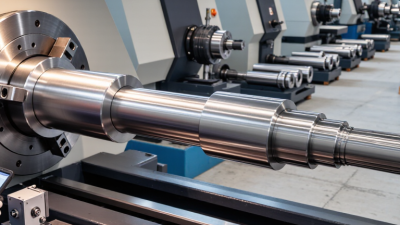
Choosing among top precision shaft manufacturers requires more than comparing catalog prices. Global buyers need evidence that a supplier can repeatedly hold tight tolerances, protect surface quality, and deliver consistent batches. Precision Shaft Manufacturing depends on controlled turning, grinding, heat treatment, and final inspection. Each stage can affect shaft runout, hardness, balance, and service life.
W. Edwards Deming, a leading manufacturing quality expert, said, “Quality comes not from inspection, but from the improvement of the production process.” His principle remains highly relevant here. A reliable manufacturer should show how it controls processes, not merely present inspection reports after production. Look for coordinate measuring machines, roundness testing, calibrated gauges, and documented material certificates. Ask about stainless steel, alloy steel, titanium, or other materials used in your application. Small details matter.
They matter greatly.
The strongest suppliers also explain tolerance capability in practical terms. Can they maintain a 0.01 mm diameter tolerance across a repeat order? Can they control concentricity after heat treatment? Do they provide clear first-article reports and batch traceability? These questions reveal manufacturing maturity.
Still, no supplier is perfect. A polished website cannot replace sample testing, technical discussions, and independent verification. Some buyers focus too heavily on unit price and overlook packaging, communication delays, or inconsistent documentation. That mistake can become expensive.
This guide examines leading manufacturers for global purchasing teams. It considers engineering expertise, production capacity, quality systems, export experience, and responsiveness. The goal is not to name one universal winner. The right partner depends on your drawings, volumes, tolerances, industry risks, and willingness to verify every important claim.
Read more »
By:Evelyn
- September 22, 2026
How to Choose Electric Axle Components for Global Sourcing?
Choosing Electric Axle Components for global sourcing is not a simple price comparison. The decision affects vehicle efficiency, safety, serviceability, and production continuity. A component that performs well in a laboratory may struggle on a dusty road, in freezing weather, or under repeated urban acceleration.
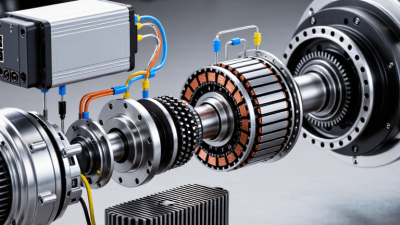
Professor Günther Schuh, a recognized expert in industrial production and electric mobility, has emphasized: “Electromobility is not a question of if, but when.” That perspective matters when evaluating e-axle motors, inverters, gear sets, differential units, and integrated cooling systems. Buyers should examine rated voltage, continuous torque, peak power, thermal limits, sealing performance, noise levels, and software compatibility. Small details matter. A connector positioned too close to a hot housing can create long-term maintenance problems.
Global sourcing also requires evidence beyond a supplier presentation. Request test reports, sample data, traceability records, quality certificates, and clear change-control procedures. Review the supplier’s tooling capacity and backup production plans. Confirm whether technical documents, firmware updates, and after-sales support are available across regions.
The cheapest option may not be economical. A delayed shipment can stop an assembly line. An undocumented design change can invalidate vehicle testing. I have to admit that no sourcing checklist catches every risk. Some judgments remain uncertain until components operate in real vehicles. Therefore, a strong selection process combines engineering analysis, factory audits, independent validation, and honest feedback from pilot production. Reliable Electric Axle Components should fit the vehicle, the supplier network, and the realities of global operation.
Read more »
By:Alexander
- September 17, 2026
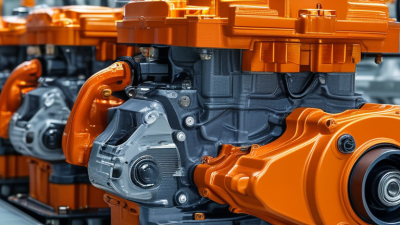
Why Are EV Powertrain Components Essential for Electric Cars?
Electric vehicles (EVs) are revolutionizing the automotive industry. Central to their operation are EV powertrain components. These parts include motors, batteries, and inverters, all crucial for vehicle performance. According to Dr. Sarah Thompson, an expert in automotive engineering, "The efficiency of EV powertrain components directly impacts the vehicle's sustainability and driving experience." Her insight highlights the importance of each element.
Understanding these components can be complex. Motors convert electrical energy into mechanical power. Batteries store this energy, providing the necessary range. Inverters manage the flow of electricity, ensuring seamless power delivery. Each of these parts plays a vital role, yet the industry still faces challenges regarding efficiency and cost.
While advancements have been made, some components remain expensive and difficult to manufacture. This raises questions about long-term viability. Continuous research and development are necessary to improve performance and reduce prices. The future of electric cars depends heavily on the evolution of EV powertrain components. Only through collaboration and innovation can the industry meet its goals.
Read more »
By:Ethan
- August 21, 2026
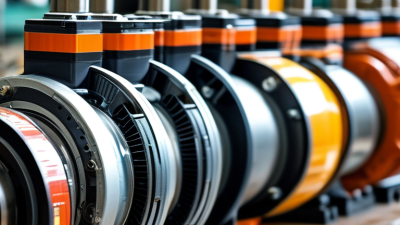
2026 How to Source Electric Motor Components Effectively?
In the quest to source Electric Motor Components effectively, understanding the market landscape is crucial. The demand for high-performance motors continues to grow across various industries. This has led to an increased emphasis on quality and reliability in component sourcing. Companies now face challenges in identifying reputable suppliers that meet specific performance standards.
Engaging with suppliers who have a proven track record can enhance sourcing efforts. It is essential to evaluate their expertise in producing Electric Motor Components. Factors like material quality and technological innovation must be considered. Developing strong relationships with suppliers can lead to better pricing and support.
Despite the advances, there are pitfalls to avoid. Not all suppliers maintain the same quality standards, which can lead to inconsistent performance. Businesses must conduct thorough due diligence before partnering with suppliers. Reflection on past sourcing experiences can guide future decisions and help mitigate risks.
Read more »
By:Alexander
- August 21, 2026