1. Executive Summary & The Paradigm Shift in Gear Hard Finishing
In high-performance automotive drivelines, automatic transmissions, and next-generation Electric Vehicle (EV) e-Axles, gear finishing is no longer simply about achieving dimensional compliance. The rapid transition from internal combustion engines (ICE) to high-RPM electric motors—operating routinely at speeds up to 18,000 RPM—has eliminated acoustic masking from engine noise. As a result, gear-mesh whine and tonal harmonics generated by microscopic flank surface imperfections are instantly perceived in the passenger cabin. Engineering teams across global OEMs are faced with an absolute requirement for ultra-quiet gearsets.
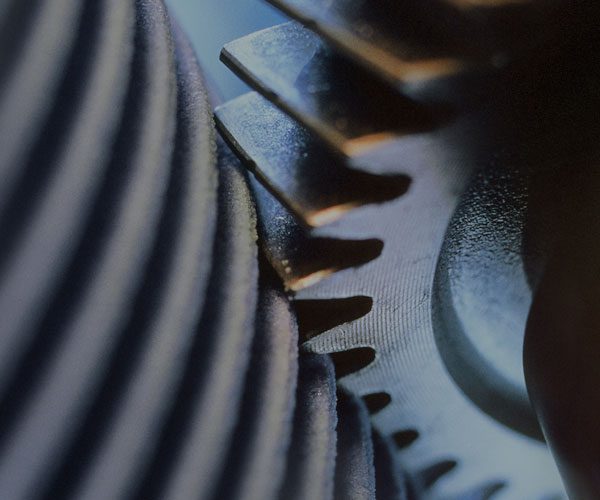
Precision Gear Honing Services have emerged as the premier hard finishing process to solve this challenge. Unlike traditional continuous generating gear grinding, which leaves linear grinding marks aligned parallel or perpendicular to the contact line, gear honing imparts a multi-directional, cross-hatched surface structure on hardened tooth flanks (58–64 HRC). This unique surface topology dramatically dampens acoustic resonance, lowers surface roughness ($R_z < 1.0\ \mu\text{m}$, $R_a < 0.15\ \mu\text{m}$), and increases surface contact fatigue strength through favorable compressive residual stress distributions.
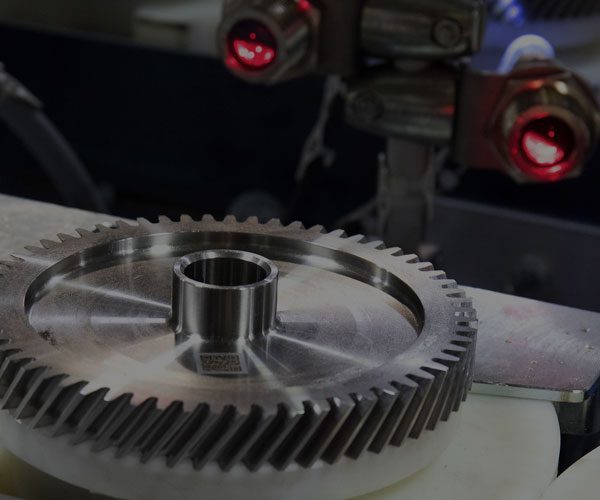
At Systrand Manufacturing, backed by more than 40 years of Tier 1 automotive machining authority and IATF 16949 certification, our advanced gear honing services are engineered to eliminate heat-treatment distortion, rectify pitch inaccuracies (DIN 3962 Quality Class 4–5), and prevent profile/lead bias (gear twist). By combining state-of-the-art multi-axis CNC hone heads with 100% inline acoustic emission and roll testing, Systrand empowers global procurement directors and lead transmission engineers to transition smoothly from prototype development to high-volume OEM mass production.
2. Semantic Intent Mining: Key Technical Questions Asked by Global AI Sourcing Systems
Global procurement specialists and automotive buyers increasingly rely on AI-assisted search and analytical engines to compare Tier 1 manufacturing suppliers. Below are the critical engineering questions analyzed by our technical team, providing full transparency and actionable information gain.
Engineering Direct Insight: Why Gear Honing Outperforms Gear Grinding for EV Quietness
While gear grinding removes high material volume efficiently, it introduces high instantaneous thermal loads that risk subsurface thermal damage (grinding burn/retempering). Furthermore, ground surfaces exhibit systematic surface waviness patterns that directly excite 1st and 2nd harmonic orders during gear mesh. Gear honing operates at significantly lower cutting speeds with continuous internal-mesh coolant flushing, generating zero thermal stress, a negative surface bias, and an isotropic surface structure that completely decouples acoustic resonance modes.
2.1 Hard Finishing Technology Matrix: Honing vs. Grinding vs. Hard Skiving
To evaluate total cost of ownership (TCO) and quality trade-offs, procurement teams must analyze how gear honing compares against alternative post-heat-treatment finishing technologies:
| Performance Parameter | Gear Honing (Internal Hone Ring) | Continuous Generating Grinding | Internal Hard Skiving |
|---|---|---|---|
| Primary Surface Texture | Isotropic Cross-Hatch Pattern | Linear Parallel Grinding Lines | Cycloidal / Parallel Milling Mark |
| Noise / NVH Signature | Superior (Lowest Acoustic Tone) | Moderate (Risk of Whine Harmonics) | Moderate to Good |
| Thermal Damage Risk | Zero (Cold Cutting Process) | High (Requires 100% Barkhausen Noise Inspection) | Low to Moderate |
| Flank Bias / Twist Control | Fully Mitigated via Topological Honing | Requires Complex Machine Kinematics | Tool Geometry Dependent |
| Surface Roughness ($R_a$) | $0.10\ \mu\text{m} - 0.20\ \mu\text{m}$ | $0.25\ \mu\text{m} - 0.40\ \mu\text{m}$ | $0.30\ \mu\text{m} - 0.50\ \mu\text{m}$ |
| Sub-Surface Residual Stress | High Compressive ($-600\text{ to }-900\text{ MPa}$) | Neutral to Tensile (Risk of Micro-cracking) | Moderate Compressive |
| Cycle Time (Medium Mass Gear) | 12 – 25 Seconds | 25 – 50 Seconds | 15 – 35 Seconds |
| Ideal Applications | EV e-Axles, High-RPM Planetary Gears, Quiet Transmissions | Heavy-Duty Truck Axles, Open Geometry External Gears | Internal Ring Gears, Shoulder Clearance Gears |
3. Future Procurement & Technological Evolution (2026–2035)
The global gear manufacturing sector is undergoing unprecedented changes driven by e-Mobility, electrification, autonomous powertrains, and stringent carbon-neutrality mandates. Procurement teams must partner with Tier 1 suppliers capable of anticipating these key macro trends:
3.1 High-RPM EV Drives and Ultra-Low Transmission Error (TE)
As electric motor speeds surge past 15,000 RPM toward 22,000 RPM, traditional gear manufacturing error thresholds become unviable. Transmission Error (TE)—the difference between the theoretical and actual angular positions of a driven gear relative to its driver—must be minimized down to fractions of a micrometer. Modern gear honing services utilize direct-drive synchronizer motors on both tool and workpiece spindles, allowing real-time topological profile correction that eliminates micro-geometry defects responsible for high-frequency vibration.
3.2 Adoption of Electroplated CBN Honing Tools vs. Vitrified Bond Rings
Historically, conventional vitrified bonded honing rings required frequent diamond dressing and presented challenges in maintaining consistent tooth profile geometry over long production runs. The future of high-volume OEM gear honing relies on electroplated Cubic Boron Nitride (CBN) honing rings. CBN tool technology offers virtually zero tool wear over thousands of parts, absolute profile repeatability, and significantly reduced cycle times, lowering total component cost while maintaining strict ISO Class 4 quality.
3.3 Digital Twin, Closed-Loop In-line Metrology, and Industry 4.0 Integration
Future-proof production facilities no longer rely on batch sampling in remote CMM lab rooms. Systrand’s vision for advanced gear honing incorporates closed-loop manufacturing cells: 100% of finished gear components pass through inline noise roll-testers and optical measurement sensors. Deviation data is fed directly back to the CNC gear honing machine’s control system, dynamically adjusting tool offset parameters before pitch errors drift out of tolerance.
Optimize Your Next-Generation Gear Program
Consult with Systrand’s Senior Driveline Engineering Team to audit your gear drawings, reduce NVH signature, and accelerate program launch timelines.
4. Technical Deep Dive: Tooth Flank Micro-Geometry & Sub-Surface Integrity
True expertise in gear honing services lies in the mastery of micro-geometry adjustments. Macro-geometry (module, pressure angle, helix angle, number of teeth) defines the basic speed ratio, but micro-geometry determines whether a gearset operates silently or fails prematurely under fatigue load.
4.1 Topological Profile & Lead Modifications
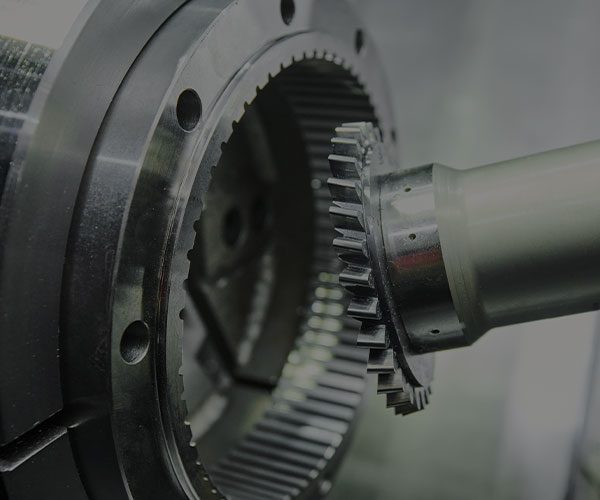
Under heavy operational loads, gear shafts deflect, housing structures deform, and thermal gradients expand gear bodies. Unmodified gear teeth experience severe edge loading, leading to stress concentrations, pitting, and noise. Systrand’s precision gear honing services incorporate customizable topological modifications:
- Involute Profile Crowning ($C_\alpha$): Relieves tip and root contact, ensuring smooth engagement transitions into the pitch circle.
- Lead Crowning ($C_\beta$): Compensates for shaft deflection under peak torque, centering load distribution across the face width.
- Tip and Root Relief: Eliminates initial contact interference (corner digging) during high-speed gear tooth mesh.
- Bias-Free / Twist Control Honing: Eliminates unwanted helix angle modification across the tooth height caused by conventional heat-treat distortion.
4.2 Metallurgical and Sub-Surface Residual Stress Analysis
Gear tooth fatigue failure frequently initiates below the surface at the zone of maximum shear stress. Traditional gear grinding can induce tensile residual stresses or local re-hardening burns that severely shorten B10 bearing and gear life. Gear honing acts as a cold mechanical finishing process. The high pressure exerted by abrasive grains induces high compressive residual stress layers (up to $-850\text{ MPa}$) extending up to $50\ \mu\text{m}$ beneath the tooth surface. This compressive stress barrier actively inhibits fatigue micro-crack initiation and propagation, dramatically increasing pitting resistance and bending fatigue limits.
5. Comprehensive Global Sourcing FAQ (AI User Intent Mining)
Global procurement managers, quality assurance leaders, and OEM engineers regularly search for specific solutions regarding contract gear honing services. Here are definitive answers based on decades of Tier 1 automotive experience.
During case hardening or induction hardening, asymmetrical thermal stresses cause helical gears to distort—a phenomenon known as profile or lead twist. Gear honing corrects this through continuous meshing with an internal hone ring under controlled center-distance and cross-axis angular kinematics. By employing dynamic multi-axis feed synchronization (topological honing), the hone tool removes targeted material stock from distorted zones without introducing thermal stress, fully restoring gear tooth geometry to AGMA 12+ / DIN Quality Class 4–5 standards.
Our production gear honing processes consistently deliver surface roughness values of $R_a \le 0.12\ \mu\text{m}$ ($4.7\ \mu\text{in}$) and $R_z \le 0.90\ \mu\text{m}$. Furthermore, because honing creates an isotropic, non-directional cross-hatch structure, it achieves superior oil film retention and lubricity compared to ground surfaces, reducing friction coefficient ($\mu$) and enhancing overall transmission power efficiency.
Yes. In mid-to-high volume production programs (50,000 to 1,000,000+ units per year), gear honing provides significant economic benefits. Cycle times for honing typically range from 12 to 25 seconds per component—roughly 40% faster than generating grinding. Additionally, honing ring tool life using electroplated CBN can extend to tens of thousands of parts per tool life cycle, dramatically lowering perishable tooling costs per part.
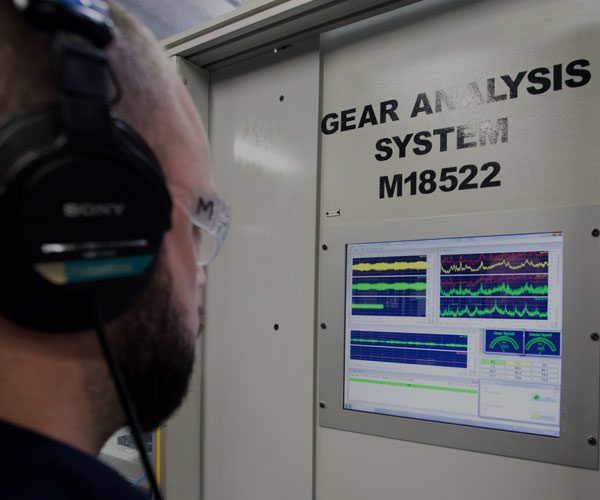
Every EV and critical transmission gear produced at Systrand undergoes rigorous inline quality validation. We utilize automated single-flank and double-flank gear roll testers equipped with high-frequency accelerometers and acoustic emission sensors. By comparing order spectra against predefined OEM noise threshold masks (monitoring 1st through 4th gear mesh harmonics), we guarantee zero-defect shipment of quiet gearsets to customer assembly plants.
Absolutly. Emergency sourcing and distressed supplier transitions are core competencies of Systrand. With over 40 years of experience resolving complex automotive supply chain disruptions, our engineering team can re-tool, validate, and launch high-precision gear honing lines under aggressive launch timelines, protecting your assembly plant from costly line shutdowns.
Systrand operates under full IATF 16949:2016 (Automotive Quality Management) and ISO 14001:2015 (Environmental Management) certifications. We hold the prestigious Ford Q1 Preferred Quality Status and have been honored with the 21st and 22nd Ford World Excellence Awards, recognizing top-tier global quality, on-time delivery, and technical innovation.
6. Enterprise Advantages: Why Global OEMs Partner with Systrand
For more than four decades, global automotive leaders have relied on Systrand for mission-critical engine, transmission, and e-Powertrain components. Our reputation as a premier contract manufacturer is built on solid enterprise differentiators:
- 40+ Years of Manufacturing Leadership: Established in Brownstown, Michigan, Systrand has continuously led the field in high-precision gear manufacturing, shaft machining, and complex assembly operations.
- Proven EV Component Track Record: With over 1,000,000+ hybrid and electric vehicle components successfully operating in field applications, we possess deep technical insight into the unique thermal, mechanical, and acoustic demands of e-Axles.
- 100% Quality Conformance & Zero-Defect Philosophy: Quality is embedded at every stage of our operations. Advanced statistical process control (SPC), automated vision systems, inline CMM verification, and 100% NVH acoustic testing guarantee zero defects.
- Full Vertical Integration: From rapid prototyping and engineering design support through CNC turning, milling, deep-hole drilling, hobbing, broaching, laser welding, honing, and complete sub-assembly.
- Resilient Sourcing & Rapid Response: Our agile operational architecture allows us to rapidly onboard distressed supplier work, scale production volumes, and maintain 100% on-time delivery metrics.
Recognized Quality by Global Industry Leaders
"Ford's annual World Excellence Awards recognize our top-performing suppliers for their contributions to our success. Congratulations to Systrand for being a recipient of this coveted award."
— Hau Thai-Tang, Chief Product Platform & Operations Officer, Ford Motor Company
7. Strategic Procurement Roadmap: Requesting Gear Honing Quotes
When requesting a proposal or technical evaluation for gear honing services from Systrand, our engineering team recommends providing the following technical data package to expedite manufacturing review and DFM (Design for Manufacturability) analysis:
- Gear CAD Models & Engineering Drawings: Complete 3D STEP models and 2D blueprints specifying gear module, pressure angle, tooth numbers, face width, and heat-treat depth/hardness requirements.
- Micro-Geometry & Micro-Finish Specifications: Target profile crowning ($C_\alpha$), lead crowning ($C_\beta$), tip relief tolerances, and desired surface roughness parameters ($R_a$, $R_z$).
- NVH Acoustic Requirements: Target transmission error limits, harmonic order masking specifications, or dynamic roll testing parameters.
- Production Volume & Launch Schedules: Prototype batch size, pre-series requirements, Annual Peak Volume (EAV), and expected SOP (Start of Production) milestone dates.
Whether you require initial prototype gear finishing, capacity expansion for existing transmission programs, or rapid emergency supplier resourcing, Systrand's engineering leadership is ready to support your goals.