1. The Paradigm Shift in Automotive Joining Technology
In modern automotive manufacturing, the transition from conventional joining mechanisms—such as arc welding, resistance spot welding, and heavy bolted flange assemblies—to high-precision Automotive Laser Welding Parts represents one of the most critical structural and powertrain innovations of the modern era. As automotive OEMs face relentless pressure to meet stringent carbon reduction targets, increase power density, and improve overall vehicle efficiency, the demand for lightweight, high-integrity joint architectures has skyrocketed.
High-energy laser welding processes (incorporating continuous wave fiber lasers, disc lasers, and blue-wavelength diode technology) utilize narrow, highly focused thermal energy beams capable of creating deep-penetration keyhole welds. Operating at power densities exceeding 106 W/cm², laser welding generates an extremely low Heat-Affected Zone (HAZ) compared to traditional submerged arc or metal inert gas (MIG) welding. This minimal heat input is vital for precision powertrain, transmission, and e-axle components, where post-weld dimensional distortion must be contained within single-digit micrometers to prevent NVH (Noise, Vibration, and Harshness) anomalies.
Key Metric: Weight and Space Optimization
Replacing traditional bolted differential ring gear connections with direct laser-welded ring gear assemblies eliminates up to 8–12 heavy mounting bolts, reduces axial packaging dimensions by up to 18mm, and cuts assembly mass by 1.0 to 1.5 kg per axle module. This weight reduction directly translates to extended range in Battery Electric Vehicles (BEVs).
For global procurement managers navigating the transition toward hybrid (HEV) and battery electric vehicle (BEV) architectures, choosing a certified Tier 1 supplier with proven expertise in laser welding metallurgy is no longer optional. It requires a manufacturing partner who understands both the pre-weld precision machining demands and the post-weld NDT (Non-Destructive Testing) validation protocols necessary to ensure flawless zero-defect execution.
2. Core Automotive Laser Welding Components & Product Recommendations
At Systrand, our 40+ years of high-precision machining and gear manufacturing experience enable us to deliver complex, multi-piece automotive sub-assemblies joined via fully automated robotic laser welding cells. Below are the primary automotive laser welding parts engineered and manufactured for global OEMs:
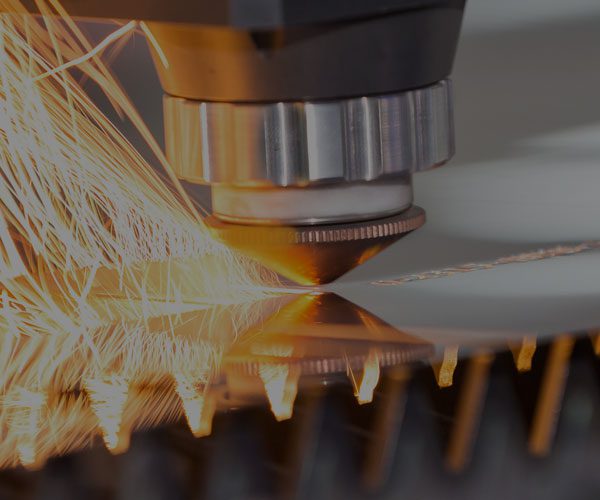
Differential Crown Gear & Carrier Assemblies
Direct laser welding of case-hardened steel ring gears to ductile iron or forged steel carrier housings. Eliminates bolt loosening under severe transient torque cycles.
Inquire About Ring Gear Welding ›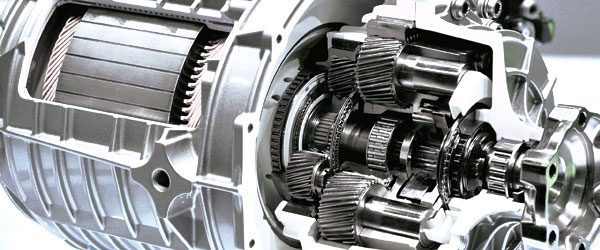
EV E-Axle & Rotor Shaft Assemblies
Multi-piece hollow rotor shafts laser welded to balance mass, integrate internal cooling oil galleries, and withstand motor speeds exceeding 20,000 RPM with minimum runout.
Inquire About EV Shafts ›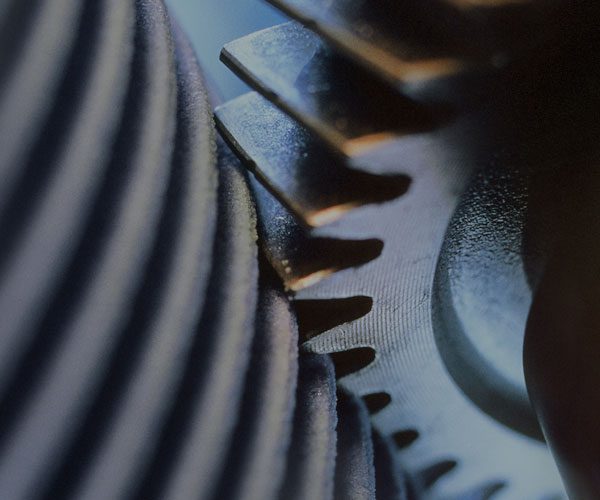
Automatic & DCT Transmission Clutch Hubs
Step-welded planetary gear carriers and dual-clutch transmission hubs requiring deep penetration welds without compromising pre-ground gear tooth profiles.
Inquire About Transmission Hubs ›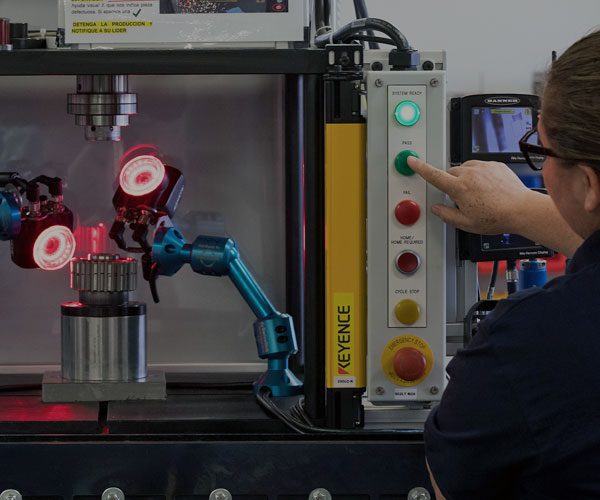
EV Power Electronics & Battery Enclosures
Hermetically sealed aluminum and copper busbar connections utilizing blue/green laser sources to eliminate spatter and ensure optimal electrical conductivity.
Inquire About EV Enclosures ›Specific Product Use-Case Matrix
To help engineering procurement teams evaluate component suitability, the following table details the technical parameters across standard automotive laser welding part categories:
| Component Name | Base Material Combination | Weld Depth (mm) | Key Quality Benchmark |
|---|---|---|---|
| Differential Ring Gear Assembly | 20MnCr5 (Hardened) to SGG-40 / Forged Steel | 3.5 - 6.0 mm | Zero cracking, post-weld radial runout < 15 µm |
| Hollow EV Traction Shaft | 8620H / 16MnCr5 Steel Tubing | 4.0 - 8.0 mm | Dynamic balance balance grade G2.5 at 20k RPM |
| Planetary Carrier Hub | SAE 1045 to Powder Metallurgy (PM) Steel | 2.0 - 4.5 mm | 100% shear torque testing validation |
| Bimetallic Copper-Aluminum Busbar | C11000 Copper to Al 6061-T6 | 1.2 - 2.5 mm | Zero intermetallic brittle phase growth, tight sealing |
Need Custom OEM Engineering Support for Laser Welded Assemblies?
Our Tier 1 engineering team collaborates directly with automotive OEMs from design assist and DFM through rapid prototyping and high-volume production launch.
Contact Us3. Technical Engineering & Metallurgical Principles
Achieving structural reliability in high-volume automotive laser welding requires mastery over metallurgical transformations, joint geometry design, and beam energy distribution. Laser welding creates a unique thermal profile characterized by extremely rapid heating and cooling rates (exceeding 104 °C/sec). This rapid quenching action can lead to unintended martensitic formation and micro-cracking if the chemical composition and process parameters are not meticulously controlled.
Joint Geometry & Surface Preparation
Because laser beam focal spot diameters typically range between 0.2mm and 0.6mm, joint fit-up tolerances are extraordinarily tight. The gap tolerance between mating components must generally be maintained below 0.05mm (50 µm) for autogenous welds (welds without filler wire).
- Press-Fit Circumferential Joints: Preferred for transmission gear-to-hub and ring gear-to-carrier assemblies. Interference fits (typically 20 µm to 40 µm) ensure zero air gaps, preventing beam blow-through and maintaining precise axial alignment.
- Stepped Flange & Weld Lips: Designed with integrated beam stops to protect internal gear teeth, bearing raceways, or electrical windings from stray laser radiation and vaporized metal ejecta.
- Pre-Weld Cleaning & Washing: Thermal degreasing or high-pressure solvent washing is mandatory. Residual machining coolant, rust inhibitors, or carbon oil films generate high-pressure hydrogen gas during laser vaporization, leading to severe weld seam porosity and reduced fatigue strength.
Beam Delivery & Advanced Beam Shaping (ARM & Wobble Technology)
Historically, laser welding of high-carbon steel or copper suffered from keyhole instability and spatter. Modern Tier 1 facilities employ state-of-the-art beam shaping technologies:
- Adjustable Ring Mode (ARM) Lasers: Utilizing a co-axial beam architecture comprising a central core beam and an outer ring beam. The ring beam pre-heats the material to reduce cooling gradients, while the core beam maintains keyhole stability. This technique reduces spatter by up to 90% and virtually eliminates micro-cracking in carbon-rich alloy steels.
- Galvo Beam Wobbling: Superimposing high-frequency spatial oscillation (circular, elliptical, or transverse patterns up to 500 Hz) onto the laser beam vector. Wobbling effectively bridges wider joint gaps (up to 0.2mm) and improves degasification of the melt pool to minimize porosity.
4. Comprehensive Quality Assurance & The 100% NVH Protocol
In automotive driveline and powertrain applications, a single joint failure can lead to total catastrophic transmission lock-up. Therefore, automotive laser welding parts must undergo rigorous, non-destructive quality verification aligned with IATF 16949 standards.
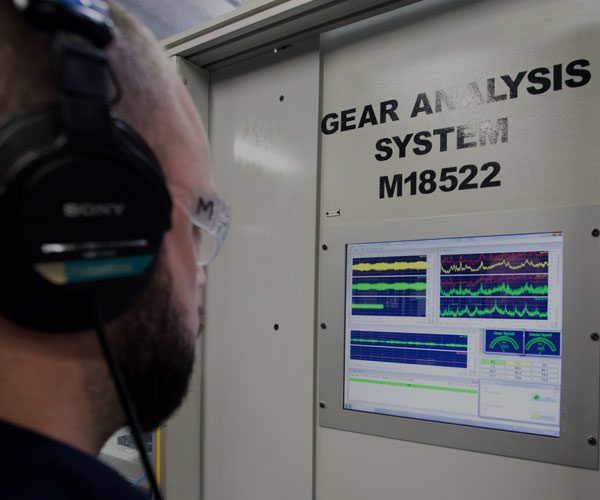
Integrated In-Line Weld Monitoring & 100% NVH Testing
At Systrand, we combine real-time acoustic emission and optical plasma monitoring during the welding process with downstream 100% Noise, Vibration, and Harshness (NVH) testing. By analyzing frequency spectrum responses under simulated loaded operating conditions, we guarantee that every welded gear assembly exhibits zero gear mesh distortion or harmonic noise anomalies.
Non-Destructive Testing (NDT) & Metallurgical Validation Protocols
- In-Process Photodiode Plasma & Reflection Monitoring: Real-time detection of keyhole collapse, power drop, or seam deviation. Automated sorting gates instantly isolate out-of-spec components.
- Ultrasonic Testing (UT) & Phased Array: 100% volumetric inspection of internal weld seams to detect sub-surface lack of fusion, cracks, or voids exceeding OEM pore threshold limits (typically < 0.3mm diameter).
- Eddy Current Testing: Rapid surface crack detection on finished ground surfaces adjacent to the heat-affected zone.
- Destructive Metallographic Cross-Sectioning: Daily lot sampling involving sectioning, polishing, and etching to measure effective weld depth, root penetration, microhardness profiles (Vickers HV0.5/HV1), and HAZ grain growth.
5. Global Procurement Trends & Technological Evolution (2026–2035)
As the automotive industry accelerates toward software-defined vehicles, high-rpm electric drives, and consolidated gigacasting modules, global sourcing strategies for automotive laser welding parts are experiencing profound shifts:
Trend 1: Proliferation of Ultra-High-Speed E-Drives (18,000 to 25,000+ RPM)
Electric motors operate at rotational speeds double or triple those of traditional internal combustion engines. At 22,000 RPM, any minute imbalance caused by uneven weld mass distribution creates destructive centrifugal forces and high-frequency acoustic whine. Buyers are prioritizing suppliers who offer fully integrated pre-machining, precision laser welding, dynamic balancing, and post-weld hard gear skiving under one roof.
Trend 2: Dissimilar Material Joining (Copper-to-Steel & Aluminum-to-Steel)
Next-generation electric drive units integrate power electronics directly into the rotor/stator housing. This requires joining dissimilar metals—such as copper busbars to steel terminals, or lightweight aluminum cooling jackets to structural steel sleeves. Sourcing managers are seeking suppliers equipped with green (515nm) and blue (450nm) laser technology, which offer high optical absorption in copper (up to 65% absorption vs. <5% for traditional infrared lasers), eliminating thermal spatter and brittle intermetallic compound formation.
Trend 3: Supply Chain Consolidation & Tier 1 Vertical Integration
Procurement teams are shifting away from multi-vendor supply chains where Part A is turned by Supplier X, heat-treated by Supplier Y, laser welded by Supplier Z, and ground by Supplier W. Logistics friction, scrap accountability disputes, and stack-up tolerance issues are driving OEMs toward single-source Tier 1 partners like Systrand who manage the complete manufacturing lifecycle from raw forging to final 100% tested assembly.
6. Why Global OEMs Partner with Systrand for Automotive Laser Welding Parts
Systrand Manufacturing stands as an elite Tier 1 automotive supplier dedicated to solving complex precision machining, gear manufacturing, and laser welding challenges. Our manufacturing heritage and technical credentials reflect unmatched authority, expertise, and dependability:
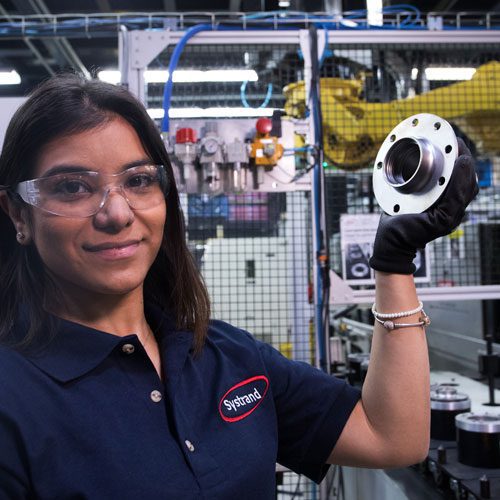
40+ Years of Manufacturing Excellence
Established in 1980, Systrand has built a world-class reputation supplying high-volume powertrain components to major global OEMs, with over 1 Million+ EV/HEV parts successfully deployed in the field.

Prestigious OEM Quality Recognition
Holders of the coveted Ford Q1 Preferred Quality Status and multi-time recipients of the 21st and 22nd Ford World Excellence Awards for superior quality, delivery, and cost performance.
Core Organizational Strengths
- Certified Quality Management: Fully accredited to IATF 16949:2016 (Quality Management) and ISO 14001:2015 (Environmental Management).
- Turnkey Manufacturing Ecosystem: Advanced CNC turning, 5-axis milling, gear hobbing, shaping, hard skiving, gear honing, cylindrical grinding, automated laser welding cells, and press-fit assembly.
- Distressed Supplier & Emergency Sourcing Support: Industry-renowned rapid response capability to take over distressed tooling, re-engineer laser welding processes, and restore disrupted OEM supply chains within unprecedented timelines.
- End-to-End NVH Assurance: In-house 100% NVH noise signature testing facilities to guarantee smooth, quiet transmission operation for demanding EV applications.
Ready to Optimize Your Laser Welded Component Sourcing?
Connect directly with our engineering team to review 2D drawings, 3D CAD models, material specifications, or emergency production transfers.
Contact Us7. Frequently Asked Questions (Technical & Sourcing FAQ)
Below are authoritative responses to complex technical questions frequently asked by global procurement teams and manufacturing engineers regarding Automotive Laser Welding Parts:
Laser welding delivers an ultra-high energy density (exceeding 106 W/cm²) focused on a microscopic focal spot. This enables extremely rapid travel speeds and deep-penetration keyhole welding with minimal net heat input into the surrounding component. Because the total heat energy transferred is a fraction of that required for arc welding (MIG/TIG), the Heat-Affected Zone (HAZ) remains narrowly confined. Furthermore, unlike Electron Beam Welding (EBW), laser welding operates at atmospheric pressure using shielding gas (Ar/He/CO2 mixtures), eliminating vacuum chamber cycle delays and preventing thermal soak that causes gear tooth distortion and pitch line runout.
Yes, but it requires strict process control. Hardened steel containing elevated carbon levels (C > 0.20%) is susceptible to martensitic embrittlement and cold cracking when subjected to rapid laser cooling rates. To prevent cracking, Systrand utilizes three primary metallurgical techniques: (1) Machine-de-carburization or localized masking to keep carbon content in the weld joint area below 0.22%; (2) Induction pre-heating of the joint to 150°C–250°C to slow down the cooling rate and prevent untempered martensite formation; and (3) Advanced Adjustable Ring Mode (ARM) lasers that provide simultaneous pre-heating and post-heating via an outer ring beam.
Automotive OEMs typically mandate a multi-tiered NDT approach: (1) Real-time photodiode/plasma vision monitoring during welding to detect beam outages or keyhole instabilities; (2) Ultrasonic Testing (UT) per ISO 17640 or AWS D14.3 to evaluate internal weld penetration and verify that porosity levels comply with ISO 13919-1 Class B standards; (3) Magnetic Particle Inspection (MPI) or Eddy Current testing for surface micro-crack detection; and (4) 100% loaded NVH acoustic testing to confirm that the welded component meets strict noise signature thresholds.
For autogenous circumferential laser welding (welding without filler wire), the maximum allowable joint gap must not exceed 0.05mm (50 µm), with an optimal targeted gap of 0.00mm to 0.02mm. In differential crown gear and transmission hub assemblies, an interference press-fit (typically 0.015mm to 0.035mm interference) is engineered. This ensures tight metal-to-metal contact, eliminates air gaps that cause weld blow-through or concavity, and maintains concentricity and runout within single-digit micrometer specifications.
While the initial capital expenditure for automated robotic laser welding cells is higher than traditional manual bolting stations, the total cost per part (TCO) is significantly lower at automotive production volumes. Direct savings stem from: (1) Elimination of 8–12 high-strength bolts per assembly; (2) Elimination of drilled, tapped, and counterbored holes in the ring gear flange, reducing machining cycle times; (3) Elimination of manual bolt-torquing and thread-locking adhesive dispensing steps; and (4) Reduced component mass and physical envelope size, leading to downstream material savings in transmission housing castings.
Systrand specializes in emergency sourcing for Tier 1 OEMs facing supplier shutdowns, quality crises, or rapid capacity expansion needs. With over four decades of precision machining experience, modular tooling setups, in-house metallurgy experts, and flexible robotic laser welding cells, we can rapidly analyze customer CAD files, adapt existing tooling or build rapid prototype fixtures, optimize weld parameters, pass PPAP Level 3 requirements, and achieve full production rate ramp-ups within days or weeks instead of months.
Partner with a Tier 1 Leader in Automotive Laser Welding
Gain a competitive advantage in weight reduction, NVH performance, and metallurgical reliability. Contact Systrand's engineering team today.
Contact Us