As global automotive OEMs accelerate the transition toward high-efficiency hybrid and battery electric vehicle (BEV) architectures, the tolerance margins for gear excitation have tightened exponentially. In legacy internal combustion engine (ICE) vehicles, low-frequency engine combustion noise easily masked high-frequency gear mesh whine. However, in modern electric powertrains—where electric motors operate at speeds exceeding 18,000 to 22,000 RPM—the ambient acoustic threshold is drastically lower. High-frequency tonal gear whine between 1,000 Hz and 5,000 Hz, driven by microscopic gear tooth deviations, is immediately perceptible to vehicle occupants and causes customer warranty claims.
Achieving acoustic comfort requires shifting from traditional dimensional metrology to sophisticated NVH Gear Analysis Testing. At Systrand Manufacturing, over 40 years of Tier 1 precision gear manufacturing and emergency sourcing experience have led us to engineer advanced, data-driven NVH methodologies. By combining sub-micron coordinate measuring machine (CMM) topography scanning with dynamic Loaded Transmission Error (LTE) analysis and 100% End-of-Line (EOL) spectral vibration profiling, we ensure zero-defect acoustic performance for global automotive programs.
1. The Physics of Gear NVH: Transmission Error & Excitation Mechanics
Noise, Vibration, and Harshness (NVH) in gear sets originates predominantly from dynamic mesh stiffness variation as gear teeth enter and exit contact under load. The fundamental driver of gear whine is Kinematic Transmission Error (KTE) and its operational counterpart, Loaded Transmission Error (LTE).
Engineering Definition: Loaded Transmission Error (LTE)
LTE ($\Delta \theta$) is defined as the difference between the actual rotational position of the driven gear and its theoretical position based on the exact gear ratio when transmitting torque:
LTE = θdriven, actual - (Ndriver / Ndriven) × θdriver, actual
Expressed in micro-radians or peak-to-peak displacement (nanometers/micrometers), LTE generates high-frequency dynamic forces at the gear mesh frequencies (GMF) and their corresponding harmonics, transmitting energy through shafts, bearings, and gearbox housing structures.
Distinguishing Gear Whine vs. Gear Rattle in Powertrains
To effectively diagnose gear assembly acoustics, powertrain engineers must isolate the primary physical phenomena:
- Gear Whine: A high-frequency, tonal acoustic excitation caused by forced vibrations from Transmission Error. Gear whine occurs directly at the Gear Mesh Frequency ($GMF = RPM / 60 \times Z$, where $Z$ is the number of teeth) and its orders. It is highly sensitive to profile crowning, tip relief, helical overlap, and tooth surface finish.
- Gear Rattle: An impact-induced, non-tonal broad-spectrum vibration caused by torsional oscillations in unloaded or lightly loaded gear pairs within the gear backlash zone. Rattle is governed by mass moment of inertia, torsional damper performance, shaft torsional stiffness, and lubricant film damping.
- Ghost Noise (Ghost Frequencies): A secondary tonal whine that occurs at non-integer orders of rotational speed. Ghost frequencies do not correlate to tooth count ($Z$), but are physically cut into the gear tooth flank during manufacturing due to kinematic errors, eccentricity, or pitch errors in the index wheel of the CNC gear hobbing or grinding machine.
2. Advanced Methodologies in NVH Gear Analysis Testing
Modern NVH quality control requires a multi-tier testing framework bridging tactile offline metrology, dynamic roll testing, and automated inline spectral analysis.
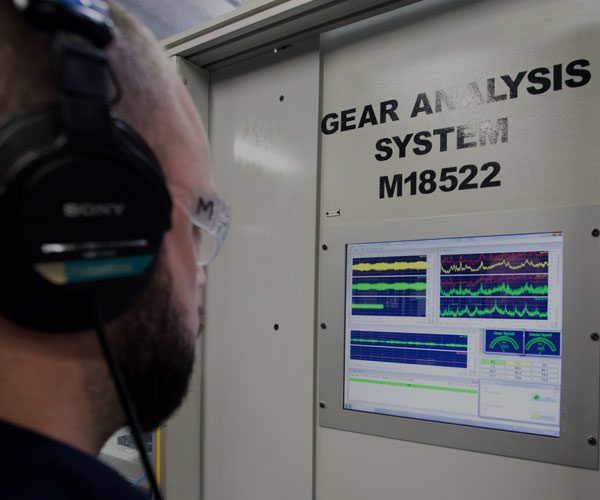
Dynamic Transmission Error (TE) Profiling
Single-flank and double-flank roll testing utilizing ultra-high-resolution optical rotary encoders to record micro-angular displacements under simulated operational speeds and torques.
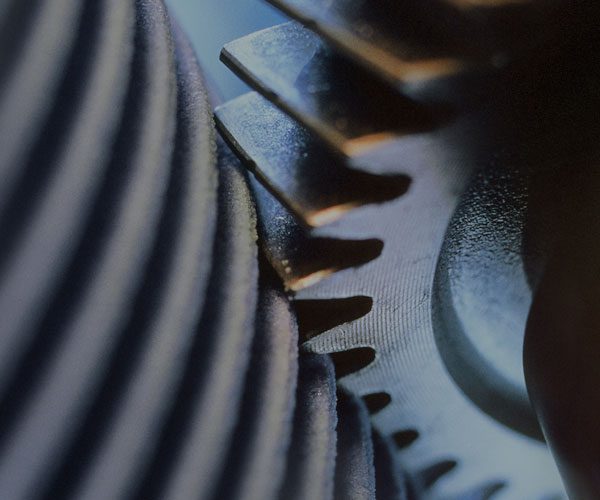
Sub-Micron Topological Grinding
Closed-loop CMM measurement feeding bias modifications back to multi-axis CNC gear grinders to eliminate profile twist and periodic surface pitch errors.
Key NVH Testing Standards & Diagnostic Techniques
- Order Analysis & FFT Fourier Spectral Decomposition: Fast Fourier Transform (FFT) algorithms convert time-domain acceleration or sound pressure signals into the frequency domain. Order tracking normalizes frequencies relative to rotational shaft speed, allowing engineers to pin noise peaks directly to specific tooth harmonics ($1^{st}, 2^{nd}, 3^{rd}$ GMF orders).
- 3D Topography & Micro-Geometry CMM Scanning: Measuring lead modification ($C_\beta$), profile crowning ($C_\alpha$), tip relief ($C_{a\alpha}$), and surface roughness metrics ($R_a$, $R_z$, $W_t$). Micro-geometry must be tailored specifically to compensate for thermal expansion and shaft bending under full motor torque.
- End-of-Line (EOL) 100% Vibration Signature Profiling: Automated testing units using tri-axial accelerometers and non-contact Laser Doppler Vibrometers (LDV) to screen every production gearbox against strict acoustic envelope limits before final shipment.
Technical Comparison: NVH Failure Modes, Root Causes & Mitigation Protocols
| NVH Symptom | Acoustic Frequency / Order | Root Engineering Cause | Diagnostic Testing Method | Manufacturing Mitigation Protocol |
|---|---|---|---|---|
| Primary Gear Whine | 1st Order GMF ($f = RPM \times Z / 60$) | High Loaded Transmission Error (LTE); incorrect profile crowning or tip relief. | Single-Flank TE Testing & CMM Profile Evaluation ($f_{H\alpha}$). | Optimize profile modifications; apply power honing or continuous generating grinding. |
| Harmonic Mesh Whine | 2nd & 3rd Order GMF Harmonics | Edge contact caused by shaft deflection, casing compliance, or tooth twist. | Tooth Contact Pattern Analysis under load; Finite Element Analysis (FEA). | Introduce lead relief ($C_\beta$) and end relief; apply bias correction in grinding. |
| Ghost Frequency Noise | Non-integer orders (e.g., Order 47.3) | Periodic error in CNC machine spindle bearings, index worm gears, or dressers. | Order Tracking & High-Frequency FFT Vibration Profiling. | Dressing tool re-profiling; machine spindle dynamic balancing & maintenance. |
| Rumble / Roughness | Sub-synchronous / Low Orders | Surface waviness ($W_t$), micro-pitting, or handling damage (nicks/burrs). | 3D Optical Profilometry & Barkhausen Noise Analysis. | Transition to isotropic superfinishing or gear honing; implement robotic handling. |
3. Precision Gear Products Engineered for Low-NVH Drivelines
Systrand produces high-precision, low-noise gears engineered specifically to pass stringent OEM acoustic acceptance criteria. Our product portfolio integrates advanced gear finishing and micro-geometry tuning:
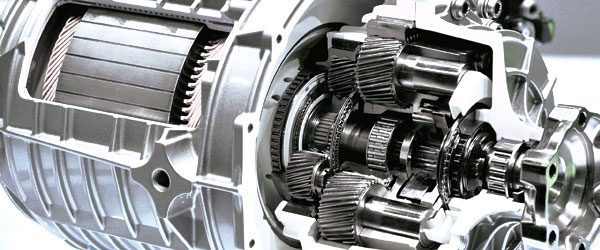
EV High-Speed Reducer Helical Gears
Designed for input speeds up to 20,000+ RPM. Precision ground and honed to DIN 3 / AGMA 14 quality levels with optimized contact ratios ($\epsilon_\gamma > 3.5$) for whisper-quiet EV performance.
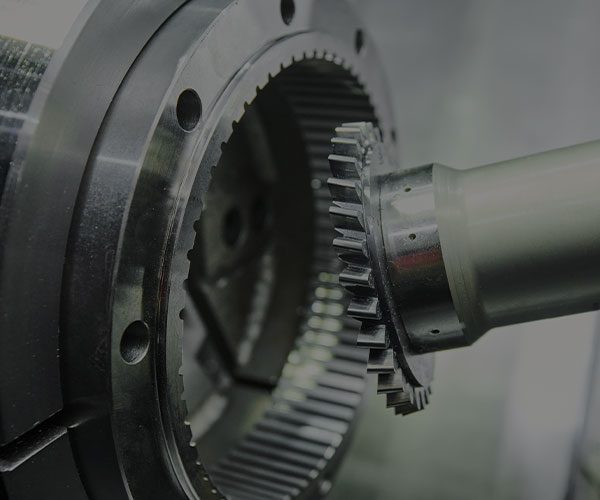
Internal Ring & Planetary Gears
Manufactured using state-of-the-art hard skiving and honing processes. Eliminates heat treatment distortion, providing superior concentricity and minimal transmission error in compact planetary e-Axles.
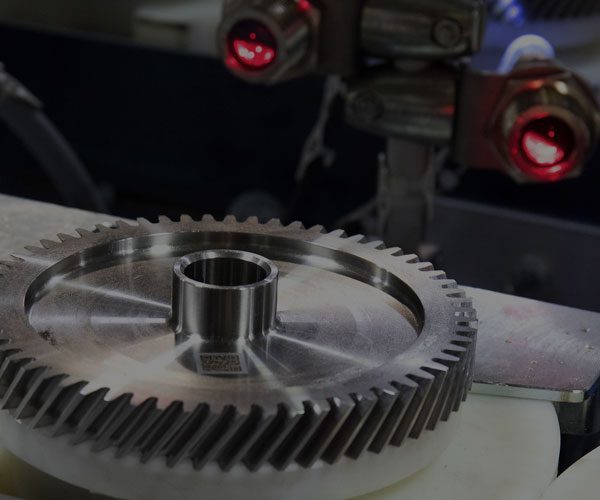
Honed High-Torque Transmission Shafts
Combining cylindrical grinding, spline rolling, and specialized gear honing. Honing imparts a crossed-hatch surface texture that dampens high-frequency acoustics and enhances oil film retention.
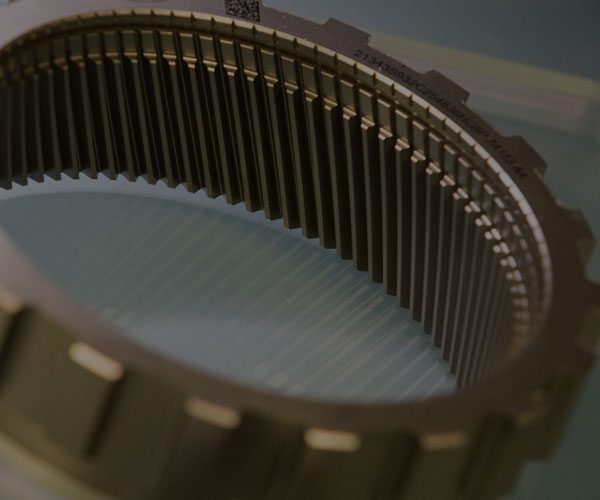
Automotive Driveline Splines & Hubs
Broached and precision-finished splines designed to eliminate radial play and backlash-induced gear rattle in multi-speed hybrid and automatic transmissions.
4. Future Global Procurement Trends in Gear NVH & Quality Control
Global automotive procurement strategies are evolving rapidly driven by electrification, sustainability goals, and shortened vehicle development cycles. Key trends shaping gear NVH procurement include:
Trend 1: 100% Inline EOL Acoustic Screening Over Statistical Sampling
Historically, OEMs relied on periodic CMM inspection (e.g., 1 part per batch of 50). In high-RPM EV programs, statistical sampling is insufficient; a single microscopic handling burr or grinding chatter pattern can cause cabin noise. Global buyers now mandate 100% End-of-Line dynamic vibration screening integrated directly into production automation lines.
Trend 2: Gear Honing Replacing Traditional Profile Grinding for EV Powertrains
Continuous generating gear grinding is highly efficient, but it leaves surface ground lines parallel to the tooth tip, which can generate microscopic micro-tonal excitations. Precision gear honing creates a stochastic, multi-directional surface texture with lower surface roughness ($R_a < 0.15\ \mu\text{m}$), effectively dispersing acoustic energy and reducing peak gear mesh frequencies by up to 3 to 6 dBA.
Trend 3: Closed-Loop Digital Twin Metrology
Leading Tier 1 suppliers like Systrand deploy closed-loop feedback systems where high-precision CMM measurement data is directly converted into machine correction code. If an NVH trend toward gear lead deviation is detected, the CNC tooth grinding system adjusts micro-geometry bias in real-time, maintaining tight CMM tolerance bands without halting production.
5. Technical Development Trends in NVH Mitigation
Engineers are looking beyond traditional gear modifications to achieve unprecedented levels of acoustic isolation:
- Asymmetric Tooth Profiles: Designing different pressure angles on the drive flank (e.g., 25°) versus the coast flank (e.g., 18°). This maximizes load-carrying capacity and flexural rigidity on the primary drive side while minimizing contact stress and Transmission Error on the coast side during deceleration.
- Isotropic Superfinishing (ISF): Chemically-accelerated vibratory polishing removes peak surface asperities without altering tooth micro-geometry. This eliminates surface-initiated friction noise and extends micro-pitting fatigue life under extreme contact pressures ($p_0 > 1,500\text{ MPa}$).
- Integrated Damping Structures & Hybrid Gears: Engineering lightweight steel-polymer hybrid gear bodies or damping rings that absorb structural vibrations before they transmit to the gearbox housing walls.
6. Enterprise Competitive Advantages: Why Global OEMs Partner with Systrand
Systrand Manufacturing stands as a premier Tier 1 automotive supplier dedicated to solving complex machining, gear manufacturing, and NVH engineering challenges.
Systrand Manufacturing Excellence Profile
- 40+ Years of Manufacturing Expertise: Deep domain knowledge in precision machining, gear hobbing, shaping, honing, grinding, and sub-assembly.
- Tier 1 Quality Recognition: Honored with Ford Q1 Preferred Quality Status and recipient of the coveted 21st and 22nd Ford World Excellence Awards.
- 1M+ EV/HEV Components Deployed: Proven real-world field reliability in high-volume hybrid and fully electric vehicle drivelines.
- IATF 16949:2016 & ISO 14001:2015 Certified: Fully audited quality and environmental management systems complying with strict global OEM standards.
- 100% NVH Noise Signature Analysis: Advanced in-house testing equipment verifying 100% of critical gear production for acoustic compliance.
- Emergency Sourcing Capabilities: Rapid response team capable of taking over tooling, correcting distressed supplier quality failures, and stabilizing OEM assembly lines within days.
Whether you are launching a new high-speed EV e-Axle project, optimizing an existing transmission for lower cabin noise, or replacing a non-compliant gear vendor, Systrand provides the engineering rigor and manufacturing scale required.
7. Global Procurement & Engineering FAQ: NVH Gear Analysis
How does Loaded Transmission Error (LTE) directly affect vehicle interior sound pressure levels?
Loaded Transmission Error (LTE) causes dynamic variations in angular velocity between meshing gears. These microscopic velocity fluctuations create periodic excitation forces at the gear mesh frequency. These forces transmit through the shafts and bearings to the transmission housing, causing housing panels to radiate sound waves into the vehicle chassis and cabin. Reducing peak-to-peak LTE from 2.0 µm to below 0.5 µm typically yields a 4 to 8 dBA reduction in cabin gear whine.
What is the technical difference between gear whine and ghost noise during spectral order analysis?
Gear whine occurs at exact integer multiples of the tooth count ($Z \times \text{shaft speed}$), corresponding to the primary gear mesh frequency (GMF). Ghost noise occurs at non-integer orders that do not match tooth count math. Ghost noise stems from periodic errors embedded in the gear cutter spindle or indexing wheel of the grinding machine. Order tracking isolate ghost peaks (e.g., Order 38.4), allowing manufacturing engineers to trace the defect back to specific grinding wheel dressers or machine bearings.
Why is gear honing increasingly preferred over generating gear grinding for high-speed EV gears?
Generating grinding leaves linear surface marks parallel to the tooth tip, which can excite high-frequency acoustic orders at motor speeds exceeding 15,000 RPM. Gear honing utilizes a flexible abrasive honing ring running in mesh with the workpiece, producing a randomized cross-hatched surface structure. This surface pattern disperses mesh excitation energy across a broader spectrum, significantly reducing tonal peaks while providing superior oil retention.
Which gear tolerance parameters are most critical for passing NVH acoustic screening?
The primary micro-geometry parameters defined under ISO 1328-1 or AGMA 2015 include Profile Form Deviation ($f_{f\alpha}$), Profile Slope Deviation ($f_{H\alpha}$), Helix Form Deviation ($f_{f\beta}$), Single Pitch Deviation ($f_{pt}$), and Total Cumulative Pitch Error ($F_p$). For low-NVH applications, controlling profile crowning ($C_\alpha$) and lead relief ($C_\beta$) to within sub-micron tolerances is critical to prevent corner contact under load.
How does Systrand execute 100% End-of-Line (EOL) NVH testing without slowing high-volume mass production?
Systrand integrates fully automated robotic test cells into the production line. Every assembled component or gear set is mounted onto high-speed automated test benches. Rotary encoders measure dynamic Transmission Error while accelerometers measure vibration signatures under automated load sweeps. Parts meeting the strict acoustic envelope pass automatically; any non-conforming part is rejected instantly for CMM micro-geometry teardown.
What capabilities does Systrand offer for emergency sourcing when an existing gear supplier fails NVH audits?
With over 40 years of emergency sourcing experience, Systrand specializes in rapidly stabilizing distressed supply chains. We can analyze non-conforming gear samples, identify NVH root causes via advanced metrology, modify tooling or grinding profiles, and ramp up high-precision production in accelerated timelines—preventing costly OEM assembly plant shutdowns.