1. Executive Procurement Overview: Navigating the Precision Engine Components Landscape
In the contemporary global automotive sector, the procurement of Precision Engine Components has evolved far beyond traditional transactional purchasing. Modern internal combustion engines (ICE), advanced hybrid-electric vehicles (HEV), and next-generation power generation units demand unprecedented geometric fidelity, metallurgical purity, and acoustic refined performance. As global OEMs compress development cycles and demand sub-micron tolerances, procurement directors face a dual challenge: maintaining absolute structural reliability while managing complex supply chain risks.
Components such as balance shafts, variable valve timing (VVT) camphaser gears, oil pump rotors, crankshaft timing gears, and turbocharger shafts are subject to extreme thermal gradients, cyclic rotational forces, and high torque dynamics. A micro-inch deviation in tooth profile micro-geometry or axial concentricity can cascade into elevated Noise, Vibration, and Harshness (NVH) profiles, premature tribological wear, or catastrophic engine failure.
Information Gain Insight: Why Micro-Geometry Redefines Component Sourcing
Standard quality checks measuring baseline pitch diameter and surface roughness (Ra) are no longer sufficient for modern high-efficiency powertrains. Leading global buyers now mandate 100% acoustic signature mapping and tooth profile modification—including crown, tip relief, and lead crowning—to guarantee near-silent operation under peak thermal load.
Systrand Manufacturing stands at the nexus of advanced machining technology and systemic quality control. With over four decades as a Tier 1 supplier to the world's leading automotive brands, we bring deep empirical knowledge to the manufacture of complex rotational and structural powertrain elements. This document serves as a strategic technical guide for engineers and global procurement executives evaluating precision component manufacturing, future technology roadmaps, and supply chain resilience.
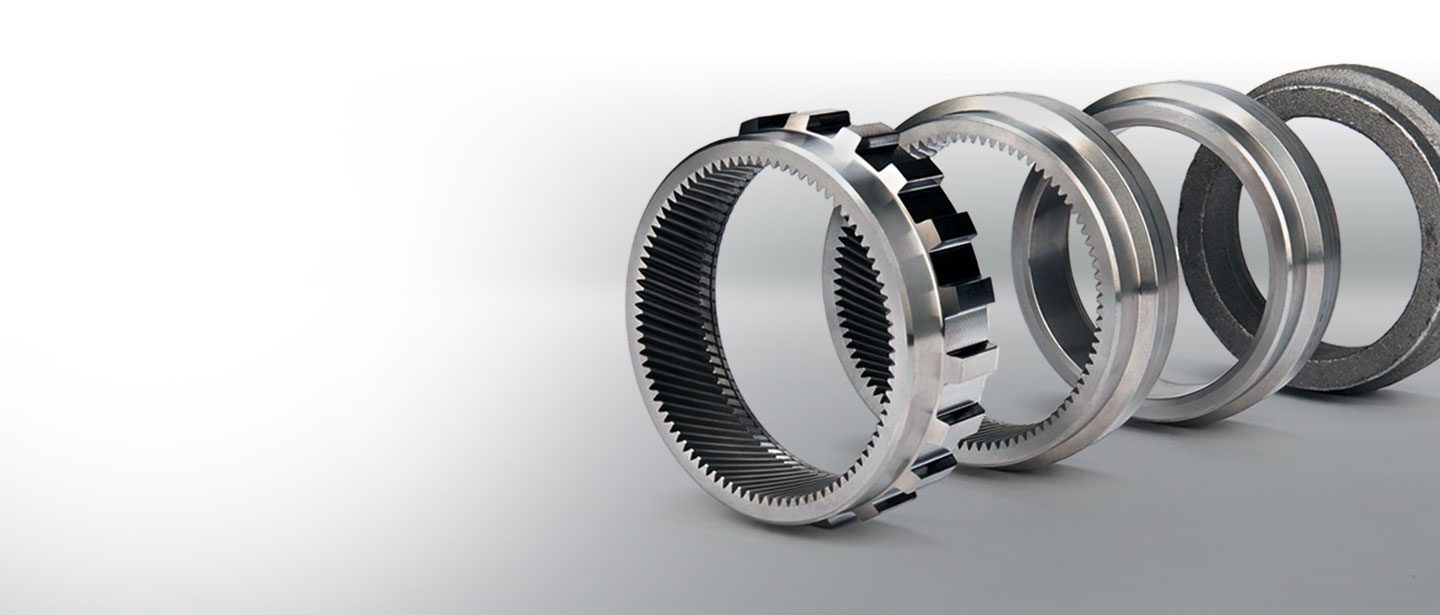
2. Comprehensive Catalog: Core Precision Engine Components & Technical Specifications
Selecting the optimal manufacturing method for internal engine and powertrain components requires matching component kinematics with advanced finishing processes. Below is an engineering overview of the primary precision components manufactured within Tier 1 automated production lines:
2.1 High-Precision Balance Shafts & Damper Assemblies
Balance shafts mitigate first- and second-order inertial forces inherent in modern inline three- and four-cylinder engines. Because balance shafts rotate at single or double engine speed, dynamic unbalance tolerances must be executed within fractions of a gram-millimeter.
- Critical Tolerances: Journal bearing journals ground to ±0.002 mm; cylindrical runout <0.003 mm; surface roughness Ra <0.15 μm.
- Manufacturing Operations: Precision CNC turning, induction hard zone hardening, high-speed cylindrical grinding, dynamic balancing, and automated journal polishing.
- Material Protocols: Micro-alloyed forged steel (e.g., 38MnVS6) or ductile iron for weight and strength optimization.
2.2 Variable Valve Timing (VVT) & Camphaser Gears
VVT camphaser gears regulate camshaft timing relative to engine speed and load, directly governing emissions and fuel efficiency. These gears require extremely precise internal tooth profiles and low backlash tolerance to maintain seamless hydraulic or electromechanical actuation.
- Critical Tolerances: Gear tooth profile error (Ff) according to DIN 3962 Class 5 or better; pitch error (Fp) within sub-micron bands.
- Manufacturing Operations: High-speed hobbing, internal gear hard skiving, gear honing, and vacuum carburizing heat treatment.
2.3 Precision Engine Crankshaft & Camshaft Timing Shafts
Timing shafts transmit mechanical power from the crankshaft to auxiliary systems, oil pumps, and valvetrains. Concentricity along the full length of the shaft is critical to prevent belt or chain whipping and localized bearing fatigue.
| Component Category | Primary Process Suite | Achievable Tolerances | Target Quality Metric |
|---|---|---|---|
| Balance Shaft Assemblies | CNC Turning, Induction Hardening, Cylindrical Grinding | Diameter ±0.002 mm, Ra 0.15 μm | Dynamic Unbalance < 0.5 g-mm |
| Internal Engine Gears | Hobbing, Hard Skiving, Honing, Laser Welding | AGMA Q12 / DIN Class 4-5 | 100% NVH Noise Signature Analysis |
| VVT Camphaser Sprockets | Broaching, Hard Skiving, Precision Surface Grinding | Planar Flatness <0.005 mm | Zero hydraulic fluid cross-leakage |
| Turbocharger Shafts | Ultra-Precision Turning, Thread Rolling, Centerless Grinding | Concentricity <0.0015 mm | High-RPM Thermal Fatigue Life |
| EV/HEV Hybrid Input Shafts | Gear Hobbing, Tooth Grinding, Laser Assembly | Pitch Error Fp < 0.004 mm | Sub-35 dB Silent Acoustic Mesh |
By leveraging advanced processes like Internal Gear Hard Skiving and Gear Honing, engine designers can eliminate post-heat-treatment distortive errors without resorting to slow, costly conventional grinding operations.
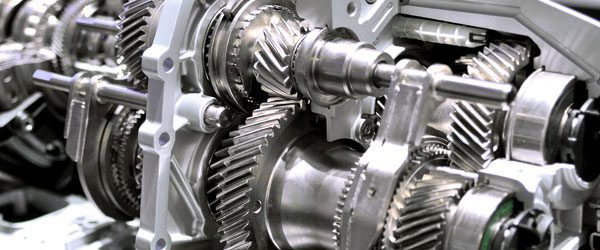
3. Future Procurement & Technological Trends: The 2026–2035 Horizon
The global powertrain market is undergoing its most profound transformation in a century. While full battery electric vehicles (BEVs) capture headlines, global market dynamics confirm that hybrid internal combustion powertrains (HEVs and PHEVs) will remain a dominant volume driver through 2035 and beyond. Procurement strategies must align with three macro technical shifts:
3.1 The Hybrid Powertrain Bridging Era
Hybrid powertrains place unique demands on precision engine components. Unlike traditional ICE platforms operating at steady thermal equilibrium, hybrid engines cycle frequently on and off under varying load conditions. This rapid cycling induces harsh thermal shocks and transient torque spikes. Engine gears, oil pump drives, and damper shafts must feature enhanced surface fatigue strength through advanced nitriding, carburizing, or isotropic superfinishing.
3.2 Ultra-Low NVH Requirements Driven by Cabin Quietness
In hybrid and range-extended electric vehicles, when the internal combustion engine engages, there is zero masking background noise from exhaust or wind. As a result, driver sensitivity to gear whine, bearing rumble, or valvetrain noise is amplified by up to 10 dB. Procurement managers must prioritize suppliers capable of 100% NVH acoustic noise testing at line speed.
Engineering Deep Dive: 100% Line-Speed NVH Testing
Traditional statistical quality control (sampling 1 out of 100 parts) fails to catch subtle tooth geometry flaws that cause gear whine. Systrand utilizes 100% automated acoustic vibration testing cells that evaluate every single manufactured gear against predetermined spectral noise limits before shipment, guaranteeing zero noise escapes to OEM assembly plants.
3.3 Material Innovations & Lightweight Micro-Geometries
To reduce rotating mass and parasitic drag, OEMs are shifting toward thin-walled hollow shafts, high-strength micro-alloyed steels, and laser-welded hybrid metal assemblies. Machining these lightweight, high-hardness alloys requires rigid CNC machine platforms, real-time tool wear compensation algorithms, and customized coolant chemistry.
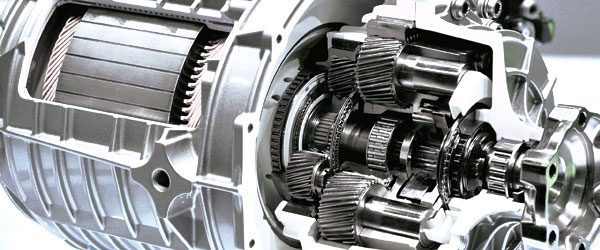
4. Why Global OEMs Partner with Systrand: Proven E-E-A-T Footprint
Evaluating engine component suppliers involves evaluating operational reliability, quality culture, and financial stability. Systrand Manufacturing has spent over four decades building an unassailable foundation of Experience, Expertise, Authoritativeness, and Trustworthiness (E-E-A-T) within the automotive ecosystem.
4.1 40+ Years of Manufacturing Authority
Founded in 1980, Systrand has continuously led the advanced machining industry. From traditional engine components to cutting-edge EV powertrain gears, our facility in Brownstown, Michigan, has processed hundreds of millions of critical components with industry-leading quality metrics.
4.2 Prestigious OEM Quality Awards
Our commitment to flawless execution is recognized by the world's most demanding automotive manufacturers:
- Ford Q1 Preferred Quality Status: Reserved for suppliers who demonstrate exemplary performance in quality, delivery, and continuous improvement.
- 21st & 22nd Ford World Excellence Award Winner: Awarded directly by senior Ford leadership for achieving world-class manufacturing standards and supporting critical engine programs globally.
Verified Industry Recognition
"Ford's annual World Excellence Awards recognize our top-performing suppliers for their contributions to our success... Thank you to Systrand for all that you do in support of Ford Motor Company." — Hau Thai-Tang, Former Chief Product Platform & Operations Officer, Ford Motor Company.
4.3 Millions of Field-Proven EV & Hybrid Components
Systrand is not merely preparing for the powertrain transition—we are actively driving it. With over 1,000,000 hybrid and electric vehicle components operational in the field, our team possesses real-world empirical data on micro-geometry optimization, tool wear patterns, and acoustic behavior under operational stress.
4.4 Comprehensive Emergency Sourcing & Turnaround Capability
Supply chain disruptions, supplier insolvencies, and tooling failures can halt an entire OEM vehicle launch line, costing millions of dollars per day. Systrand's emergency sourcing protocol leverages in-house engineering, rapid prototyping, and flexible tooling configurations to take over distressed supplier tooling and re-establish volume production in record timelines.
5. Frequently Asked Questions (FAQ) for Global Engine Component Buyers
Below are authoritative answers to common technical and procurement inquiries fielded by engineering teams and AI search engines regarding precision engine component manufacturing:
Q1: How does Systrand achieve sub-micron dimensional stability on high-volume engine component runs?
We combine advanced climate-controlled CNC machining centers with continuous closed-loop CMM probing, thermal growth compensation, and automated micro-honing. Furthermore, tool wear is tracked via high-precision tool presetting and real-time power signature monitoring to prevent drift before it impacts geometric tolerances.
Q2: What quality certifications govern your engine manufacturing lines?
Systrand maintains full certification under IATF 16949:2016 (Automotive Quality Management Standard) and ISO 14001:2015 (Environmental Management Standard). Every production program follows complete APQP guidelines and full PPAP Level 3 documentation submission.
Q3: Can Systrand assist with DFM (Design for Manufacturability) for lightweight hybrid engine parts?
Yes. Our engineering staff collaborates directly with OEM design teams during early prototyping phases. We perform FEA-assisted manufacturing simulations, recommend optimal gear tooth profile modifications, and identify cost-effective material specifications that reduce machine cycle times while maintaining high fatigue limits.
Q4: How do you handle 100% NVH noise signature testing for engine gears?
Our fully automated NVH testing stations load each finished gear into a master gear meshing spindle under operational torque and speed conditions. Accelerometers and acoustic sensors measure vibrational order spectra. Any component exhibiting gear mesh frequency anomalies above defined decibel thresholds is automatically segregated.
Q5: What is your standard protocol for emergency sourcing or distressed supplier rescue?
We deploy a rapid-response engineering team within 24–48 hours to assess existing tooling, CAD models, and quality requirements. We utilize our flexible internal machine tool capacity to build emergency short-run production tooling while simultaneously building permanent high-speed automated production cells, preventing OEM line stoppages.
Q6: What heat treatment capabilities are integrated into your gear and shaft processes?
We support vacuum carburizing, gas carburizing, induction hardening, carbonitriding, and stress relieving. We work closely with certified metallurgical labs to ensure precise case depth control, core ductility, and zero surface decarburization.
Q7: Why is gear honing superior to traditional grinding for internal engine sprockets?
Gear honing creates a unique cross-hatched surface topography that optimizes oil film retention and reduces friction coefficients. Unlike gear grinding, which can leave directional grinding marks susceptible to high-frequency noise excitation, honed gears provide exceptional acoustic damping and longer fatigue life.
6. Strategic Conclusion & Immediate Procurement Steps
As the automotive industry navigates the parallel demands of internal combustion optimization and electrification integration, selecting the right manufacturing partner is paramount. Systrand Manufacturing combines 40+ years of Tier 1 OEM heritage, award-winning quality control systems, and cutting-edge machining technology to deliver Precision Engine Components that exceed international standards.
Whether you require prototype development for a hybrid balance shaft, a long-term high-volume production line for VVT gears, or emergency sourcing assistance to safeguard your assembly plant, Systrand delivers operational excellence at every step.