1. Executive Technical Summary: The EV Powertrain Paradigm Shift
The global automotive industry is undergoing a structural transformation from Internal Combustion Engines (ICE) to Electric Vehicle (EV) drive architectures. For procurement directors, driveline engineers, and supply chain executives, this transition introduces fundamentally new physical, mechanical, and acoustic constraints. Traditional automotive transmission components operating at 4,000 to 6,000 RPM are being replaced by high-rpm EV powertrain components engineered to withstand input speeds exceeding 18,000 to 22,000 RPM while enduring extreme instant torque loads.
In traditional ICE vehicles, combustion noise masking effectively dampens minor mechanical gear whine and shaft vibration. In battery electric vehicles (BEVs), the absence of a combustion engine lowers the background cabin noise floor by up to 20 dB. Consequently, gear mesh frequencies, micro-geometry deviations, and transmission error (TE) become immediately audible to end customers. Achieving quiet, efficient, and ultra-durable electric drive units (e-Drives) requires a total rethinking of gear manufacturing, heat treatment control, spline grinding, and end-of-line quality assurance.
Technical Insight: Why Micro-Geometry Control Defines EV Powertrain Quality
At 20,000 RPM, gear tooth deformations measured in sub-microns directly translate into high-frequency tonal noise (whine). Achieving acceptable Noise, Vibration, and Harshness (NVH) levels demands pitch errors strictly held within ISO 1328 Grade 4/5 tolerances, combined with tailored lead crowning and profile tip relief via continuous gear tooth grinding or hard skiving.
Systrand Manufacturing stands at the forefront of this technical evolution. As a Ford Q1 Preferred Tier 1 automotive supplier with over 40 years of precision machining expertise, Systrand has successfully engineered and delivered more than 1,000,000 HEV and EV components into active field operation. This technical guide outlines our complete product matrix, future procurement trends, micro-geometry engineering standards, and proven supply chain resiliency strategies.
2. High-Precision EV Powertrain Component Portfolio
Every electric drive module—whether a coaxial, parallel-axis, or 3-in-1 integrated e-Axle—relies on a core matrix of high-precision rotational components. Below are the key product lines manufactured at Systrand, optimized for ultra-low NVH, lightweighting, and long-term durability under high thermal strain.
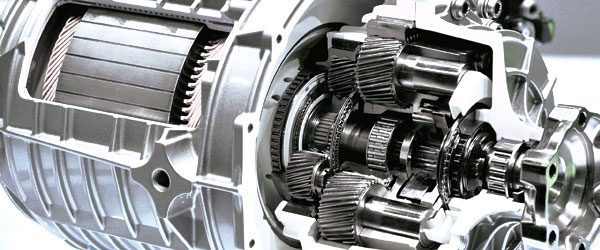
EV Reduction Gears & Helical Pinions
High-ratio, low-noise helical gears and planetary pinions designed for single-speed and multi-speed EV gearboxes. Precision finished via post-heat treatment gear grinding or gear honing to eliminate thermal distortion.
- DIN 3962 Quality Class 4 to 6
- Surface roughness Ra < 0.2 µm
- Post-carburizing hard skiving & gear honing
- 100% automated acoustic NVH testing
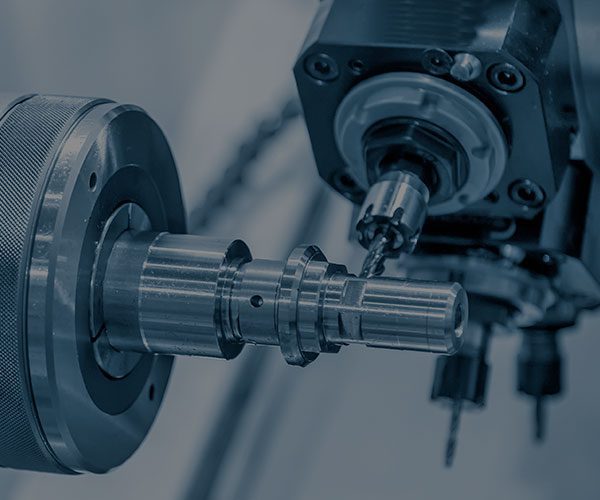
Electric Motor Rotor Shafts (Hollow & Solid)
Precision-turned and cylindrical-ground rotor shafts designed for high rotational dynamics. Engineered with thin-walled hollow sections for lightweighting and integrated internal oil-cooling channels.
- High-speed dynamic balance < 0.5 g·mm/kg
- Precision spline rolling & ground external teeth
- Concentricity held within 0.005 mm TIR
- Advanced induction hardening & stress relief
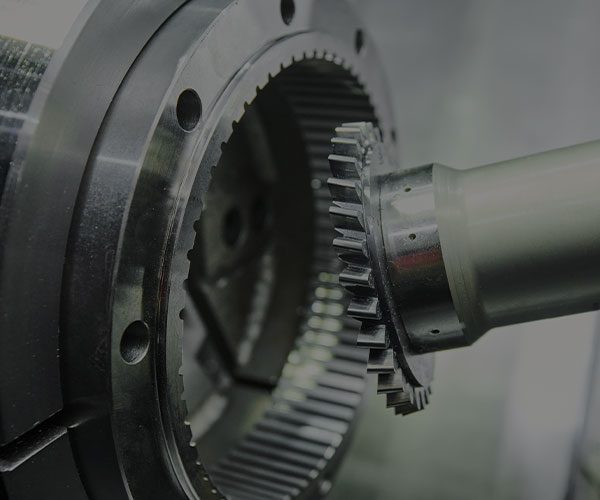
Internal Ring Gears (Hard Skived & Honed)
Critical internal ring gears for planetary e-Axle gearboxes. Utilizing state-of-the-art carbide hard skiving machines to replace slow, expensive internal grinding while achieving superior tooth flank quality.
- Hardness processing up to 60-62 HRC
- Elimination of post-quench distortion errors
- Compact ring wall thickness design
- Integrated outer housing locating features
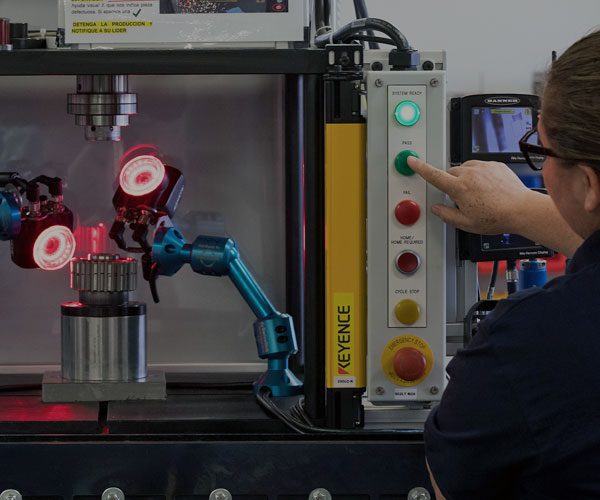
Laser-Welded e-Axle Sub-Assemblies
Fully assembled differential carriers, shaft-gear combinations, and parking lock assemblies. Utilizing automated CNC laser welding to reduce mass and eliminate mechanical fastener failure points.
- Deep penetration seam laser welding
- In-line ultrasonic weld integrity testing
- Sub-component press fit and balancing
- Complete trace-ability for Tier 1 OEM supply
Need custom technical evaluation or fast-track prototyping for your electric drive platform?
Contact Us to speak directly with our Senior Powertrain Application Engineers.
3. Micro-Geometry Engineering & NVH Mitigation: The Technical Moat
In high-torque EV powertrains, macro-geometry (module, pressure angle, number of teeth) ensures basic load-carrying capacity, but micro-geometry parameters govern thermal endurance, efficiency, and quiet operation. The key cause of high-frequency gear whine in electric vehicles is Transmission Error (TE)—the minute angular departure of the output shaft from its ideal theoretical position during tooth meshing.
3.1 Advanced Tooth Flank Modifications
Under heavy acceleration torque, gear teeth undergo elastic bending deflection. If gear teeth are manufactured with perfect involute shapes in an un-loaded state, the tooth tip will collide with the mating flank during entry under load, inducing severe shock loads and acoustic radiation. Systrand employs multi-axis CNC gear grinding and gear honing machines to apply targeted micro-geometry corrections:
- Profile Tip Relief & Root Relief: Removing micron-level material at the tip and root to prevent tip interference during deflection under maximum EV motor torque.
- Lead Crowning (Helical Modification): Modifying the tooth along its face width to center the contact patch under dynamic shaft bending and housing deflection.
- Topological Flank Twist Correction: Compensating for bias errors that occur naturally during helical gear grinding, ensuring equal load distribution across the entire meshing plane.
| Finishing Process |
Surface Finish (Ra) |
DIN / ISO Accuracy |
NVH Performance |
Best Application for EV Powertrains |
| Conventional Hobbing & Shaving |
0.8 – 1.6 µm |
Class 7 – 8 |
Poor (High Whine) |
Low-cost, low-RPM auxiliary drives only |
| Continuous Profile Grinding |
0.3 – 0.6 µm |
Class 4 – 5 |
Good |
High-load final drive reduction gears |
| Precision Gear Honing |
0.15 – 0.3 µm |
Class 4 – 5 |
Superior (Ultra-Low Whine) |
High-RPM e-motor pinions (>18,000 RPM) |
| Hard Skiving (Internal Gears) |
0.2 – 0.4 µm |
Class 5 – 6 |
Excellent |
Compact planetary ring gears for e-Axles |
3.2 100% End-of-Line Acoustic NVH Noise Signature Analysis
Quality control at Systrand goes beyond conventional coordinate measuring machine (CMM) dimensional checks. For EV powertrain components, 100% of manufactured transmission gears undergo end-of-line psychoacoustic noise testing on high-speed single-flank roll testers. Accelerometers and laser vibrometers capture Order Analysis spectra, detecting order-related micro-ripples and ghost frequencies before components are dispatched to OEM assembly plants.
Accelerate Your EV Powertrain Program with Proven Tier 1 Expertise
Over 1,000,000 HEV/EV parts deployed. Zero compromise on quality. Talk with our engineering team today.
4. Future Trends in EV Powertrain Procurement & Manufacturing
Global procurement teams must balance immediate cost reduction demands with aggressive vehicle electrification timelines. Based on industry data and engineering roadmaps from major automotive OEMs, four dominant manufacturing and sourcing trends will define the next decade of EV powertrain development:
Trend 1: Migration to High-Voltage 800V SiC Architectures & Ultra-High RPMs
Next-generation electric vehicles are transitioning from 400V to 800V Silicon Carbide (SiC) inverter systems. Higher system voltage enables lighter wiring and faster charging, but drives motor speeds up to 24,000 RPM. At these extreme velocity vectors, centrifugal forces on rotor shafts and e-gears skyrocket. Procurement teams must source materials with elevated fatigue limits (e.g., premium vacuum-arc remelted steels like 18CrNiMo7-6 or specialized powder metallurgy alloys) and mandate dynamic balancing down to sub-gram-millimeter thresholds.
Trend 2: Shift Toward Integrated 3-in-1 and 8-in-1 E-Drives
Automotive OEMs are abandoning modular electric drive components in favor of fully integrated e-Drives combining the electric motor, power electronics, transmission, differential, and thermal management into a single housing. Sourcing isolated components is giving way to sourcing fully assembled, laser-welded sub-assemblies. Suppliers must possess end-to-end capabilities—including CNC turning, gear cutting, heat treatment, laser welding, precision washing, bearing press fitting, and functional testing under one quality umbrella.
Trend 3: Lightweighting via Thin-Walled Hollow Rotor Shafts
Rotational inertia directly impacts EV acceleration, efficiency, and range. Future procurement specifications increasingly demand hollow rotor shafts produced via deep-hole drilling, rotary swaging, or radial forging. Machining thin-walled shafts without introducing chatter or concentricity runout requires specialized high-rigidity CNC turning lathes and tailored damping workholding systems.
Trend 4: Supply Chain Resiliency & Emergency Sourcing Protocols
Geopolitical volatility, raw material fluctuations, and distressed supplier risks have highlighted the fragility of global automotive supply chains. OEMs can no longer rely on single-region or unvetted Tier 2 suppliers. The market is aggressively favoring agile Tier 1 partners with domestic production footprints, rapid tooling turnarounds, and proven emergency sourcing capabilities capable of taking over distressed tooling and production lines within days, not months.
5. Frequently Asked Questions (FAQ) for EV Powertrain Sourcing
Below are authoritative answers to the most critical technical and procurement questions asked by automotive purchasing managers and driveline design engineers evaluating EV powertrain suppliers.
How does gear pitch error directly impact NVH in high-rpm EV powertrains?
Adjacent pitch error (fp) and cumulative pitch error (Fp) create periodic spatial deviations during gear mesh. In an EV operating at 20,000 RPM, even a 3-micron pitch irregularity generates intense pressure spikes at exact mesh frequencies (order noise). This manifests as high-pitched cabin whine. Maintaining pitch errors within DIN Quality Class 4/5 via precision gear honing minimizes these pressure variations and eliminates tonal acoustic spikes.
What are the key advantages of internal gear hard skiving over shaping or grinding for EV ring gears?
Internal ring gears are notoriously difficult to finish after heat treatment. Gear shaping before heat treatment leaves heat distortion uncorrected. Internal thread grinding is extremely slow and costly. Hard skiving utilizes specialized carbide tools on high-rigidity CNC machines to cut fully hardened gear teeth (up to 62 HRC) at high cutting speeds. It delivers surface finishes down to Ra 0.2 µm, eliminates quench distortion, reduces cycle times by up to 70% compared to grinding, and provides exceptional tooth geometry control.
How does Systrand ensure zero-defect quality during high-volume production ramping?
Systrand operates under strict IATF 16949:2016 quality management protocols. We utilize statistical process control (SPC) with automated in-line gauging, 100% CMM inspection, post-heat treatment magnaflux crack detection, and EOL acoustic NVH testing. Our closed-loop manufacturing systems directly feed measurement data back to CNC grinders, automatically correcting tool wear before dimensional drift can occur.
What heat treatment processes are optimal for high-torque EV transmission shafts and gears?
Deep-case vacuum carburizing followed by high-pressure gas quenching (HPGQ) is preferred for high-stress EV gears. This minimizes surface oxidation and thermal distortion while producing a tough, shock-resistant core with a wear-resistant hard case (58–62 HRC). For long rotor shafts, localized induction hardening is frequently used to harden spline sections and bearing journals while preserving shaft ductility.
How does Systrand assist automotive OEMs with emergency sourcing for distressed EV supply chains?
With over 40 years of experience resolving emergency supplier crises, Systrand offers rapid supply chain takeover services. We possess modular CNC machining cells, in-house tooling capabilities, and seasoned launch engineers capable of receiving customer tooling, establishing certified quality control plans, and delivering PPAP (Production Part Approval Process) samples in expedited timeframes to prevent OEM assembly line stoppages.
Can Systrand handle both low-volume prototyping and high-volume mass production?
Yes. We support global OEM customers across the entire product lifecycle—from rapid prototyping and pre-series development batches (APQP Phase 2/3) to full high-volume automated series manufacturing exceeding millions of units annually.
Have a technical question not answered here? Our engineering team is ready to review your CAD files and print specifications.
Contact Us
6. Why Global OEMs Partner with Systrand: Proven E-E-A-T Excellence
Choosing a Tier 1 supplier for EV powertrain components is a high-stakes decision. A single component failure or acoustic defect can trigger costly vehicle recalls or compromise brand reputation. Systrand’s decades-long track record of quality, innovation, and reliability provides automotive buyers with complete confidence.
40+
Years of Engineering Heritage
Founded in 1980, Systrand has spent over four decades mastering precision machining, gear manufacturing, and complex driveline engineering.
1,000,000+
EV/HEV Parts in the Field
Proven real-world performance with over one million hybrid and electric vehicle components successfully operating under extreme driving conditions.
100%
NVH Testing Rigor
Every critical gear signature is analyzed using state-of-the-art acoustic end-of-line systems, guaranteeing whisper-quiet operation in electric vehicles.
Industry Recognition & Quality Certifications
Systrand is not just a supplier; we are a strategic manufacturing partner recognized globally for quality excellence:
- Ford Q1 Preferred Quality Status: Reserved for suppliers who consistently achieve superior quality, delivery, and operational performance.
- 21st & 22nd Ford World Excellence Award Winner: Honored multiple times by Ford Motor Company for world-class manufacturing contributions.
- IATF 16949:2016 Certified: Compliant with the stringent international quality standard for automotive design and production.
- ISO 14001:2015 Certified: Dedicated to environmentally responsible manufacturing, energy efficiency, and sustainable production.
Start Your Custom EV Powertrain Project Today
Whether you require early-stage design-for-manufacturability (DFM) assistance, precision prototyping, continuous gear honing, or high-volume series manufacturing, Systrand has the equipment, expertise, and quality systems to deliver.
Ready to Elevate Your EV Powertrain Performance?
Contact our sales and engineering leadership to request a technical consultation or submit your RFQ package.
Contact Us