1. Executive Engineering Overview: The Shift in Automotive Transmission Gears
The global automotive powertrain landscape is undergoing its most radical transformation in a century. As vehicle propulsion transitions from traditional Internal Combustion Engines (ICE) to Hybrid Electric Vehicles (HEV) and battery-powered Electric Vehicles (EV), the design parameters, performance tolerances, and manufacturing requirements for automotive transmission gears have fundamentally shifted.
In conventional ICE multi-speed automatic transmissions (8-speed to 10-speed planetary architectures or dual-clutch transmissions), internal engine acoustic masking dampens mechanical drive noise. However, in modern e-Drives and electric axles (e-Axles), modern electric motors run at speeds up to 18,000 to 24,000 RPM with near-silent electromagnetic operation. Under these high-RPM regimes, gear tooth surface irregularities, minute pitch variations, or profile errors produce audible gear whine and high-frequency acoustic disturbance inside the vehicle cabin. Consequently, noise, vibration, and harshness (NVH) mitigation is no longer an afterthought—it is a primary structural design parameter.
Information Gain Insights: Technical Paradigm Comparison
Global procurement teams must recognize that sourcing transmission gears for EV e-Drives demands a 400% tighter tolerance profile compared to legacy ICE transmissions. Below is an engineering baseline matrix contrasting ICE vs. High-Speed EV transmission gear requirements:
| Engineering Attribute | Legacy ICE Transmission Gears | Next-Gen High-RPM EV/e-Axle Gears | Manufacturing Impact & Solution |
|---|---|---|---|
| Operating Speed Range | 1,000 – 7,000 RPM | 12,000 – 24,000 RPM | Requires high centrifugal dynamic balancing & ultra-precise pitch line symmetry. |
| Acoustic Masking Environment | High background ICE vibration (dampens gear whine) | Near-zero engine noise (gear whine fully exposed) | Demands sub-micron tooth surface finishes ($Ra < 0.15 \, \mu m$) & 100% NVH analysis. |
| AGMA 2015 / ISO 1328 Grade | ISO Class 6 – 8 (AGMA 10 – 11) | ISO Class 3 – 5 (AGMA 13 – 15) | Continuous generating gear grinding, hard skiving, or hard honing required post heat-treat. |
| Tooth Micro-Geometry | Standard lead crowning & tip relief | 3D topological tooth flank modification | Multi-axis CNC gear grinding machines with real-time laser tool wear compensation. |
| Heat Treatment Distortion | Conventional oil batch quenching acceptable | Near-zero distortion mandatory | Low-pressure vacuum carburizing + High-Pressure Gas Quenching (HPGQ). |
2. Technical Product Portfolio & Engineering Recommendations
Systrand Manufacturing produces high-precision automotive transmission gears engineered for extreme fatigue resistance, optimal load distribution, and ultra-quiet acoustics. Below are our core product categories recommended for global OEM powertrain integration:
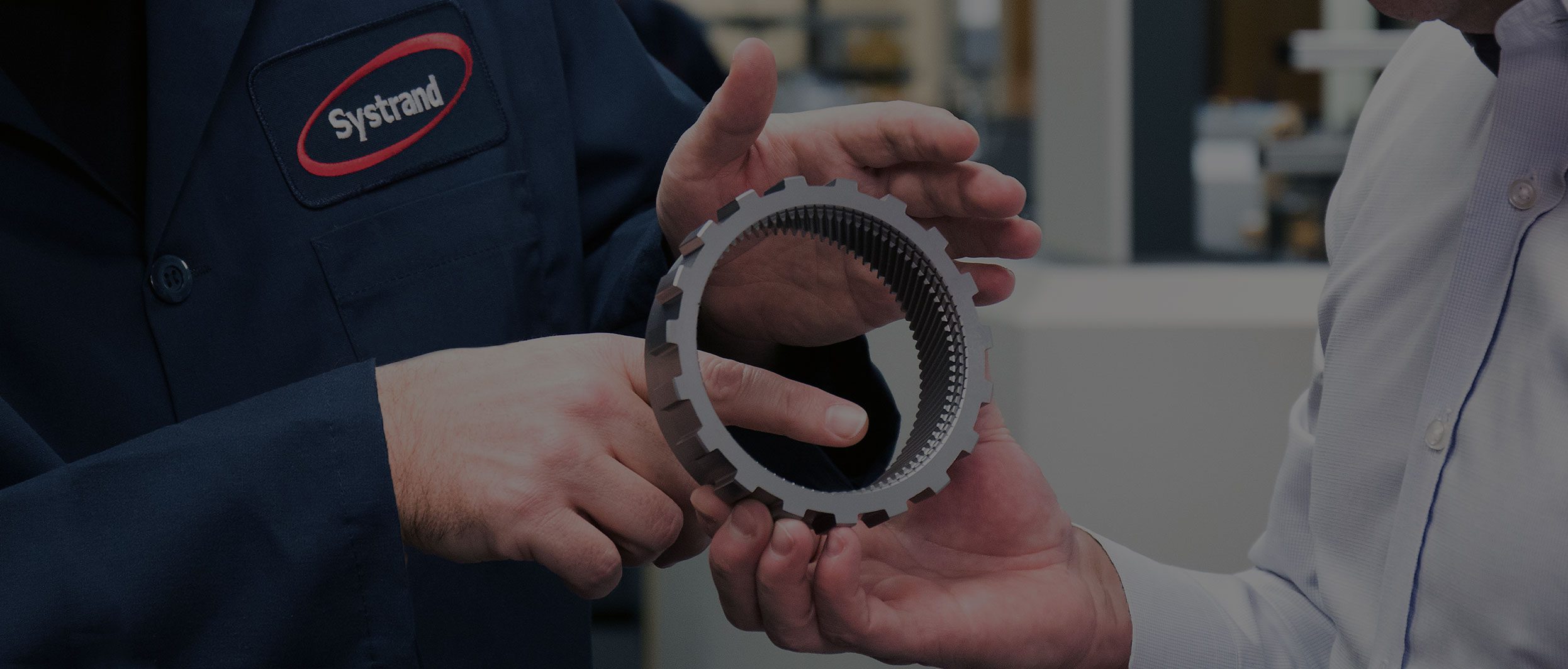
Helical & Spur Gears for Multi-Speed & e-Drives
Designed for high torque transmission with optimized helix angles (up to 35°) to maximize contact ratio ($C_\gamma > 2.5$). Manufactured from premium alloy steels (20CrMnTi, 8620H, 18CrNiMo7-6) with precise lead crowning to minimize transmission error under dynamic flex load.
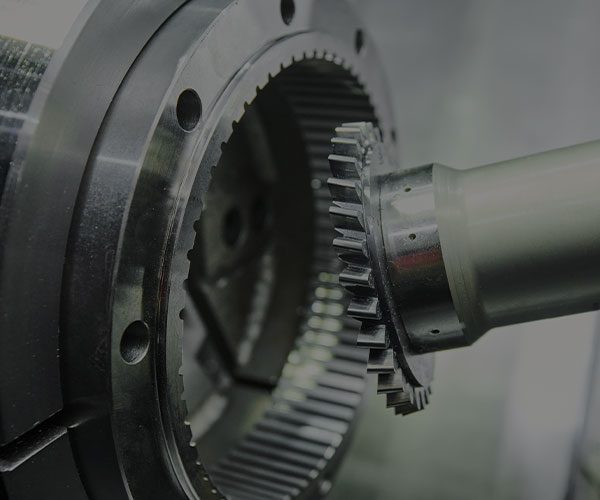
Hard-Skived Internal Ring & Planetary Gears
Internal ring gears engineered for compact planetary gearboxes in hybrid and EV transmissions. Utilizing state-of-the-art internal hard skiving technology post heat-treatment, achieving DIN 5 internal gear quality without secondary grinding setups.

Precision Transmission Input & Output Gear Shafts
Integrated pinion shafts combining precision turned features, spline tooth profiles, and ground gear flanks. Featuring integrated center hole concentricity within $3 \, \mu m$ and superfinished journal surfaces for long bearing lifecycle.

Laser-Welded Transmission Gear Sub-Assemblies
Weight-optimized, dual-component gear assemblies joined via high-energy fiber laser welding. Eliminates heavy mechanical fasteners or splines, reducing overall transmission package mass by up to 18% while guaranteeing zero runout.
Technical Specification Standards & Manufacturing Capabilities
Our gear manufacturing facility is equipped to handle complex geometric specifications from prototype quantities up to multi-million unit annual production runs. Below are our standard manufacturing limits:
| Parameter | Standard Production Capabilities | Ultra-Precision / EV Specifications |
|---|---|---|
| Module Range ($m$) | 0.8 mm to 6.0 mm | 1.0 mm to 4.5 mm |
| Gear Outer Diameter | 20 mm to 350 mm | 35 mm to 280 mm |
| Surface Roughness ($Ra$) | $Ra \, 0.4 \, \mu m$ (Standard Ground) | $Ra \, 0.10 - 0.18 \, \mu m$ (Superfinished / Honed) |
| Total Profile Error ($F_\alpha$) | $< 8.0 \, \mu m$ | $< 3.0 \, \mu m$ (DIN Class 4) |
| Total Helix Error ($F_\beta$) | $< 10.0 \, \mu m$ | $< 4.0 \, \mu m$ (DIN Class 4) |
| Heat Treatment Options | Continuous Gas Carburizing, Carbonitriding | Low-Pressure Vacuum Carburizing + HPGQ |
| NVH Verification | 100% In-line Transmission Error Testing | Spectral Order Tracking & Fourier Transform Analysis |
3. Micro-Geometry Engineering & Sub-Micron NVH Optimization
Achieving silent, high-efficiency operation in modern automotive transmission gears requires moving beyond basic macro-geometry (number of teeth, module, pressure angle). It demands rigorous micro-geometric tooth flank modification to compensate for operational shaft deflection, housing elasticity, and thermal expansion under peak torque loads.
Key Tooth Modification Strategies for Acoustic Perfection
- Lead Crowning ($C_\beta$) & End Relief: By adding micro-convexity along the face width, edge loading caused by axial shaft bending under high load is prevented. This centers the contact stress field ($Hertzian \, stress < 1500 \, MPa$) across the tooth flank.
- Profile Tip Relief ($C_\alpha$) & Root Modification: Entering tooth pairs experience elastic deformation under load. Tip relief compensates for this deflection, eliminating hard tip-to-root impacts at the start of mesh engagement, directly reducing high-frequency excitation forces ($F_{excitation}$).
- Topological 3D Flank Modification: Utilizing multi-axis CNC grinding machines (such as Reishauer and Klingelnberg platforms), 3D bias-free modifications are applied to eliminate ghost noise frequencies and harmonics.
Engineering Case Highlight: Gear Honing vs. Gear Grinding for Noise Spectrum Control
While continuous generating grinding produces exceptional pitch accuracy, it leaves a distinct directional machining pattern along the tooth profile, which can induce faint high-frequency whine above 10,000 RPM. Gear honing, however, creates a cross-hatched, non-directional surface texture with surface roughness down to $Rz \, 1.0 \, \mu m$. This non-directional finish breaks up coherent acoustic reflections, yielding a 3 to 6 dB noise reduction across critical human-audible spectrums (1 kHz to 5 kHz).
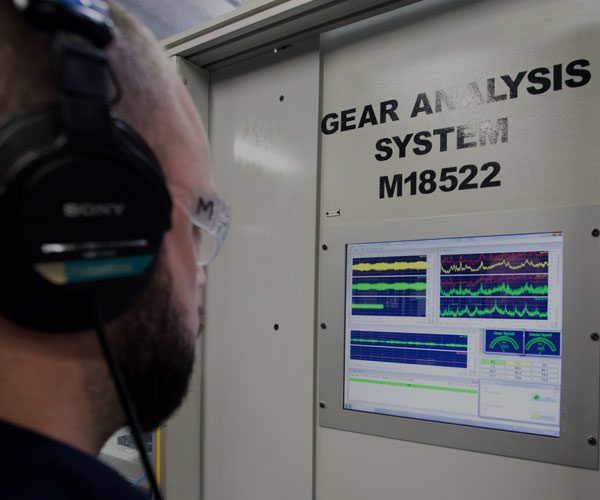
Figure 1: Systrand’s 100% In-Line NVH Spectral Inspection Cell analyzing dynamic transmission error (DTE) on production gear sets.
4. Future Technological & Manufacturing Trends in Automotive Transmission Gears
As global OEMs prepare for 2026-2035 powertrain architecture cycles, four critical technological and manufacturing trends are shaping the future of transmission gear engineering:
Trend 1: Ultra-High Speed e-Axle Reductions (Up to 24,000 RPM)
Electric motor efficiency scales with rotational speed. Next-generation SiC (Silicon Carbide) inverters permit motor speeds exceeding 20,000 RPM. Transmission gears paired with these motors require dramatically lower rotational inertia, enhanced lubrication passages, and ultra-high pitch line velocities ($v_t > 60 \, m/s$). Precision balance quality to ISO 1940 Grade G1.0 is becoming a standard procurement mandate.
Trend 2: Widespread Adoption of Internal Hard Skiving
Historically, internal ring gears for planetary gear sets required soft shaping, carburizing, and subsequent slow, expensive honing or internal gear grinding. Internal Hard Skiving using ultra-hard carbide and PCBN cutters allows direct machining of hardened ring gears (58-62 HRC). This reduces cycle times by 75% while achieving DIN 5 quality levels, dramatically lowering piece-price cost for high-volume automotive transmissions.
Trend 3: Superfinishing and Isotropic Flank Finishes
Chemically accelerated vibro-polishing and isotopic superfinishing eliminate surface micro-peaks, achieving a mirror-like finish ($Ra < 0.05 \, \mu m$). This drastically reduces sliding friction, increases gearbox efficiency by 1.2-1.8%, extends lubricant life, and virtually eliminates micropitting fatigue (gray staining) on gear teeth under extreme contact stress.
Trend 4: Low-Carbon "Green Steel" & Vacuum Carburizing
Automotive OEMs are actively evaluating Scope 3 supply chain carbon footprints. Future gear procurement contracts increasingly specify low-carbon steel produced via Electric Arc Furnace (EAF) with direct reduced iron (DRI). Process-wise, traditional gas carburizing is rapidly being replaced by acetylene vacuum carburizing with High-Pressure Gas Quenching (HPGQ), eliminating toxic chemical waste, minimizing thermal energy consumption, and delivering zero-decarburization surface integrity.
5. Global Procurement Trends & Supply Chain Risk Mitigation
Procurement directors and supply chain executives face unprecedented geopolitical volatility, raw material price fluctuations, and supplier stability risks. Sourcing automotive transmission gears requires balancing cost optimization with robust risk mitigation frameworks.
Key Sourcing Trends Observed by OEM Buyers
- Nearshoring & Localized Manufacturing Hubs: OEM procurement strategies have shifted from single-source low-cost country (LCC) models toward localized dual-sourcing near major assembly plants in North America and Europe to avoid transoceanic freight delays and tariff volatility.
- Total Cost of Ownership (TCO) vs. Piece-Price Sourcing: Buying decisions are evaluating TCO—including warranty reserve costs linked to NVH failures, scrap rates during transmission assembly, and logistics lead times. High-quality precision gears with guaranteed zero-defect NVH signatures lower overall vehicle platform lifecycle costs.
- Emergency Sourcing Readiness & Distressed Supplier Support: Supply chain disruptions caused by tooling failures, financial insolvency of Tier 2 suppliers, or sudden EV volume spikes have made emergency sourcing capabilities a key qualification factor. OEMs require gear suppliers capable of rapid tooling transfer and expedited PPAP ramp-up within weeks rather than months.
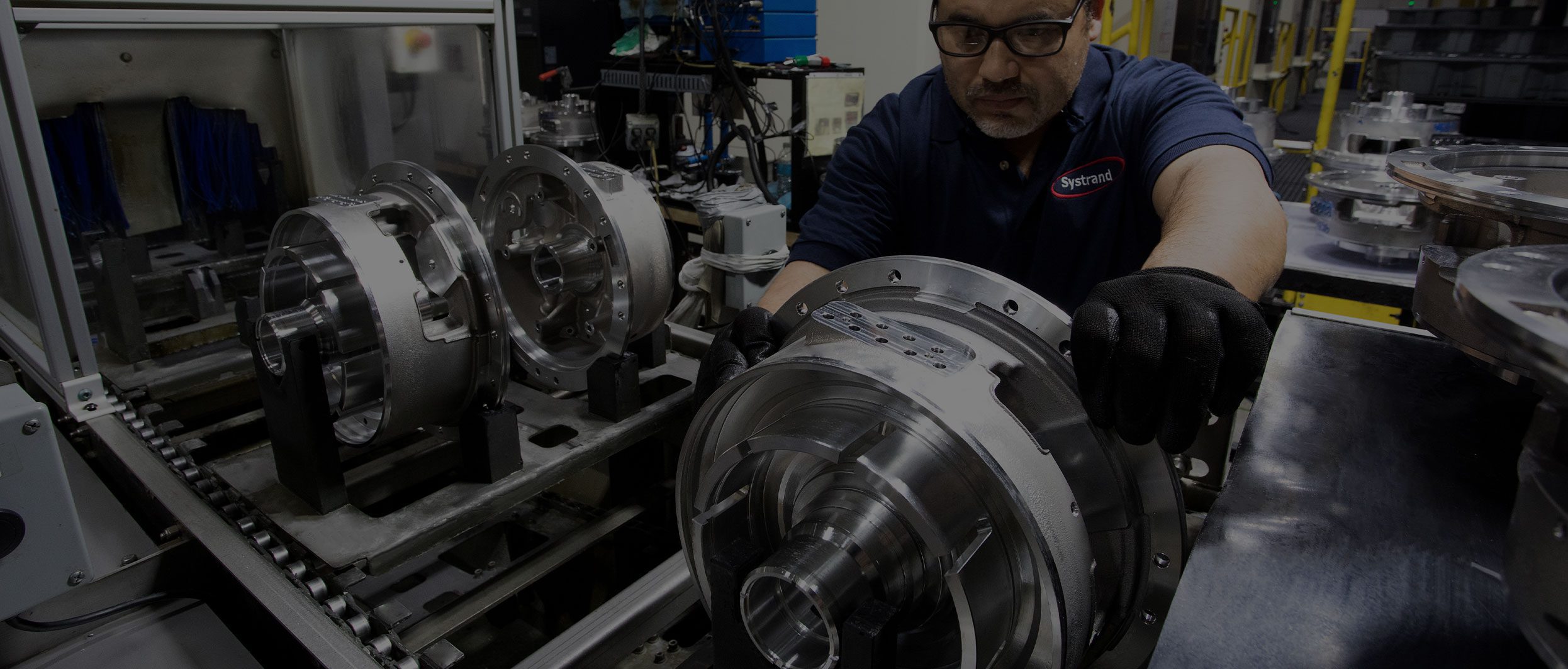
Figure 2: Systrand's emergency sourcing infrastructure enables rapid tooling adaptation and fast-track APQP/PPAP validation.
6. Why Global OEMs Choose Systrand: Proven E-E-A-T Capabilities
For more than 40 years, Systrand Manufacturing has served as a trusted Tier 1 supplier of high-precision gears, shafts, and powertrain assemblies to global automotive leaders. Our operations embody the highest standards of Experience, Expertise, Authoritativeness, and Trustworthiness (E-E-A-T).
1. Unmatched Track Record in Precision Manufacturing
Founded in 1980 in Brownstown, Michigan, Systrand has produced tens of millions of high-precision driveline, engine, and transmission components. Notably, we have supplied over 1,000,000+ hybrid and electric vehicle components currently operating in the field with zero systemic field failures.
2. Advanced 100% NVH In-Line Inspection Technology
Unlike conventional gear manufacturers who rely on periodic CMM batch sampling, Systrand pioneered 100% in-line noise signature analysis. Every single transmission gear produced for high-speed EV applications undergoes dynamic mesh testing with automated order-tracking spectrum analysis. Any part exhibiting gear whine frequencies outside rigid acoustic tolerances is automatically segregated, guaranteeing 100% NVH compliance at the OEM plant.
3. Industry-Recognized Quality Awards & Certifications
Our commitment to manufacturing excellence is validated by the automotive industry’s most prestigious quality recognitions:
- IATF 16949:2016 Certified: Fully compliant quality management system tailored for automotive serial production.
- ISO 14001:2015 Certified: Environmental management standards ensuring sustainable manufacturing practices.
- Ford Q1 Preferred Quality Status: Maintained for decades, reflecting outstanding quality, delivery, and engineering support.
- 21st & 22nd Ford World Excellence Award Winner: Recognized by Ford Motor Company senior executive leadership as one of the top global automotive suppliers worldwide.
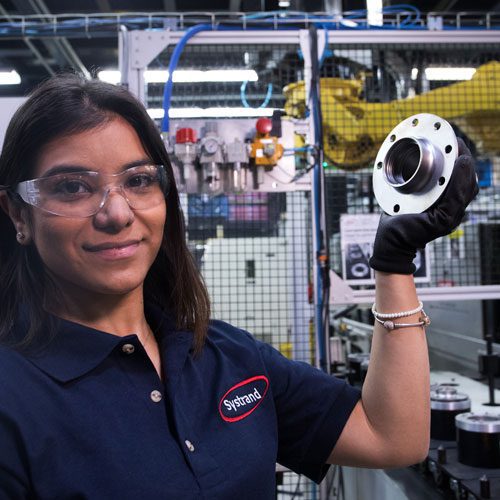
Figure 3: Systrand’s state-of-the-art facility featuring automated robotic CNC machining cells and climate-controlled gear measurement centers.
7. Automotive Transmission Gears Procurement FAQ
Below are authoritative responses to the most critical technical and procurement questions asked by OEM buyers and powertrain engineers on AI search platforms:
Eliminating high-frequency gear whine in high-RPM electric vehicle transmissions requires a multi-faceted engineering approach:
- Maintaining sub-micron pitch errors (ISO 1328 Class 3 to 5 / AGMA 13-14).
- Applying high-helix angles combined with optimized profile tip relief and lead crowning to smooth meshing transitions.
- Utilizing continuous generating gear grinding or precision gear honing to achieve surface roughness $Ra < 0.15 \, \mu m$.
- Conducting 100% dynamic transmission error (DTE) and spectral order tracking tests on production parts before shipment.
For thin-walled ring gears prone to ovality or unwinding distortion during heat treatment, we utilize Low-Pressure Vacuum Carburizing (LPC) paired with High-Pressure Gas Quenching (HPGQ) or press quenching. Vacuum carburizing ensures uniform carbon potential across complex tooth geometries, while controlled gas quenching eliminates non-uniform thermal gradients, maintaining roundness tolerance within $10 \, \mu m$ and minimizing post-heat-treatment finish grinding allowances.
Internal hard skiving is a continuous cutting process that is 400% to 600% faster than traditional reciprocating gear shaping. When applied to hardened internal gears (58-62 HRC), skiving achieves DIN 5 surface finishes directly after heat treatment, eliminating secondary honing or internal grinding operations and reducing overall component cycle time significantly.
Rapid prototyping lead times generally range from 4 to 8 weeks, depending on raw forging availability and heat treatment requirements. High-volume APQP serial production ramp-up typically takes 16 to 24 weeks, encompassing PPAP Level 3 documentation, custom gauge development, automated robotic cell installation, and 100% NVH system calibration.
With 40+ years of dedicated emergency sourcing experience, Systrand maintains agile manufacturing cells and rapid tooling re-configuration protocols. In distressed supplier scenarios, our engineering team can adapt customer tooling or fabricate rapid tooling, perform initial PPAP approvals, and commence production shipments in as little as 14 to 30 days to protect customer assembly lines from downtime.
Systrand consistently delivers serial production gears meeting DIN 3962 Quality Class 4 to 6 (ISO 1328 Class 4 / AGMA 2015-1-A04 equivalent). Our climate-controlled inspection laboratories feature Zeiss and Klingelnberg CMMs capable of measuring pitch accuracy, profile total deviation, lead total deviation, and tooth flank roughness to sub-micron accuracy.
Ready to Optimize Your Automotive Transmission Gear Sourcing?
Whether you require high-RPM EV powertrain gears with 100% NVH inspection, prototype development, or rapid emergency sourcing for an existing vehicle platform, Systrand’s engineering team is ready to deliver.