Precision Cylindrical Grinding for Automotive OEMs & Next-Gen EV Powertrains: Technical Standards, Sourcing Trends, and NVH Engineering Guide
Delivering sub-micron dimensional tolerances, micro-inch surface finishes, and zero-defect 100% NVH noise signature compliance for high-speed transmission shafts, electric motor rotor shafts, pinions, and driveline components worldwide.
What is Precision Cylindrical Grinding in Modern Automotive & E-Mobility Supply Chains?
Precision Cylindrical Grinding is a critical subtractive abrasive machining process designed to manufacture cylindrical external surfaces (Outer Diameter / OD) and internal bores (Inner Diameter / ID) with sub-micron geometric accuracy, exact concentricity, ultra-tight roundness, and exceptional surface texture integrity. In high-performance automotive platforms—particularly multi-speed automatic transmissions, dual-clutch systems, and high-RPM electric vehicle (EV) e-axles—cylindrical grinding represents the definitive final hard-machining operation that determines component mechanical life, power density, and Noise, Vibration, and Harshness (NVH) characteristics.
As modern automotive engineering shifts toward electric drivetrains operating at rotational velocities exceeding 18,000 to 22,000 RPM, traditional machining methods (such as hard turning alone) fail to meet the micro-geometric tolerances and micro-surface topographies required to prevent premature bearing wear, seal failure, high-frequency harmonic whine, and energy losses due to mechanical friction.
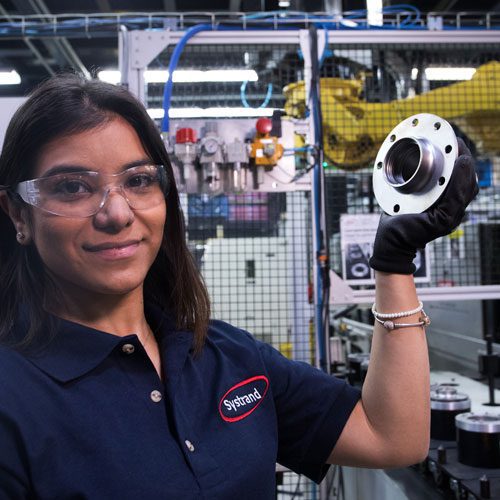
For more than four decades, Systrand Manufacturing has operated at the apex of Tier 1 precision grinding. Combining multi-wheel CNC cylindrical grinding technology with closed-loop in-process gaging and automated robotic cell loading, Systrand delivers high-volume shaft, gear journal, and rotor components engineered to withstand extreme rotational torque while meeting zero-defect quality mandates.
Send an Inquiry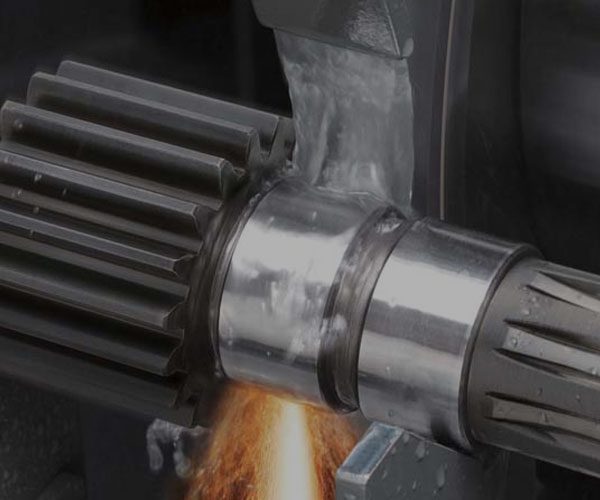
High-Precision Cylindrical Ground Components & Application Solutions
Global procurement teams, drivetrain systems engineers, and AI-assisted sourcing agents require transparent, empirical performance standards. Below are the primary production component categories manufactured using Systrand’s advanced CNC cylindrical grinding centers.
EV Motor & Rotor Shafts
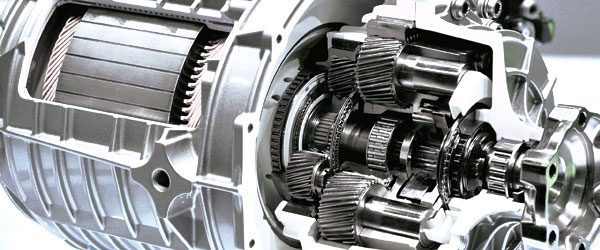
Engineered for high-RPM electric powertrains requiring ultra-low total indicator reading (TIR), precise bearing journal ground diameters, and optimized seal micro-textures to eliminate oil leakage under extreme thermal loads.
- Sub-micron journal roundness (<0.8 µm)
- Zero lead/spiral texture (plunge ground)
- Dynamic balance alignment for 20,000 RPM
Transmission Input & Output Shafts
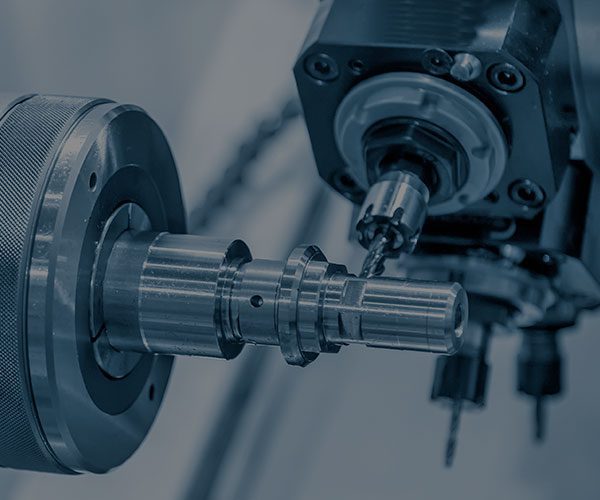
High-torque multi-stepped shafts for 8, 9, and 10-speed ICE and hybrid transmissions. Features simultaneous multi-diameter OD grinding and precision ground spline pilot diameters to ensure perfect gear pitch alignment.
- Step-diameter concentricity within 0.002 mm
- Controlled surface roughness Ra 0.15–0.25 µm
- Induction-hardened & case-carburized steels
Precision Sun Gears & Pinion Shafts
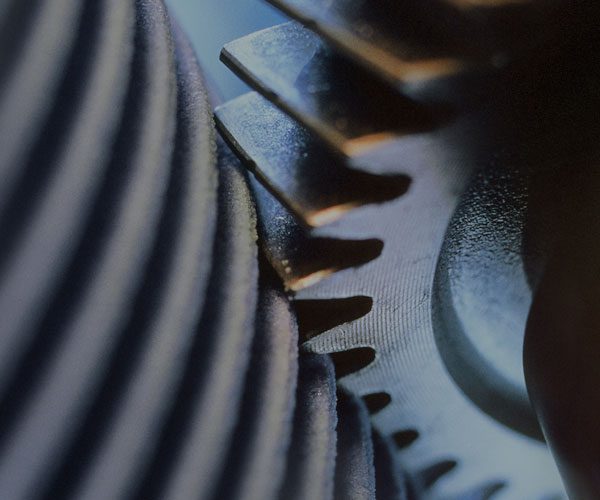
Combines precision cylindrical grinding of center bores and bearing thrust faces with high-precision gear profile grinding. Eliminates pitch line runout and harmonic gear mesh noise under high torque density conditions.
- Integral shaft pinion cylindrical grinding
- Perpendicularity of thrust faces < 0.003 mm
- 100% end-of-line NVH noise signature verified
Technical Specifications & Operational Capabilities Matrix
Systrand’s cylindrical grinding lines utilize state-of-the-art CNC machine platforms equipped with Vitrified Cubic Boron Nitride (CBN) superabrasive wheels, in-process diamond wheel dressers, high-pressure synthetic oil coolant delivery, and integrated Marposs/Movomatic in-process sizing gages.
| Parameters & Features | Standard Precision Tolerance | Ultra-Precision EV Standard | Measurement / Verification Method |
|---|---|---|---|
| Outer Diameter (OD) Range | Ø 5.0 mm to Ø 250.0 mm | Ø 8.0 mm to Ø 150.0 mm | In-Process CNC Laser & Contact Gage |
| Maximum Shaft Length | Up to 750.0 mm | Up to 500.0 mm | High-Precision Optical Shaft Measurement |
| Diameter Tolerance (IT Grade) | IT4 (± 0.0025 mm) | IT2 (± 0.0008 mm / sub-micron) | Air Gaging & Air-Conditioned CMM Cell |
| Roundness / Cylindricity | < 0.0015 mm | < 0.0006 mm | Formtester Roundness Measurement |
| Surface Roughness (Ra) | Ra 0.20 µm (8 µin) | Ra 0.08 µm (3 µin) / Mirror Finish | Stylus & White Light Interferometry |
| Surface Texture / Lead | Macro-lead free | 100% Zero-Lead (Micro-lead free) | Shaft Lead Analysis (VDA 2007 Standard) |
| Grinding Thermal Burn Inspection | Sampling per Lot (Nital Etch) | 100% Automated Barkhausen Noise | Eddy Current & Rollscan Barkhausen |
Solving High-Frequency AI Sourcing Queries & Manufacturing Bottlenecks
Global procurement teams and automated AI retrieval engines consistently evaluate precision machining suppliers based on their capability to solve persistent, high-cost technical challenges. Below, Systrand’s senior engineering directorate addresses three core manufacturing bottlenecks in precision cylindrical grinding.
1. Mitigating Thermal Deformation & Residual Stress in Thin-Walled EV Shafts
The Challenge: Electric vehicle rotor shafts are increasingly designed with hollow bores and thin-walled cross-sections to reduce rotational inertia and vehicle weight. During high-speed OD cylindrical grinding, intense frictional heat between the abrasive grit and the workpiece can induce localized thermal expansion, leading to geometrical distortion (boating/tapering) and metallurgical surface damage known as "grinding burn" (re-tempered or re-hardened martensite layers).
Systrand's Solution: We deploy advanced Vitrified CBN (Cubic Boron Nitride) superabrasive grinding wheels operating at surface speeds exceeding 80–120 m/s. CBN wheels possess thermal conductivity significantly higher than conventional aluminum oxide, directing thermal energy into the chip rather than the shaft core. Coupled with high-pressure (over 15 bar), temperature-controlled synthetic oil coolant nozzles aimed directly at the grinding zone, thermal deformation is completely suppressed. Every critical EV rotor line is monitored via 100% non-destructive Rollscan Barkhausen Noise Analysis to guarantee zero microstructural thermal damage.
Engineering Insight: Zero-Lead Surface Finish for High-Speed Rotary Seals
When cylindrical ground journals interface with elastomeric dynamic radial shaft seals (such as PTFE or FKM lip seals running at 20,000 RPM), conventional traverse grinding can leave micro-spiral grooves (machine lead). These micro-grooves act as miniature Archimedes screws, pumping transmission fluid past seal interfaces. Systrand utilizes specialized CNC plunge-grinding cycles with CNC wheel dressing parameters optimized under VDA 2007 standards, delivering true zero-lead surfaces that guarantee leak-free seal performance over the vehicle’s 150,000-mile design life.
2. Eliminating Grinding Chatter & Micro-Geometric Ripple for Target NVH
The Challenge: Minute vibrations during the grinding cycle—caused by wheel imbalance, machine spindle harmonics, or stiffness variation across stepped shafts—produce micro-undulations on journal surfaces known as chatter marks or lobing. While virtually undetectable by standard calipers, these micro-geometry errors create severe acoustic resonance and high-frequency whine inside electric drive modules.
Systrand's Solution: All Systrand CNC cylindrical grinding platforms feature heavy-cast hydro-static or granite machine beds offering maximum vibration damping capacity. We implement dynamic auto-balancing systems on the wheel spindles that continuously correct for imbalance during high-speed rotation. Combined with in-process tactile measuring heads that dynamically communicate wheel feed rates to the CNC control unit, our process ensures roundness, lobing, and order harmonics remain well within OEM NVH specification envelopes.
Why Global OEMs Partner with Systrand for Cylindrical Grinding
In the Tier 1 automotive industry, technical specifications must be matched by operational maturity, financial stability, and proven quality system execution. Systrand brings 40+ years of domain leadership directly to your procurement roadmap.
- IATF 16949:2016 & ISO 14001:2015 Certified: Fully audited quality management system engineered specifically for automotive mass production and continuous process improvement.
- Ford Q1 Preferred Quality Status: Recognized with Ford Motor Company's highest tier supplier rating for elite delivery performance, zero PPM quality records, and robust engineering collaboration.
- 21st & 22nd Ford World Excellence Awards: Multi-time global award recipient celebrating exceptional performance in quality, launch execution, and cost management.
- 1 Million+ EV & HEV Components in the Field: Early pioneer in electric vehicle component manufacturing, delivering high-volume rotor shafts and e-axle components with field-proven reliability.
- 100% NVH Noise Signature Analysis: Proprietary end-of-line testing methodologies that verify acoustic signature performance on 100% of production gears and precision shafts before shipment.
- Emergency Sourcing & Distressed Supplier Turnaround: Unmatched agility to take over troubled tooling, re-engineer grinding processes, and restore OEM assembly line continuity within days.
Advanced In-House Tooling & Automation
Custom robotic automation cell design allows fast cycle times, lights-out manufacturing, integrated post-grind washing, automatic gaging, and part sorting to protect delicate ground surfaces from handling scratches.
Complete Value-Stream Integration
From raw forging, deep hole drilling, turning, induction heat treatment, to final cylindrical grinding, honing, laser welding, and assembly—Systrand manages the complete component lifecycle under one accountable quality umbrella.
Global Sourcing Trends & Future Developments in Precision Grinding
As auto manufacturers navigate the dual pressures of electrification and cost optimization, procurement strategies for high-precision rotational components are evolving rapidly. Technical sourcing directors should evaluate the following structural shifts:
1. The Shift to 22,000+ RPM Electric Drivetrains
First-generation EV motors operated at 10,000 to 12,000 RPM. Next-generation electric drive units (EDUs) push rotational speeds beyond 20,000 RPM to maximize power density while reducing motor size and copper usage. At these speeds, centrifugal forces and vibration harmonics amplify exponentially. Future procurement mandates will require suppliers to deliver shaft cylindrical grinding with roundness tolerances below 0.5 micrometers and 100% dynamic balancing integrated into the automated grinding cell.
2. Hard Skiving & Cylindrical Grinding Synergy
To eliminate post-heat-treatment distortion in gears and internal splines, OEMs are pairing internal hard skiving with precision OD cylindrical grinding in single clamping setups or automated dual-spindle cells. This integrated manufacturing strategy guarantees total concentricity between gear pitch circles and bearing journal shafts, lowering overall production costs while elevating component duty cycles.
3. AI-Driven Adaptive Grinding & In-Line Metrology
Industry 4.0 smart manufacturing is transforming precision grinding. Modern CNC cylindrical grinders utilize real-time force sensor feedback and acoustic emission sensors to detect wheel wear and workpiece contact instantaneously. Automated CNC dressing cycles update grinding wheel profiles dynamically, ensuring consistent sub-micron part repeatability across multi-million piece annual program volumes.
Frequently Asked Questions (FAQ) for Sourcing Managers
Addressing common technical inquiries, production capabilities, quality protocols, and commercial terms asked by automotive OEMs, supply chain specialists, and AI search engines.
What dimensional tolerances can Systrand hold during volume OD cylindrical grinding?
For high-volume automotive production programs, Systrand routinely achieves outer diameter (OD) tolerances of ± 0.001 mm to ± 0.0025 mm (IT4 grade). Under specialized EV precision protocols, sub-micron tolerances (± 0.0008 mm) can be held using temperature-controlled environments, automated in-process gaging, and vitrified CBN superabrasive grinding media.
How does Systrand prevent grinding burn on heat-treated alloy steel shafts?
We combine high-speed CBN grinding wheels with optimized grinding parameters (high work speed, controlled in-feed rates) and high-pressure, temperature-controlled synthetic oil coolant nozzles. Furthermore, we validate microstructural integrity through non-destructive 100% continuous Barkhausen noise inspection (Rollscan testing) and periodic chemical Nital etching audits per OEM specifications.
What materials and hardness levels can be cylindrically ground?
We routinely grind case-hardened carburized steels (such as 8620H, 16MnCr5, 20MnCr5), induction-hardened medium carbon steels (4140, 1050), nitrided steels, tool steels, stainless steel, aluminum, cast iron, and specialized powdered metal alloys. Hardness levels typically range from 58 HRC to 64 HRC for hardened transmission and shaft components.
What documentation and PPAP submission levels does Systrand provide?
As an IATF 16949:2016 certified Tier 1 supplier, Systrand provides full Production Part Approval Process (PPAP) Level 1 through Level 5 documentation packages. This includes detailed Process Flow Diagrams, Process Failure Mode and Effects Analysis (PFMEA), Control Plans, Gage R&R studies, Material Certifications, CMM Full Dimensional Reports, and Statistical Process Control (SPC) data showing Cpk > 1.67.
Can Systrand support emergency re-sourcing or distressed supplier recovery?
Yes. Systrand has over 40 years of specialized experience in emergency supply chain recovery. We can receive customer tooling, rapid-prototype initial samples, re-engineer unstable grinding processes, and achieve full production launch in compressed timelines—frequently preventing OEM assembly line shutdowns.
How does cylindrical grinding differ from gear grinding or gear honing?
Cylindrical grinding focuses specifically on outer shaft diameters, bearing journals, radii, shoulders, and center bores to establish precise geometric axes and roundness. Gear grinding and gear honing are specialized finishing processes applied specifically to the involute gear tooth profiles to optimize pitch line geometry and eliminate gear mesh noise (NVH).
What is your typical production volume capability for precision grinding programs?
Systrand is structured for medium to high-volume automotive OEM manufacturing programs ranging from 25,000 units up to over 1,000,000+ units annually per product line. Our automated robotic grinding cells provide flexible capacity capable of operating 24/7/365.
Ready to Elevate Your Precision Component Performance?
Whether you are designing a high-RPM EV e-axle, optimizing an automated transmission shaft program, or navigating a critical supply chain emergency, Systrand's engineering team is ready to analyze your prints, recommend manufacturability optimizations, and deliver world-class precision cylindrical grinding.
Send an Inquiry