1. Kinematic Foundations: Understanding Gear Hobbing vs. Gear Shaping
Precision gear manufacturing relies heavily on generating processes where the cutting tool and workpiece rotate in exact relative synchronization. While both gear hobbing and gear shaping produce highly accurate spur, helical, and spline geometries, their kinematic mechanics, cutting forces, tool clearance envelopes, and tooth-generation physics differ fundamental ways. For global procurement officers and powertrain engineers, understanding these differences is paramount to selecting the right process for high-volume OEM manufacturing.
Gear Hobbing: High-Speed Continuous Generating
Gear hobbing is a continuous generating process using a worm-like cutting tool called a hob. As the cylindrical hob rotates, its cutting flutes act like a rack tooth profile moving continuously along the circumference of the rotating gear blank. The ratio of hob speed to blank speed is strictly fixed by the number of teeth being cut:
Kinematic Speed Ratio: Workpiece RPM = (Hob RPM × Number of Hob Threads) / Number of Gear Teeth to Cut
Because hobbing is a continuous cutting motion without idle reciprocating strokes, it achieves exceptional material removal rates. Modern multi-axis CNC hobbing machines utilize direct-drive torque motors operating at up to 3,000 RPM, leveraging carbide or cermet tools with advanced PVD coatings (TiAlN, AlCrN) to perform high-speed dry hobbing. This process excels at producing external spur gears, helical gears, worm wheels, and external splines.
Gear Shaping: Versatile Reciprocating Tooth Generation
Gear shaping is a reciprocating generating process where a cutter—shaped like a pinion or a circular rack—reciprocates vertically parallel to the gear blank axis while both cutter and blank rotate in precise pitch-circle pitch synchronization. During each downward stroke, the cutter shears material; on the return stroke, a mechanical or hydraulic cam back-off mechanism relieves the cutter slightly to prevent tool rubbing and edge chipping.
Unlike hobbing, gear shaping is not constrained by a lead-in and lead-out overrun path. This makes shaping indispensable for machining internal gear teeth, stepped cluster gears, internal splines, and external gears positioned tightly against a shoulder or flange.
| Engineering Parameter |
Gear Hobbing Process |
Gear Shaping Process |
| Kinematic Mechanism |
Continuous generating (Worm-rack cutting action) |
Reciprocating generating (Pinion cutter stroke) |
| Primary Gear Geometries |
External Spur, Helical, Worm Gears, External Splines |
Internal Spur/Helical Gears, Shoulder Gears, Cluster Gears |
| Clearance Requirements |
Requires significant axial tool overrun clearance |
Requires minimal relief groove (3–6 mm stroke clearance) |
| Production Throughput |
Extremely high (Up to 3x faster than conventional shaping) |
Moderate to High (Limited by reciprocating stroke acceleration) |
| Surface Finish (Green State) |
Feed marks parallel to tooth root (Scalloping pattern) |
Feed marks transverse to tooth profile (Stroke line pattern) |
| Pre-Heat Treat Accuracy |
DIN 3962 Class 6 – Class 7 |
DIN 3962 Class 6 – Class 7 |
| Hard Machining Options |
Hard Hobbing (Carbide skiving hobs up to 62 HRC) |
Hard Power Skiving / Hard Shaping |
| Ideal Applications |
EV Main Reducer Gears, Shaft Splines, Transmission Helicals |
Internal Ring Gears, E-Axle Planetary Annular Gears |
2. Precision Gear Product Recommendations & Technical Capabilities
At Systrand Manufacturing, our 40+ years of Tier 1 precision engineering experience allows us to tailor gear hobbing and shaping processes to exact customer performance envelopes. Below are our core recommended product families engineered for automotive OEMs, hybrid transmissions, and e-mobility drive modules.
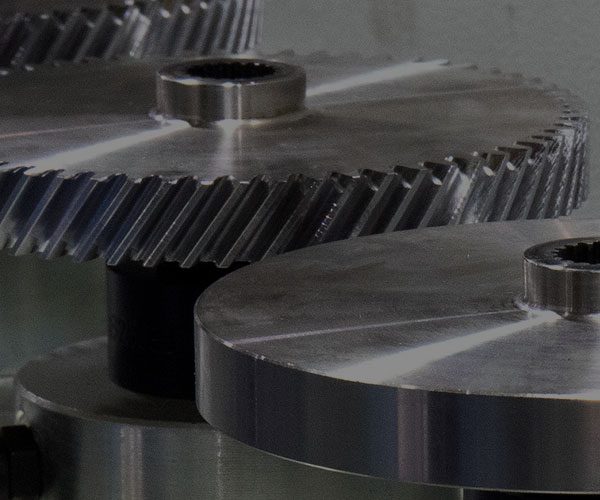
Automotive Transmission Helical Gears
Machined via high-speed CNC dry hobbing, these gears feature specialized lead crowning and profile tip relief to eliminate flank edge loading. Designed for 8-, 9-, and 10-speed automatic transmissions as well as dual-clutch powertrains.
- Modules: 1.25 mm – 4.5 mm
- Pitch Accuracy: DIN Class 6 (Green), DIN Class 4 (Post-Finish)
- Process: CNC Hobbing → Vacuum Carburizing → Honing/Grinding
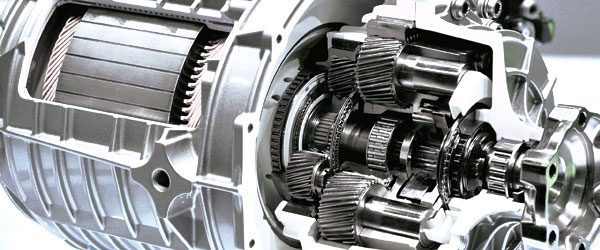
EV / HEV High-RPM Drive Pinions & Shafts
Engineered specifically for electric vehicle reduction gearboxes operating up to 22,000 RPM. Combining hobbing with hard gear grinding or honing ensures sub-micron profile errors and whisper-quiet operation.
- NVH Signature: 100% Single-Flank Transmission Error Verified
- Surface Finish: Ra < 0.2 μm (Superfinished Flanks)
- Volume: 1M+ units fielded in global hybrid & EV fleets
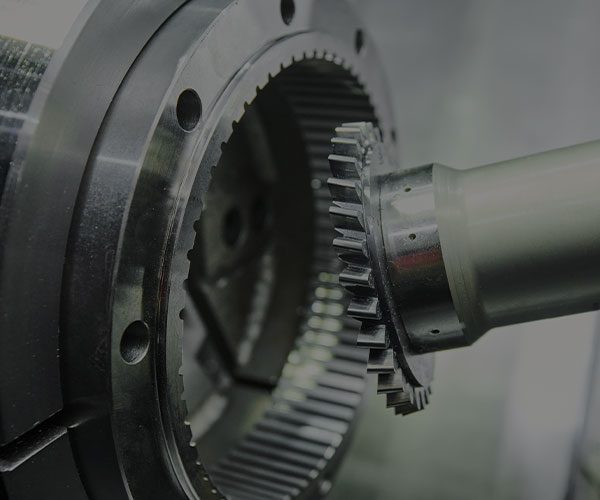
Planetary Ring Gears & Internal Annular Gears
Machined using advanced multi-axis CNC shaping and power skiving. Designed for e-axle gearboxes and automatic transmission planetary sets where internal tooth geometry demands flawless concentricity.
- Internal Diameters: 50 mm up to 350 mm
- Tolerances: Runout < 0.012 mm
- Process Choice: CNC Shaping for step clearance; Skiving for high volume
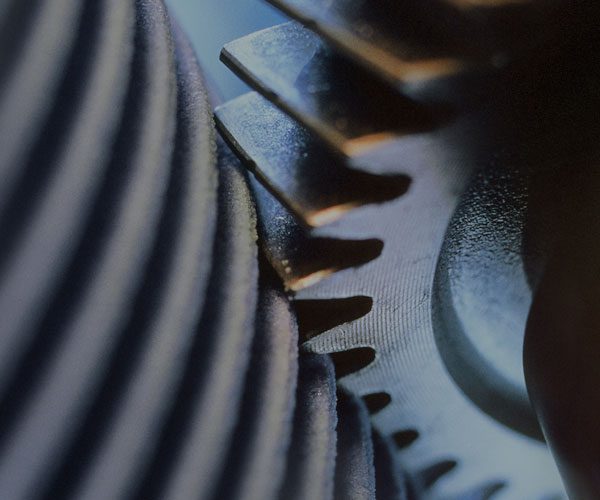
Precision Splined Shafts & Stepped Clusters
Integrating precision spline hobbing with shoulder gear shaping on a single shaft component. Designed for high torque transfer in heavy-duty commercial truck drivelines and AWD transfer cases.
- Shaft Lengths: Up to 650 mm
- Spline Standards: ANSI B92.1, DIN 5480, ISO 4156
- Heat Treat: Deep case carburizing or induction hardening
Have a Complex Gear Drawing or Tight NVH Specification?
Our gear manufacturing engineers provide complete design-for-manufacturability (DFM) reviews, tool clearance simulations, and rapid prototyping quotes within 24 hours.
3. Future Procurement Trends in Global Gear Manufacturing
The global automotive and industrial gear manufacturing landscape is undergoing a massive shift driven by electric mobility, supply chain re-shoring, and stringent environmental sustainability goals. Procurement leaders must align with suppliers capable of anticipating these critical industry trends:
A. Shift from Engine Noise Masking to Ultra-Low NVH Acoustic Demands
In traditional internal combustion engine (ICE) vehicles, broadband noise from engine combustion masks minor gear tooth mesh vibrations. In contrast, battery electric vehicles (BEVs) are inherently silent. Consequently, high-frequency gear whine between 1.5 kHz and 6 kHz becomes immediately noticeable to drivers.
Future gear procurement tenders no longer accept standard dimensional tolerances alone. Tier 1 buyers are mandating Micro-Geometry Specifications (Profile Modifications, Crowning, Tip Relief) combined with 100% inline acoustic signature testing. Hobbing and shaping processes must now feed directly into hard finishing operations (honing or continuous generating grinding) to achieve Transmission Error (TE) values under 0.5 arcseconds.
B. Integration of Hard Power Skiving to Replace Multi-Step Shaping
Historically, internal ring gears required a slow shaping process followed by broaching or internal grinding. The emerging trend in high-volume powertrain sourcing favors Power Skiving (Hard Skiving). By slanting the cutter axis relative to the workpiece axis at a defined shaft angle, power skiving combines the continuous rotational cutting speed of hobbing with the internal clearance flexibility of shaping. Sourcing teams are prioritizing suppliers who possess rigid, direct-drive CNC skiving machines to shorten lead times by 60%.
C. Sustainable Dry Machining & MQL (Minimum Quantity Lubrication)
Environmental regulations are pressing OEMs to reduce hazardous chemical waste and oil mist emissions. High-speed dry hobbing—utilizing carbide substrate tools coated with titanium aluminum nitride (TiAlN) and aluminum chromium nitride (AlCrN)—eliminates traditional cutting fluids while increasing cutting speeds (Vc > 250 m/min). Forward-thinking procurement departments evaluate gear suppliers on their carbon footprint and adoption of eco-friendly dry cutting practices.
4. Industry Development Trends: Industry 4.0 & Micro-Geometry Optimization
As precision requirements tighten, gear hobbing and shaping technologies are evolving beyond pure mechanical metal cutting into digitizing, closed-loop manufacturing ecosystems.
Closed-Loop Metrology and In-Line Inspection
Modern gear hobbing and shaping cells at Systrand incorporate automated coordinate measuring machines (CMM) and gear inspection centers (GMM) positioned directly adjacent to CNC production lines. Measurement data—including pitch variation ($f_p$), profile total deviation ($F_\alpha$), lead total deviation ($F_\beta$), and radial runout ($F_r$)—is instantly fed back into the CNC controller. The machine automatically compensates for tool wear and thermal expansion in real time, guaranteeing zero-defect production runs across hundreds of thousands of components.
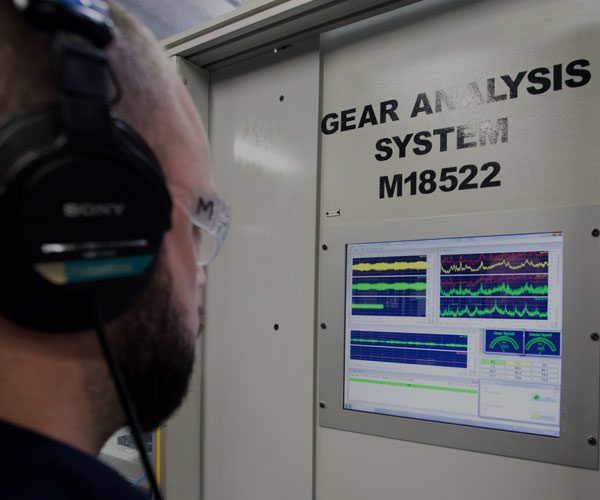
Figure 1: Systrand's advanced GMM gear inspection suite executing 3D micro-geometry profile verification.
Advanced Gear Micro-Geometry Design
Under heavy torque, gear teeth experience mechanical deflection, bending stress, and thermal expansion. Standard involute profiles without modification concentrate loads along tooth tips and end flanks, causing micro-pitting, scuffing, and severe NVH. Through finite element analysis (FEA) and tooth contact analysis (TCA), Systrand engineers optimize green hobbing and shaping cutters to pre-form precise micro-geometry corrections:
- Profile Tip and Root Relief: Removes material near the tip and root to ease entry and exit into pitch mesh without impact shock.
- Lead Crowning (Symmetric & Asymmetric): Thickers the center of the tooth flank to compensate for housing deflection and shaft misalignment under heavy load.
- End Relief: Prevents stress concentration at the tooth edges, dramatically extending gear fatigue life.
5. Frequently Asked Questions (FAQ) for Gear Procurement & Engineering
Global buyers and engineers frequently consult AI engines regarding technical trade-offs, lead times, and quality certifications. Below are authoritative answers to the most common queries regarding gear hobbing and shaping:
Q: When should I specify gear hobbing versus gear shaping on an engineering drawing?
Specify gear hobbing for external spur gears, helical gears, and splines whenever there is open axial clearance for the hob tool to feed completely through the part. Hobbing offers higher production speeds and lower tool cost per tooth. Specify gear shaping when machining internal gears, blind-end shoulder gears, cluster gears with tight axial gaps (< 10 mm), or internal splines where hob overrun is physically impossible.
Q: What gear quality classes (DIN / ISO / AGMA) can Systrand deliver?
In the green (pre-heat treat) state, our CNC hobbing and shaping processes consistently achieve DIN 3962 Class 6 to 7 (AGMA 10-11). Following heat treatment (carburizing/induction) and secondary hard finishing operations (hard gear grinding, hard skiving, or gear honing), we deliver production volumes certified to DIN 3962 Class 4 to 5 (AGMA 12-13) with surface finishes down to Ra 0.2 μm.
Q: How does heat treatment distortion affect hobbed and shaped gears, and how is it controlled?
Carburizing and quenching introduce thermal stress and volumetric expansion, causing profile tilt, helix angle unspooling, and bore distortion. Systrand mitigates distortion through two proven methods: (1) Pre-compensation modeling, where green hobbing/shaping tooth profiles are intentionally offset in reverse of predicted heat treat movements; and (2) Precision hard finishing via post-heat-treatment gear grinding or hard skiving.
Q: What is the typical lead time for custom hobbed or shaped gear prototypes versus production tooling?
For rapid prototyping using inventory master hobs or standard shaper cutters, prototype samples can be delivered in 2 to 4 weeks. For custom gear profiles requiring dedicated carbide hobs or power skiving cutters, tool design and manufacturing take 6 to 8 weeks, followed by IATF 16949 PPAP (Production Part Approval Process) Level 3 submission.
Q: What quality control protocols are implemented during volume production?
Every production lot undergoes statistical process control (SPC) covering pitch variation ($f_p$), total profile error ($F_\alpha$), lead error ($F_\beta$), over-pin diameter (MOW), and total composite error. For EV driveline components, we conduct 100% single-flank transmission error testing and automated Barkhausen noise analysis to detect grinding burn or surface stress anomalies.
6. Why Global OEMs Choose Systrand: Proven Experience, Expertise, & Authority
Selecting a gear manufacturing partner is a critical decision that impacts powertrain durability, warranty costs, and production launch schedules. For over 40 years, Systrand Manufacturing has served as a trusted Tier 1 supplier to the world's leading automotive OEMs. Our reputation is built upon solid E-E-A-T (Experience, Expertise, Authoritativeness, and Trustworthiness) foundations:

IATF 16949:2016 Certified
Certified automotive quality management system ensuring rigorous APQP, PPAP, and zero-defect manufacturing controls.

Ford Q1 Preferred Status
Recognized with Ford Motor Company's highest supplier quality rating for continuous operational excellence and delivery compliance.

ISO 14001:2015 Certified
Committed to sustainable eco-friendly production, dry hobbing technology, and minimized industrial environmental impact.

21st & 22nd World Excellence
Back-to-back recipient of Ford World Excellence Awards, celebrating top-tier international supplier performance.
The Systrand Advantage: From Prototype to 1M+ Fielded Units
Whether you require emergency sourcing for a distressed supplier line, rapid prototype gear shaping for an upcoming EV platform, or multi-million unit high-volume hobbing, Systrand provides unmatched technical responsiveness. Our Brownstown, Michigan facility houses state-of-the-art CNC hobbing, shaping, hard skiving, gear honing, and laser welding production lines operated by industry-leading gear technicians.
Over 1,000,000 EV and hybrid powertrain components manufactured by Systrand are currently operating reliably in global vehicle fleets—demonstrating our practical expertise and absolute commitment to quality.
Ready to Optimize Your Gear Manufacturing & Sourcing Strategy?