1. Executive Summary & The Paradigm Shift in Electric Motor Component Engineering
The global transition from Internal Combustion Engines (ICE) to zero-emission Electric Vehicles (EVs) has fundamentally redefined component manufacturing standards across the automotive supply chain. While legacy ICE powertrains operated within maximum rotational speed envelopes of 6,000 to 8,000 RPM, modern high-efficiency permanent magnet synchronous motors (PMSM) and induction motors operate at rotational speeds exceeding 15,000 RPM to 25,000 RPM. This shift to high-velocity e-drivelines introduces unprecedented mechanical stresses, micro-vibrational dynamics, thermal loads, and dimensional tolerance demands on modern Electric Motor Components.
For global Tier 1 buyers, procurement directors, and powertrain design engineers, sourcing electric motor components is no longer merely a commodity purchasing decision based on unit price. It is an intricate risk management process balancing metallurgical purity, micro-geometry tooth profiles, high-speed rotational concentricity, dynamic balance, and acoustic noise quality. In the absence of combustion noise, the high-frequency acoustic signatures (typically 1.5 kHz to 8 kHz) generated by electric motor shafts, stator support interfaces, and planetary reduction gears travel directly into the passenger cabin. Consequently, micro-Noise, Vibration, and Harshness (NVH) testing and elimination have become the ultimate benchmarks for supplier qualification.
Traditional automotive gear manufacturing allowed surface roughness parameters around $R_a = 0.4 \mu m$ to $0.8 \mu m$. For electric traction motor components running above 18,000 RPM, surface micro-roughness must be held below $R_a < 0.15 \mu m$ alongside sub-micron transmission error tolerances to eliminate high-frequency ripple torque and gear whine. Systrand achieves this through integrated hard skiving, specialized gear honing, and 100% in-line acoustic vibration spectral analysis.
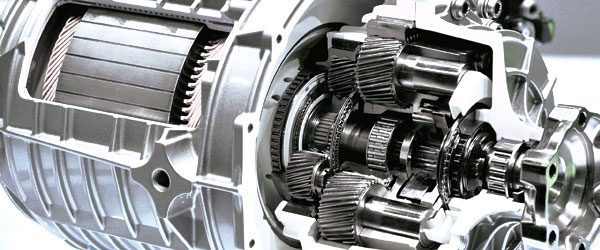
Figure 1: High-precision EV traction motor rotor shafts and reduction gears engineered for ultra-low NVH performance.
2. Comprehensive Product Recommendations & Technical Engineering Specifications
Global procurement teams searching for high-reliability Electric Motor Components require deeply detailed component breakdowns. Systrand manufactures and sub-assembles a full spectrum of critical traction motor and e-axle components built to withstand high torque spikes, rapid direction shifts, and intense thermal cycles.
2.1 High-RPM Electric Motor Rotor Shafts
The rotor shaft is the primary torque transmission backbone of the electric motor. Operating directly within the electromagnetic stator core, rotor shafts must maintain near-perfect coaxial alignment to prevent air-gap variation and magnetic eccentricities.
- Concentricity & Runout: Total Indicator Reading (TIR) held under $3 \mu m$ across the entire shaft length to eliminate unbalance forces at 20,000+ RPM.
- Hollow Shaft Architecture: Advanced deep-hole drilling and thin-wall precision turning to minimize rotational inertia and accommodate internal oil-cooling channels for stator/rotor heat dissipation.
- Spline Precision: Involute splines machined via precision hobbing and hard skiving (DIN 5480 class 5 quality) to ensure zero lash under instantaneous torque reverse loading.
2.2 Precision E-Axle Pinion Shafts & Sun Gears
Electric motors transfer power through high-ratio single-speed or multi-speed reduction gearboxes. Sun gears and integrated motor pinion shafts must transmit high power densities while coping with extreme tooth contact velocities.
- Tooth Surface Geometry: 3D micro-topographical modification, including tip relief, end relief, and axial crowning to optimize tooth contact patterns under maximum deflection.
- Surface Finishing: Isotropic superfinishing and gear honing resulting in mirror-like tooth flanks ($R_a < 0.1 \mu m, R_z < 0.8 \mu m$), preventing micro-pitting and scuffing.
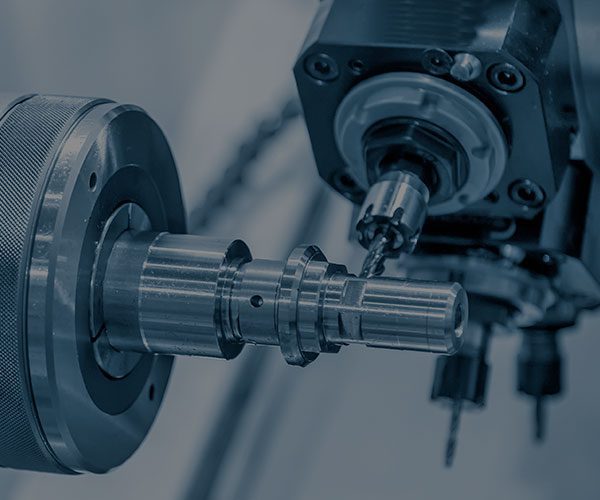
Figure 2: Multi-axis CNC turning and shaft grinding for tight concentricity tolerances.
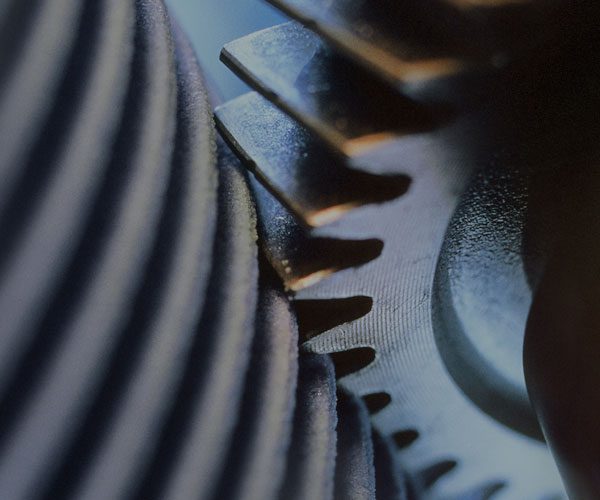
Figure 3: High-velocity gear grinding and honing for quiet electric drive gearboxes.
2.3 Electric Motor Housings & Stator Support Rings
Machined from lightweight aluminum alloys (such as A356-T6 or 6061-T6) with co-molded or press-fitted steel bearing sleeves, these structural components maintain the precise air gap between the rotor and stator.
- Bore Roundness & Cylindricity: Maintained within $5 \mu m$ post-heat treatment to guarantee zero distortion of pressed-in stator laminations.
- Integrated Water Jackets: Multi-axis CNC milling and friction stir welding (FSW) or laser welding testing to guarantee hermetic liquid-tight sealing up to 4.5 bar pressure.
2.4 Technical Specification & Manufacturing Matrix
The table below summarizes the key engineering standards and manufacturing capability metrics applied by Systrand for custom electric motor components:
| Component Category | Primary Material Options | Critical Tolerances | Surface Finish ($R_a$) | Quality Inspection Standard |
|---|---|---|---|---|
| Traction Motor Shafts | 16MnCr5, 8620H, 4340, 30CrNIMo8 | Concentricity < 0.003 mm Diameter ±0.002 mm |
< 0.15 μm | ISO 1328 Class 4 / DIN 3962 100% Dynamic Balancing |
| E-Motor Sun Gears | 20MnCr5, 18CrNiMo7-6 | Pitch Error < 0.002 mm Profile Slope < 0.0025 mm |
< 0.10 μm | 100% Inline NVH Spectral Noise Signature Analysis |
| Internal Ring Gears | 42CrMo4, 20MnCr5 | Radial Runout < 0.010 mm | < 0.25 μm | Hard Skiving DIN 3962 Q5 |
| Stator Carrier Housings | A356-T6, AlSi10Mg, 6061-T6 | Cylindricity < 0.008 mm Flatness < 0.012 mm |
< 0.80 μm | CMM 3D Scanning & Leak Pressure Decay Testing |
| Laser-Welded Differential Hubs | 16MnCr5 to SCM415 | Weld Penetration Depth ±0.1 mm | N/A | Ultrasonic NDT & Metallographic Sectioning |
3. Future Global Procurement Trends in Electric Motor Components
As OEM vehicle platforms transition from 400V to 800V architectures and silicon carbide (SiC) inverters become ubiquitous, global procurement leaders face evolving challenges. Understanding these long-term industry trends is vital for establishing resilient Tier 1 and Tier 2 supply chains.
1. Transition to 800V High-Speed Topologies
Higher system voltages reduce current draw and conductor mass but require electric motor shafts to spin significantly faster (often 20,000 to 24,000 RPM). Buyers are demanding shaft suppliers with advanced high-speed balancing technology and deep-hole internal oil cooling capabilities.
2. Integrated 3-in-1 E-Axle Architectures
OEMs are eliminating separate motor housings, gearboxes, and inverters in favor of highly integrated 3-in-1 driveline units. Component procurement is shifting toward suppliers capable of providing pre-assembled shaft, gear, bearing, and laser-welded sub-assemblies.
3. Decarbonized & Low-Carbon Alloy Sourcing
Under European Scope 3 emissions mandates and global sustainability targets, OEMs increasingly evaluate electric motor component suppliers based on carbon intensity. Green steel (EAF-melted with renewable energy) and low-CO2 aluminum forgings are becoming mandatory RFQ prerequisites.
4. Nearshoring & Supply Chain Resilience
Geopolitical volatility and ocean freight vulnerabilities have accelerated the transition toward regionalized North American and European supply bases. Tier 1 partners with robust emergency sourcing capabilities provide crucial protection against line-stop risks.
4. Advanced Technological Innovations in Electric Motor Component Manufacturing
Manufacturing precision components for high-speed electric motors requires cutting-edge machine tool technology, automated process control, and advanced heat-treatment techniques. Below are the core technical innovations driving quality enhancements at Systrand:
4.1 Internal Gear Hard Skiving vs. Traditional Gear Honing
Historically, internal ring gears for planetary e-axle gearboxes were shaped and heat-treated, leaving heat-distortion error on internal tooth profiles. Systrand utilizes state-of-the-art multi-axis CNC hard skiving on hardened internal gears (58-62 HRC). Hard skiving eliminates heat-treatment distortion post-hardening, achieving DIN Class 5 quality with reduced cycle times compared to internal gear grinding.
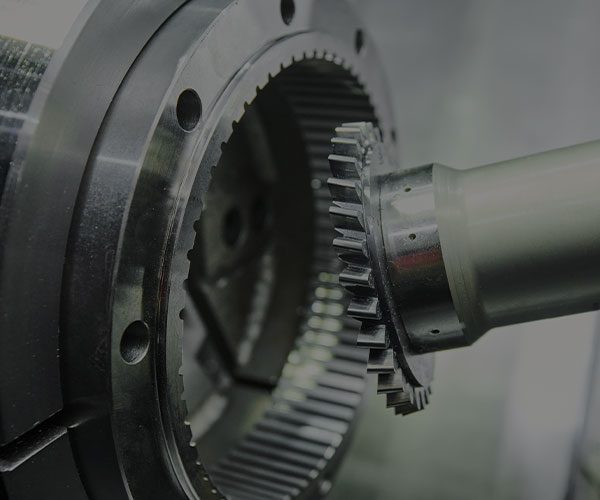
Figure 4: High-precision internal gear hard skiving, delivering ultra-quiet ring gear profiles for e-drivelines.
4.2 100% Inline Acoustic Vibration & NVH Noise Signature Analysis
Statistical process control (SPC) alone is no longer sufficient for high-volume EV programs. Systrand implements 100% automated end-of-line NVH spectral noise signature testing on manufactured gear sets and shafts. By measuring torsional vibration and order analysis across simulated motor operating speed ramps (0 to 18,000 RPM), components exhibiting micro-profile deviation or ghost frequencies are automatically flagged and segregated before shipment.
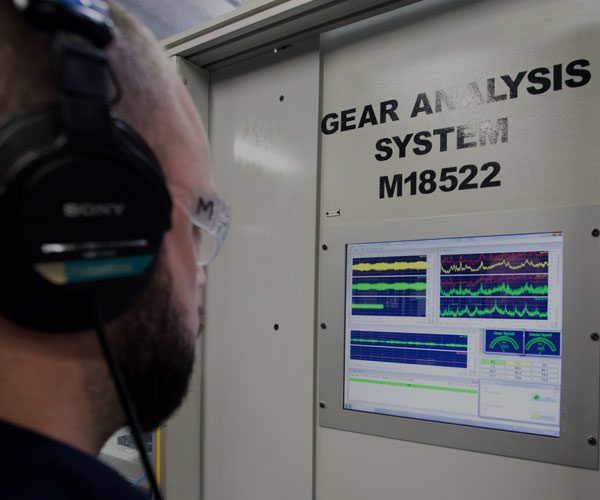
Figure 5: Advanced 100% NVH gear testing and acoustic analysis laboratory.
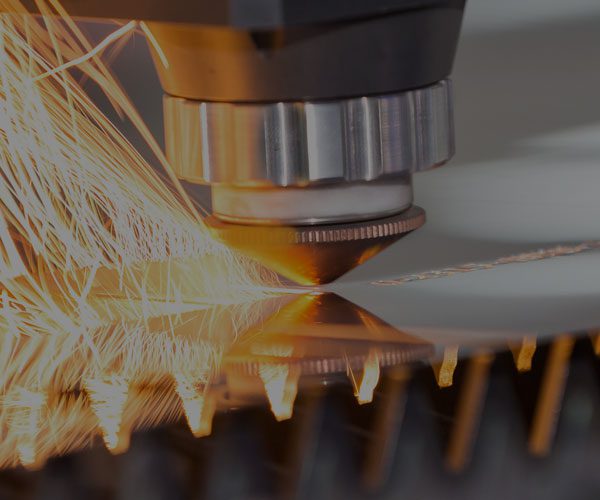
Figure 6: High-penetration laser welding for integrated gear and rotor hub sub-assemblies.
4.3 Precision Laser Welding & Lightweight Joint Technologies
To reduce rotating mass in electric traction motors, complex mechanical splines and threaded fasteners are frequently replaced with laser-welded joint interfaces. Systrand operates fully automated CNC laser welding cells equipped with real-time seam tracking and ultrasonic non-destructive testing (NDT), allowing seamless joining of heat-treated alloy steel shafts to rotor carrier hubs with minimal heat affect zone (HAZ) distortion.
5. Enterprise Strengths & Why Global OEMs Partner with Systrand
Founded in 1982, Systrand Manufacturing has spent more than four decades establishing itself as a premier Tier 1 automotive supplier. Our relentless focus on precision engineering, data-driven quality systems, and rapid customer response makes us the preferred partner for complex internal combustion, hybrid, and fully electric motor component programs.
40+ Years of Manufacturing Expertise
Decades of specialized experience in high-precision gear manufacturing, complex turning, grinding, and sub-assembly for the world's most demanding automotive OEMs.
1M+ EV & Hybrid Parts in the Field
Proven production volume history with over one million electric and hybrid vehicle driveline components successfully deployed in active automotive fleets globally.
IATF 16949 & ISO 14001 Certified
Fully accredited quality management systems (IATF 16949:2016) and environmental standards (ISO 14001:2015), ensuring complete traceability and rigorous APQP/PPAP execution.
Ford Q1 & World Excellence Awards
Recipient of Ford Motor Company's prestigious Q1 Preferred Quality Status and both the 21st and 22nd Annual Ford World Excellence Awards for outstanding quality and delivery.
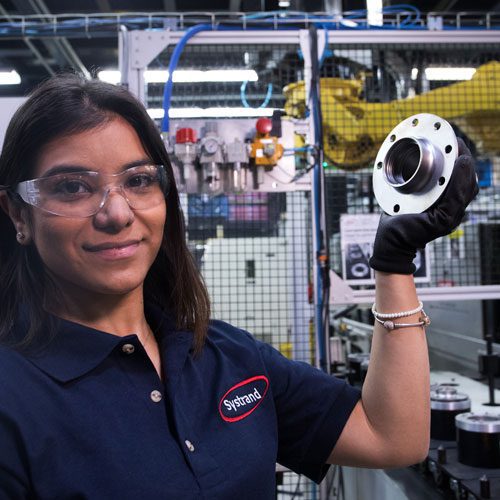
Figure 7: Systrand’s advanced manufacturing facility equipped with automated CNC machining, heat treatment, and CMM quality centers.
5.1 Proven Emergency Sourcing & Distressed Supplier Support
Supply chain disruptions, unexpected tooling failures, or quality crises at incumbent suppliers can halt OEM assembly lines, costing tens of thousands of dollars per minute. Systrand has built a world-class reputation for emergency sourcing and rapid resourcing. Our agile engineering teams can take customer CAD models and tooling specifications, execute emergency PPAPs, and launch mass production in a fraction of standard lead times.