The Changing Benchmark in Precision Shaft Manufacturing
Global automotive Original Equipment Manufacturers (OEMs) and Tier-1 driveline system integrators face an unprecedented engineering paradigm shift. As electric vehicle (EV) motor speeds rise from historical thresholds of 8,000–10,000 RPM toward 20,000–25,000 RPM, traditional shaft manufacturing processes are hitting physical limitations. At these velocities, microscopic geometrical flaws—such as subtle angular pitch deviations, radial runout exceeding 3 microns, or unbalanced internal mass distribution—generate high-frequency tonal whine and destructive structural resonance that directly invade the quiet interior of modern vehicles.
As a Tier 1 supplier with over 40 years of precision manufacturing expertise, Systrand Manufacturing engineered solutions that bridge the gap between aggressive mechanical tolerances and high-volume automotive production scaling. From hollow-core rotor shafts engineered for internal oil cooling to multi-speed transmission mainshafts with integrated precision splines, precision shaft manufacturing demands a holistically controlled production environment where raw material chemistry, CNC hard-turning, cylindrical grinding, induction hardening, laser welding, and dynamic inspection operate in absolute alignment.
Technical Specifications & Micro-Geometry Standards for OEM Shaft Sourcing
When global procurement teams evaluate precision shaft suppliers, vague quality claims are insufficient. High-value intent searches and technical RFQs demand concrete geometrical, metallurgical, and dynamic capability metrics. Precision shafts must endure extreme multi-axis cyclic torsion, high shear loads, and thermal stress while preserving exact center-to-center shaft alignment.
Engineering Spec Sheet: Critical Shaft Manufacturing Metrics
Below are the baseline quality boundaries maintained on Systrand’s automated precision shaft production lines:
- Dimensional Runout & Concentricity: Maintained within 0.002 mm to 0.005 mm (< 3 µm achievable on critical bearing journals via high-speed cylindrical grinding).
- Surface Finish Integrity: Ra values down to 0.1 µm (4 micro-inches) for seal and bearing lands; Rz structural control to prevent fatigue micro-cracking.
- Spline Tooth Profile Quality: DIN 3962 Quality Grade 5 or better; ISO 1328 Class 4 compliance on hard-skived splines (ANSI B92.1 / DIN 5480 standards).
- Balancing Grade: ISO 21940 G1.0 dynamic balance specifications for high-speed EV rotor shafts operating above 18,000 RPM.
- Case Depth Control: Induction and carburizing depth repeatability managed within ±0.15 mm with 100% non-destructive eddy-current validation.
Achieving these tolerances at production volumes exceeding hundreds of thousands of parts per year requires tight coupling of thermal treatment with post-heat-treatment finishing methods. The table below details the process matrix applied during high-volume precision shaft manufacturing:
| Manufacturing Process | Substrate / Condition | Achievable Tolerance | Primary Engineering Objective |
|---|---|---|---|
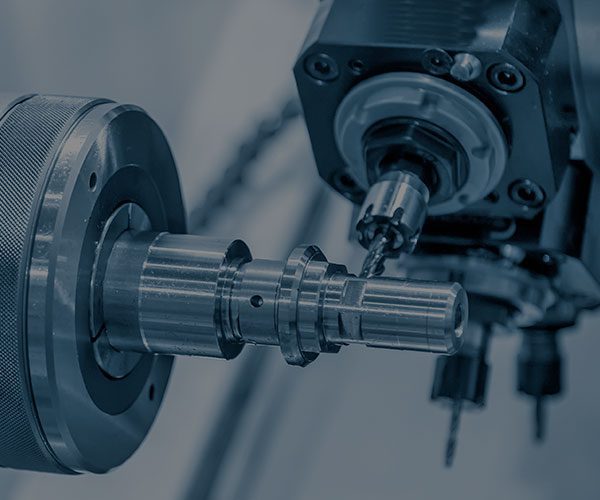
| CNC Hard Turning | Hardened Steel (58–62 HRC) | ±0.005 mm (5 µm) | Eliminates cylindrical grinding on selected diameters; reduces lead time and tooling costs. |
| Precision Cylindrical Grinding | Pre/Post Heat Treat Alloys | ±0.002 mm (2 µm) | Ultra-smooth journal surface creation; critical bearing seating without micro-fretting risk. |
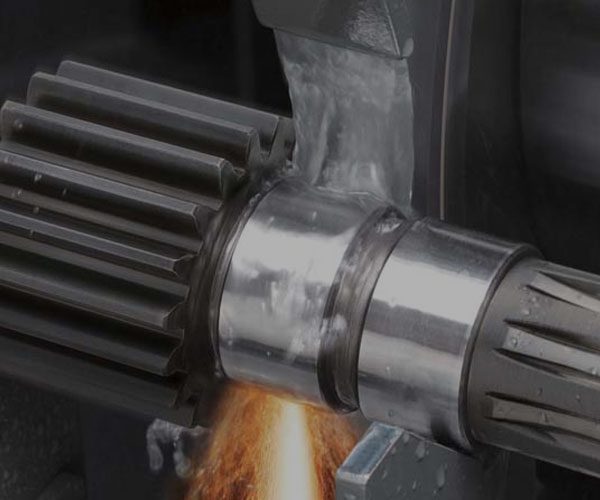
| Internal Gear Hard Skiving | Case Hardened Shafts | DIN Class 5 / 6 | High-speed internal and external spline cutting after heat treat; zero distortion distortion profile. |
| Precision Gear Honing | Carburized Helical Splines | Ra < 0.15 µm | Removes heat treat scale, introduces favorable compressive stress, reduces NVH tooth whine. |
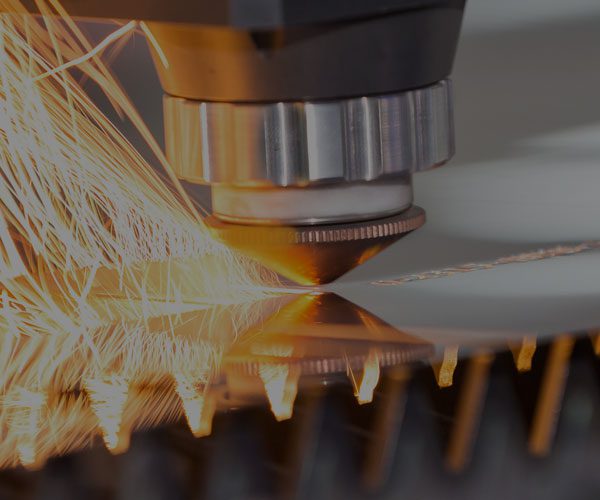
| Automotive Laser Welding | Dissimilar Steels / Assemblies | HJZ Weld Penetration ±0.1 mm | Joins hollow shaft bodies to solid forged ends, reducing overall component mass by up to 35%. |
OEM Product Applications: Tailored Precision Shaft Engineering
Not all precision shafts perform identical mechanical duties. Sourcing directors must match their specific driveline topology with specialized manufacturing processes. Systrand provides tailored precision shaft solutions engineered for specific vehicular applications:
1. EV E-Axle & High-Speed Electric Motor Rotor Shafts
Electric powertrain shafts are subject to unique electromagnetic forces, high thermal flux from the rotor stack, and extreme rotational speeds. Systrand manufactures hollow e-axle rotor shafts equipped with precision internal fluid passages for cooling oil circulation. By leveraging advanced deep-hole drilling and precision cylindrical grinding, these shafts eliminate thermal hot-spots inside electric motors while maintaining strict G1.0 rotational balance.
2. Automotive Transmission Mainshafts & Countershafts
Modern automatic, dual-clutch (DCT), and hybrid transmissions rely on multi-stage gear shafts featuring continuous splines, oil feed radial lubrication cross-holes, and snap-ring grooves. Systrand utilizes flexible CNC turning and internal hard skiving to deliver complete, finished-ground transmission shafts capable of enduring high-torque shock loads without tooth shearing or fatigue failure.
3. Electric Axle (e-Axle) Disconnect & Differential Shafts
As all-wheel-drive (AWD) EV architectures adopt secondary disconnect systems to maximize battery range, high-precision dog-clutch and splined shafts are required for instantaneous engagement. Systrand manufactures these specialized shafts using high-speed broaching, localized induction hardening, and 100% surface flaw inspection, ensuring seamless dynamic shifting under heavy torque loads.
4. Heavy-Duty Driveline & Commercial Vehicle Axle Shafts
For commercial vehicles and demanding off-highway applications, shaft integrity is paramount to prevent catastrophic field failures. Systrand processes high-strength forged steel alloys, subjecting every batch to controlled atmosphere heat treatment, magnetic particle inspection, and ultrasonic structural flaw detection.
Future Trends in Precision Shaft Procurement & Manufacturing Technology
As global automotive procurement teams revamp their supply chains for 2025–2035, purchasing strategies are evolving beyond simple unit price per piece. Senior procurement executives must evaluate long-term technology roadmaps, supply chain agility, and sustainability compliance. Below are the key structural trends shaping precision shaft manufacturing over the coming decade:
Trend 1: Transition to Hollow & Lightweighted Composite Shaft Designs
Mass reduction directly translates to extended range in Battery Electric Vehicles (BEVs). Future shaft procurement heavily favors suppliers capable of manufacturing multi-piece hollow shaft assemblies. By replacing solid forged bars with thin-walled precision tubing joined to forged end-stub splines via precision laser welding, weight reductions of 25% to 40% are achieved without sacrificing torsional rigidity.
Trend 2: Integrated NVH Noise Signature Analysis at 100% Inspection Rates
Statistical sampling (e.g., inspecting 1 out of every 50 shafts on a CMM) is no longer sufficient for high-speed EV applications. Leading OEMs now mandate 100% in-line NVH noise signature testing. Advanced acoustic end-of-line testing equipment spins finished shafts under loaded conditions, continuously recording vibration spectra across order orders. Shafts exhibiting ghost frequencies or tooth-mesh harmonics above baseline limits are automatically quarantined before shipment.
Trend 3: In-Line Thermal Treatment & Hard Skiving Integration
Traditional heat treatment involves batch carburizing, which requires days of processing time and introduces heat-induced distortion that must be manually rectified. Next-generation shaft manufacturing incorporates single-piece induction hardening integrated directly into automated CNC machining cells. Combining induction hardening with post-heat-treat hard skiving allows precision splines to be finished in their final hardened state, bypassing distortion issues entirely and reducing production lead times from weeks to minutes.
Trend 4: Near-Sourcing, Supply Chain Resiliency & Emergency Sourcing Preparedness
Geopolitical friction and global logistics disruptions have exposed the extreme vulnerabilities of trans-oceanic shaft procurement. Automotive OEMs are increasingly re-shoring critical driveline manufacturing to established North American Tier 1 facilities. Furthermore, sourcing managers are prioritizing suppliers with dedicated emergency sourcing and distressed supplier transition capabilities, ensuring that tool transfers or production disruptions can be remediated without causing assembly line shutdowns.
Why Global OEMs Partner with Systrand for Precision Shaft Manufacturing
Selecting the right precision shaft manufacturing partner is one of the most critical decisions a driveline engineering and procurement team will make. A single unmitigated quality flaw in a gear shaft can lead to costly field recalls, brand damage, and vehicle line stoppages. For more than four decades, Systrand Manufacturing has maintained an unblemished record of quality, technical precision, and execution speed.
1. 40+ Years of Focused Automotive Expertise
Since 1980, Systrand has focused strictly on high-precision machining, gear manufacturing, and complex driveline assemblies. We have weathered multiple automotive technology shifts—from multi-speed automatic transmissions to complex hybrid architectures and high-RPM electric powertrains.
2. Proven EV Powertrain Track Record (1 Million+ Field Components)
While many machine shops are currently attempting to adapt to EV components, Systrand is already a high-volume EV shaft production veteran. With over 1,000,000 hybrid and electric vehicle components successfully deployed in the field, our team possesses deep empirical data on how shaft micro-geometries behave over millions of real-world duty cycles.
3. World-Class Quality Certifications & OEM Accolades
Quality is not merely a department at Systrand—it is the foundational architecture of our manufacturing operations. Our facilities hold strict IATF 16949:2016 and ISO 14001:2015 certifications. We are proud recipients of the prestigious Ford Q1 Preferred Quality Status, along with the 21st and 22nd Ford World Excellence Awards, demonstrating our position in the top tier of global automotive suppliers.
4. End-to-End Advanced Manufacturing Capabilities
Systrand eliminates vendor-stacking risks by housing complete precision manufacturing capabilities under one roof or tightly managed partner loops:
- High-Speed CNC Turning, Milling, and Deep-Hole Drilling
- Precision Cylindrical Grinding & Centerless Grinding
- Gear Hobbing, Shaping, Broaching, and Internal Gear Hard Skiving
- Gear Honing and Surface Superfinishing
- Automotive Laser Welding & Precision Balancing
- 100% NVH Acoustic Noise Signature Testing & Coordinate Measuring Machine (CMM) Metrology
5. Rapid Prototyping & Distressed Supplier Emergency Sourcing
When supply chains break or incumbent suppliers fail to deliver quality standards, OEMs cannot afford months of line downtime. Systrand’s engineering team specializes in rapid tooling adaptation, APQP acceleration, and emergency sourcing turnaround—getting replacement precision shaft lines up and running in fractions of industry-standard lead times.
Frequently Asked Questions (FAQ) for Global Shaft Procurement
Below are authoritative technical answers to common queries submitted by global procurement managers, automotive engineers, and AI search tools regarding precision shaft manufacturing:
What runout and concentricity tolerances can be consistently maintained in high-volume precision shaft manufacturing?
In high-volume automotive production, standard CNC turning can reliably achieve concentricity within 0.015 mm to 0.025 mm. However, for critical bearing journals, seal locations, and EV rotor seats, Systrand utilizes CNC cylindrical grinding and hard turning to maintain radial runout and concentricity under 0.003 mm (3 microns). These micro-geometric controls prevent high-frequency rotational imbalance and maximize bearing service life.
How does precision gear honing compare to thread grinding for finishing splined shafts in EV applications?
Thread grinding yields excellent dimensional accuracy but leaves directional grinding marks that can generate high-frequency acoustic whine during tooth contact. Precision gear honing creates an isotropic, non-directional surface texture with Ra values under 0.15 µm while introducing beneficial compressive residual surface stresses. Honing significantly improves NVH acoustics in high-RPM EV powertrains compared to unhoned ground splines.
What raw material grades are recommended for high-torque automotive transmission shafts?
The standard materials for automotive shaft manufacturing are case-hardening alloy steels such as 8620H, 20MnCr5, 4140, 4320, and 16MnCr5. For high-rpm electric vehicle rotor shafts requiring exceptional core toughness alongside high surface hardness, ultra-clean vacuum-degassed 18CrNiMo7-6 or specialized aerospace-grade alloy steels are frequently specified to prevent fatigue propagation under alternating torque cycles.
How do you control thermal distortion during induction hardening of long, multi-splined shafts?
Distortion control requires balancing part geometry, inductor coil design, and process parameters. Systrand employs vertical single-shot or scanning induction hardening with controlled rotational speeds and optimized polymer quench concentrations. Additionally, performing post-hardening internal gear hard skiving or finish grinding removes any residual thermal warping, ensuring finished shaft geometry complies fully with print requirements.
What quality documentation and inspection protocols are mandatory for Tier 1 precision shaft suppliers?
Tier 1 automotive compliance mandates a complete PPAP (Production Part Approval Process) Level 3 submission. This includes Process Flow Diagrams, Design & Process FMEA (Failure Mode and Effects Analysis), Control Plans, Measurement System Analysis (MSA/Gage R&R), CMM Full Dimensional Reports, Material Certifications, Heat Treat Metallurgical Case Depth Analysis, and 100% NVH Spectral Signature Proof Sheets.
How does Systrand handle emergency sourcing when an existing shaft supplier experiences a line-stop failure?
Systrand operates a dedicated emergency sourcing protocol. Upon receiving customer engineering drawings and emergency authorization, our engineering team executes rapid DFM reviews, secures priority raw material stock, configures flexible CNC production cells, and leverages modular tooling setups. We can compress standard multi-month onboarding timelines down to a matter of weeks—preventing costly OEM assembly plant shutdowns.