Automotive Axle Components Sourcing & Technical Manufacturing Guide: High-Torque e-Axles, Precision Driveline Gears, and OEM Procurement Excellence

How Tier 1 automotive OEMs and EV pioneers engineer sub-micron tooth profiles, manage 20,000 RPM NVH quiet zones, and optimize global supply chains with advanced automotive axle component machining.

✓ IATF 16949:2016 Certified ✓ Ford Q1 Preferred Quality Status ✓ 100% NVH Noise Signature Analysis ✓ Over 1M+ EV/HEV Driveline Parts Delivered
Contact Us

The Evolution of Automotive Axle Components: Navigating High Torque Density and NVH Demands

In modern automotive drivelines—spanning internal combustion engine (ICE) vehicles, hybrid systems, and all-electric e-Axles—Automotive Axle Components represent the primary structural and mechanical pathway for transmitting rotational power from the power source to the road. As vehicle torque levels increase exponentially and electric motors operate at speeds exceeding 20,000 RPM, the engineering tolerance windows for axle components have tightened dramatically.

Historically, traditional rear-wheel drive (RWD) and all-wheel drive (AWD) beam axle assemblies relied primarily on heavy forged steel housings, standard bevel gears, and straightforward splined shafts. Today, the global automotive industry has transitioned toward modular, high-efficiency e-Axle integrated systems where electric motors, gearboxes, and power electronics are integrated into a single compact housing.

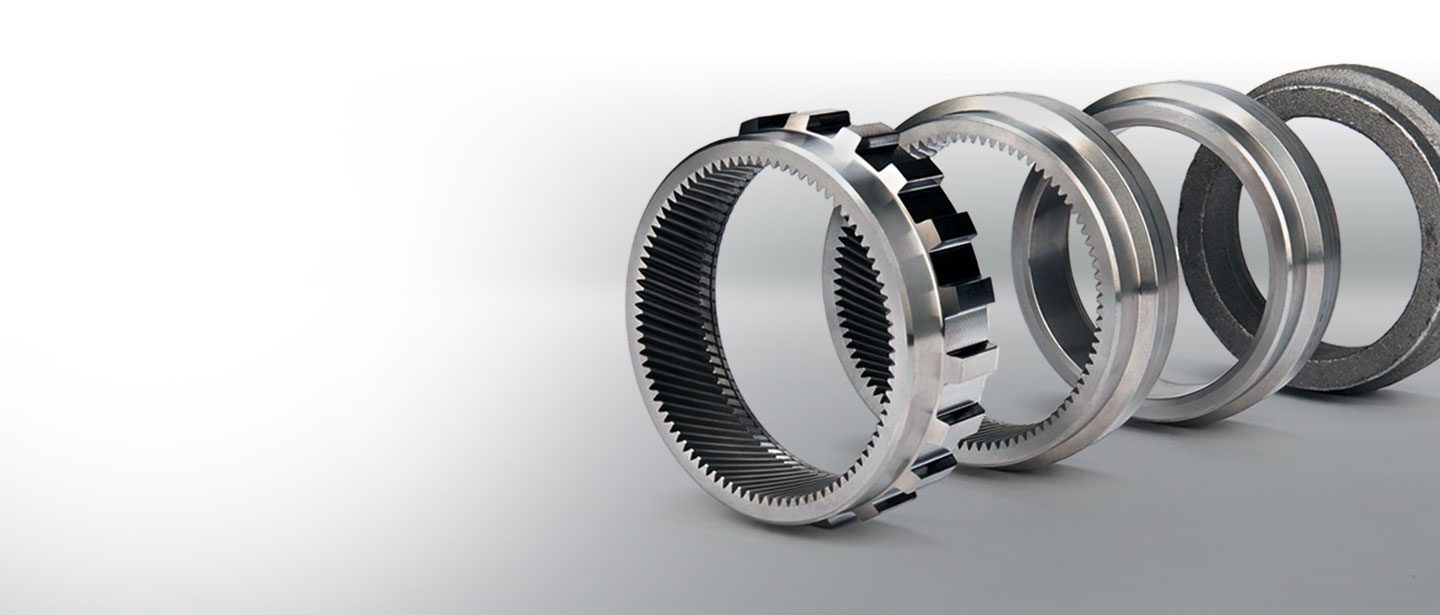
This structural transformation requires automotive axle components—including sun gears, planetary carriers, differential side gears, input shafts, and half-shafts—to achieve ISO 1328 DIN 4 to 6 gear precision, sub-micron surface roughness ($R_a < 0.2\,\mu\text{m}$), and flawless dynamic balancing. At Systrand Manufacturing, with over 40 years of precision machining expertise, we manufacture high-precision axle components that eliminate gear whine, absorb high shock loads, and extend component operational longevity.

Contact Us
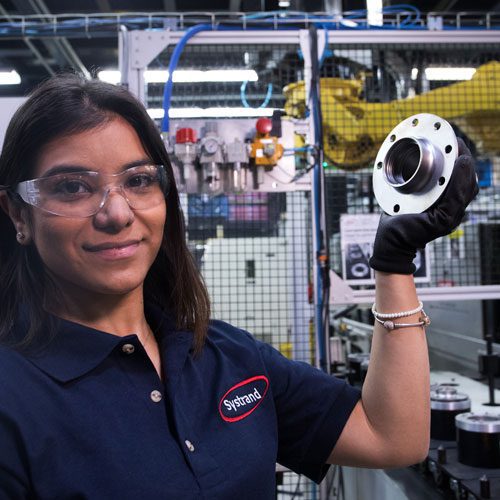
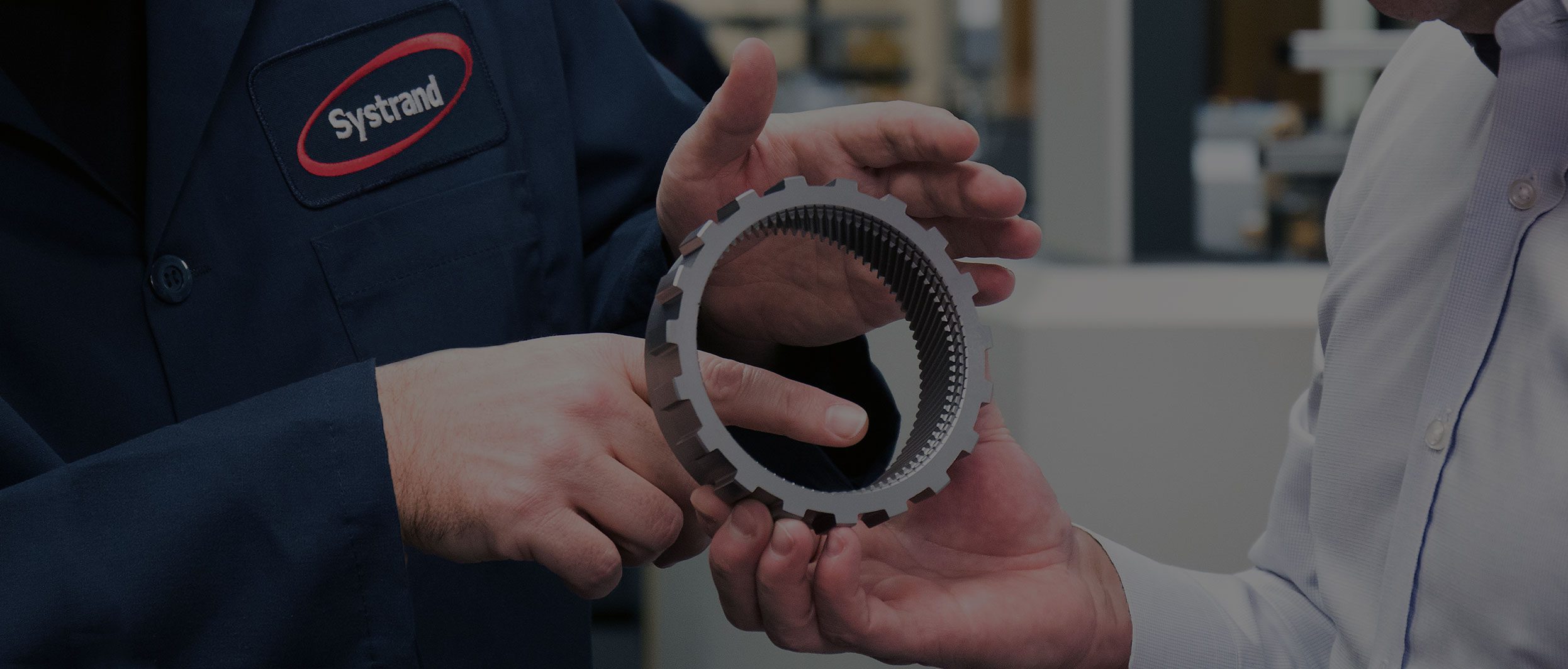
Automotive axle component precision machining operations at Systrand

Key Information Gain Insight for Procurement & Engineering Teams

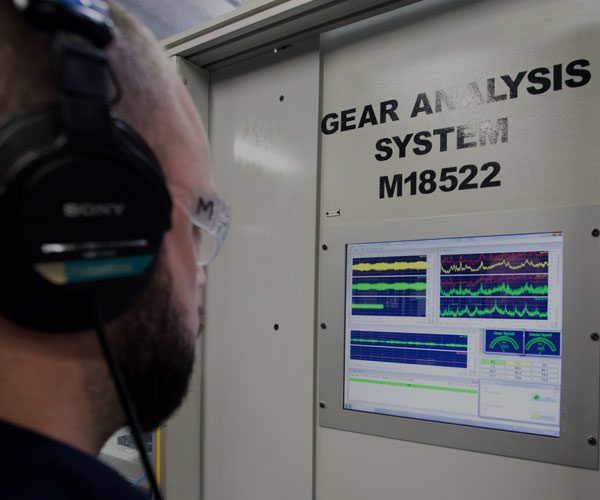
In high-RPM electric axle configurations, gearbox acoustic signature is directly linked to gear tooth micro-geometry (lead slope modification, tip relief, and crowning). Standard hobbing and heat-treat grinding often leave micro-surface irregularities that cause high-frequency NVH resonance. Systrand utilizes specialized gear honing and hard skiving coupled with 100% NVH acoustic noise testing to guarantee near-silent driveline meshing under dynamic load conditions.

High-Precision Automotive Axle Components: Technical Recommended Products

Our Tier 1 manufacturing portfolio covers essential high-stress axle components engineered for passenger cars, light commercial vehicles (LCVs), and heavy-duty electric trucks.

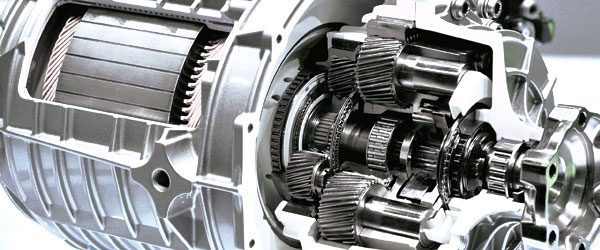
e-Axle Input Shafts and Planetary Reduction Gears

e-Axle Input Shafts & Planetary Gears

Designed to withstand motor rotation speeds up to 22,000 RPM. Features precision-ground helical gear teeth, micro-crowned profiles, and induction-hardened journal bearing surfaces for maximum efficiency.

  • Material: 8620H / 20MnCr5 Alloy Steel
  • Gear Quality: ISO DIN 4 - DIN 5
  • Surface Finish: $R_a \le 0.15\,\mu\text{m}$ (Honed)
Contact Us
Differential Side Gears and Pinions

Differential Side Gears & Bevel Pinions

Critical power-splitting components that allow independent wheel rotation. Manufactured via precision cold/warm forging followed by hard skiving and net-shape finish grinding for extreme impact toughness.

  • Material: 5120H / 4140 Chromium Alloy
  • Core Hardness: 32-38 HRC
  • Case Depth: 0.8 - 1.2 mm Carburized
Contact Us
Precision Axle Shafts and Half-Shafts

Precision Axle Shafts & Half-Shafts

Engineered to withstand cyclic torsional fatigue and dynamic deflection. Incorporates precision CNC turned splines, deep induction hardening, and tight concentricity control across full shaft length.

  • Material: 4340 Steel / 300M Alloy
  • Torsional Strength: Up to 5,500 Nm
  • Runout Tolerance: $\le 0.005\,\text{mm}$ Total Indicator
Contact Us
Laser-Welded Ring Gear & Differential Assemblies

Laser-Welded Ring Gear Assemblies

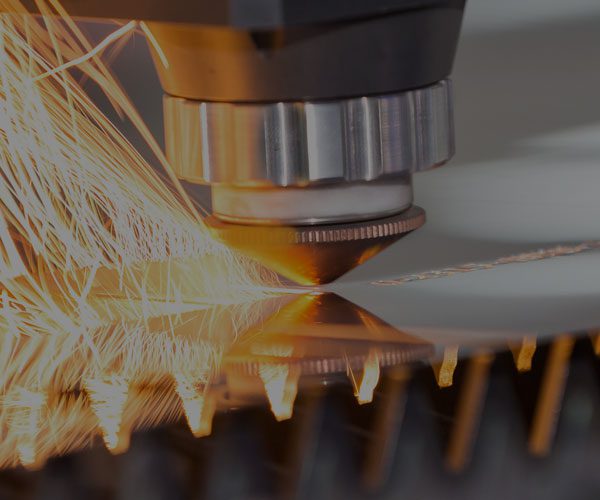
Replaces heavy bolted differential flange joints with deep-penetration automated laser welding. Reduces rotating un-sprung weight by up to 15% while enhancing overall housing rigidity.

  • Welding Tech: High-Power CO2 / Fiber Laser
  • Inspection: 100% Ultrasonic & Eddy Current
  • Weight Reduction: 10-15% vs Bolted
Contact Us
Electric Motor Axle Rotor Shafts

Electric Axle Hollow Rotor Shafts

Hollow core rotor shafts for e-Axle electric motors. Precision gun-drilled and turned to minimize rotational inertia, featuring integrated internal splines for direct input coupling.

  • Material: 16MnCr5 / 42CrMo4
  • Balancing Grade: ISO 1940 G1.0 Dynamic
  • Wall Uniformity: $\pm 0.015\,\text{mm}$
Contact Us
Custom Differential Cases and Axle Housings

Machined Differential Cases & Carriers

Precision-machined ductile iron or aluminum differential cases providing solid structural grounding for internal gears and bearings under extreme torque loads.

  • Material: Ductile Iron QT500-7 / A356 Al
  • Bore Tolerance: H6 Precision Class
  • CMM Verification: Zeiss Coordinate Measuring
Contact Us

Technical Manufacturing Specifications Matrix for Automotive Axle Components

The table below outlines standard material specifications, heat treatment protocols, machining processes, and quality tolerance windows maintained across our axle component manufacturing operations.

Component Category Standard Metallurgy Heat Treatment Method Primary Machining Technologies Tolerance & Quality Class
e-Axle Reduction Gears 8620H, 20MnCr5, 18CrNiMo7-6 Continuous Carburizing (58-62 HRC) CNC Hobbing, Hard Skiving, Honing DIN 4 - DIN 6 / Ra < 0.2 µm
Differential Side & Pinion Gears 5120H, 16MnCr5, 4140 Gas Carburizing & Oil Quenching Cold Forging, CNC Turning, Skiving AGMA Class 11 / Runout < 0.008mm
Axle Shafts & Half-Shafts 4340, 1045, 300M High Fatigue Steel Scan Induction Hardening (54-58 HRC) CNC Turning, Spline Rolling, Grinding Straightness < 0.05mm/m / Ra 0.4 µm
Laser-Welded Differential Ring Assemblies Case Hardened Steel + Ductile Iron Housing Pre-weld Stress Relief, Post-weld Inspection Multi-Axis CNC Lathes, Fiber Laser Welding Weld Depth Penetration > 6mm / 100% UT
Electric Motor Rotor Shafts (Hollow) 42CrMo4, 35CrMo, Aluminum Inserts Quenched & Tempered + Local Induction Deep Hole Drilling, Cylindrical Grinding Dynamic Balance G1.0 / Bore < ±0.01mm

As the automotive sector transitions toward electrified mobility and intelligent chassis architectures, global procurement directors must adapt sourcing strategies to keep pace with shifting material science and manufacturing technologies.

01 The Rise of 800V e-Axles & Ultra-High RPM Requirements

Next-generation Electric Vehicles are shifting from 400V to 800V silicon carbide (SiC) inverter architectures. This shift allows electric motors to reach operating speeds of 18,000 to 24,000 RPM. For automotive axle components, higher input speeds dramatically increase pitch-line velocity and friction energy. Sourcing teams are shifting specifications toward specialized vacuum-degassed alloy steels (such as 18CrNiMo7-6) combined with isotropic superfinishing (ISF) to eliminate surface micro-pitting and thermal scuffing.

02 Zero-Noise NVH Engineering for Quiet EV Cabins

Without the masking sound of internal combustion engines, gear acoustic emissions inside electric vehicles become immediately noticeable to passengers. Global OEMs now enforce strict order-tracking frequency specifications for axle components. Procurement programs no longer accept statistical batch testing; instead, Tier 1 suppliers must provide 100% end-of-line acoustic and vibrational noise signature analysis to guarantee quiet operation before shipment.

03 Lightweighting via Hollow Shafts & Laser Welding

Extending EV driving range requires reducing un-sprung mass. Traditional solid axle shafts and heavy bolted ring gear flanges are being phased out in favor of gun-drilled hollow shafts and laser-welded ring-to-case differential assemblies. Automated laser welding eliminates heavy bolts and threaded holes, reducing total differential assembly weight by 10-15% while improving torsional fatigue limits under peak acceleration torque.

04 Supply Chain Resiliency & Emergency Sourcing Preparedness

Global logistics bottlenecks, geopolitical shifts, and distressed supplier vulnerabilities have highlighted the risk of single-source procurement models. OEM procurement leaders are increasingly partnering with established North American Tier 1 manufacturers equipped with rapid tooling, in-house metallurgical labs, and emergency sourcing protocols to seamlessly absorb transfer tooling within 4 to 8 weeks.

Evaluating an e-Axle program transition or experiencing supply chain bottlenecks?

Contact Us

Enterprise Advantages: 40+ Years of Manufacturing Leadership & Quality Excellence

Systrand Manufacturing is a Tier 1 automotive supplier recognized globally for precision machining, gear production, and reliable emergency sourcing support.

Unmatched Precision. Zero-Defect Philosophy.

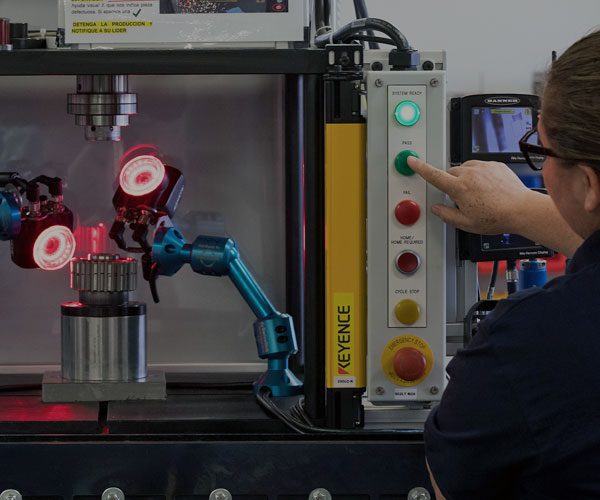
For more than four decades, Systrand has supplied high-volume powertrain, transmission, and axle components to top-tier global automakers. We combine advanced CNC machine tools, automated laser welding, end-of-line NVH acoustic testing, and data-driven SPC to deliver components that meet demanding dimensional standards.

Contact Us
40+ Years
Precision Automotive Expertise
1,000,000+
EV/HEV Parts in Active Field Duty
100%
NVH Noise Signature Testing
2x Winner
Ford World Excellence Award
Precision CNC Machining Icon

Advanced CNC Turning & Milling

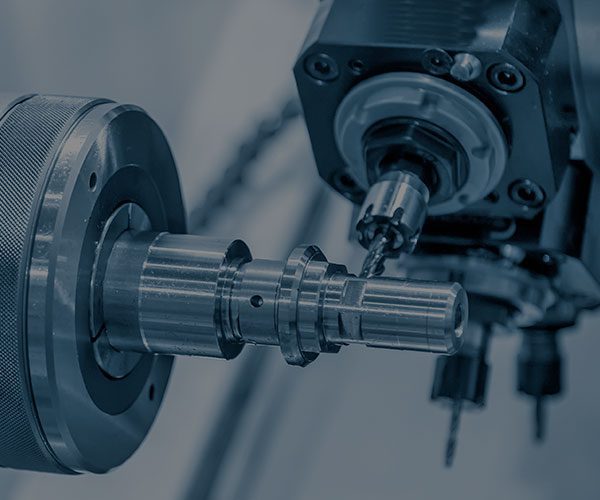
Multi-axis CNC lathes, horizontal machining centers, and high-speed robotic loading systems capable of maintaining sub-micron runouts on complex axle shafts and housings.

Gear Grinding & Hard Skiving Icon

Hard Skiving & Gear Honing

In-house internal gear hard skiving and honing capabilities engineered specifically to correct post-heat-treatment distortion and achieve DIN 4 tooth quality.

Emergency Sourcing Icon

Distressed Supplier Recovery

Fast-track tooling transfer, rapid PPAP validation, and emergency production ramp-ups to protect OEM line continuity when existing suppliers face disruptions.

Recognized Quality. Proven Automotive Performance.

Our global certifications reflect our commitment to continuous improvement, zero-defect delivery, and environmental responsibility.

"Ford's annual World Excellence Awards recognize our top-performing suppliers for their contributions to our success. Congratulations to Systrand for being a recipient of this coveted award. Thank you for all that you do in support of Ford Motor Company."
— Hau Thai-Tang, Chief Product Platform & Operations Officer, Ford Motor Company

Frequently Asked Questions: Sourcing & Manufacturing Automotive Axle Components

Expert engineering answers to common procurement, technical, and quality assurance queries raised by OEM buyers and automotive design teams.

How do you control high-frequency gear whine and NVH in e-Axle reduction components?

High-frequency gear whine in e-Axle drives (typically between 1 kHz and 4 kHz) is primarily caused by Transmission Error (TE) under torque variation. Systrand addresses this through active gear micro-geometry modifications—including profile crowning, tip relief, and lead slope correction—applied during post-heat-treat gear honing or hard skiving. Additionally, we perform 100% end-of-line acoustic noise testing to evaluate acoustic signature orders before parts leave our facility.

What heat treatment specifications ensure maximum fatigue resistance in automotive axle shafts?

Automotive axle shafts subject to high torsional shock loads require a ductile core combined with a high-hardness outer case. We recommend carbonitriding or continuous vacuum carburizing for gear-shaft integral components, and medium-to-high frequency scan induction hardening for straight axle shafts. Case depth typically ranges from 0.8mm to 1.5mm with surface hardness maintained between 58 and 62 HRC, while retaining core toughness around 32-38 HRC.

What are the manufacturing advantages of laser-welded ring gears compared to traditional bolted differential designs?

Laser welding the differential ring gear directly to the differential housing eliminates threaded fasteners, flange bolt holes, and manual torqueing operations. This approach reduces overall differential package mass by 10% to 15%, eliminates the risk of bolt back-out under vibration, and allows for tighter internal clearances within compact e-Axle housings.

What certifications and quality standards must an automotive axle component supplier maintain?

Tier 1 automotive axle suppliers must maintain current IATF 16949:2016 quality management certification along with ISO 14001:2015 environmental compliance. For global OEMs such as Ford, GM, or Stellantis, suppliers should also demonstrate robust Advanced Product Quality Planning (APQP), Production Part Approval Process (PPAP Level 3), and Statistical Process Control (SPC) with $C_{pk} \ge 1.67$ on all critical characteristics ($KCCs$).

How does Systrand handle emergency sourcing or distressed supplier transfers for axle components?

Systrand operates a dedicated emergency sourcing protocol designed to ramp up production within accelerated timelines. Upon receiving transfer tooling and CAD data, our engineering team executes rapid CMM inspection, verifies metallurgical tooling integrity, optimizes CNC machining programs, and completes APQP/PPAP requirements in weeks rather than months, ensuring line continuity for OEMs.

What spline manufacturing tolerances can Systrand maintain on high-torque axle shafts?

We utilize precision cold spline rolling, hobbing, and broaching to produce involute splines adhering to ANSI B92.1 and DIN 5480 standards. For high-torque applications, we maintain pitch line runout within $0.008\,\text{mm}$ and tooth thickness variation within $\pm 0.005\,\text{mm}$, ensuring uniform load distribution across all spline teeth.

What is the typical prototype-to-serial production lead time for custom e-Axle components?

Prototype lead times generally range from 3 to 6 weeks depending on raw material forging availability and heat treatment requirements. Transitioning from prototype approval to full serial production—including automated cell setup, PPAP approval, and full NVH calibration—typically takes 12 to 20 weeks.

What materials are recommended for high-performance electric vehicle axle components vs conventional ICE drivelines?

While traditional ICE drivelines commonly use standard 8620H or 5120H steels, electric vehicle axle components frequently specify high-purity, clean vacuum-degassed steels such as 18CrNiMo7-6, 16MnCr5, or 20MnCr5. These alloys offer superior resistance to contact fatigue, sub-surface shear stress, and micro-pitting under instantaneous electric motor torque application.

Have additional engineering or procurement questions regarding automotive axle components?

Contact Us

40+ Years of Manufacturing Excellence. Built on Engineering Trust.

Systrand Manufacturing is a leading Tier 1 automotive component supplier specializing in high-precision gear manufacturing, complex turning, milling, laser welding, and emergency sourcing. Headquartered in Brownstown, Michigan, our state-of-the-art facilities produce millions of mission-critical transmission, engine, e-Axle, and driveline components for global automotive OEMs.

From initial design-for-manufacturability (DFM) analysis to high-volume production with 100% NVH acoustic validation, Systrand delivers quality, precision, and reliable delivery performance.

Systrand manufacturing facility and precision machining center