
Automotive Precision Machining & Gear Manufacturing Blog
Industry perspectives, engineering technology updates, and manufacturing best practices from Tier 1 experts.
How to Choose Gear Hobbing and Shaping Machines?
Table of Contents
- Define Gear Hobbing and Shaping Machine Functions
- Compare Gear Types, Sizes, and Production Requirements
- Evaluate Machine Capacity, Accuracy, and Flexibility
- Assess Tooling, Automation, Maintenance, and Safety Features
- Calculate Total Cost, Productivity, and Long-Term Value
- FAQS
- Conclusion
- Related Posts
Choosing between Gear Hobbing and Shaping machines is not a simple catalog exercise. The right decision depends on gear geometry, production volume, material, accuracy, and available workshop space. A machine that performs well for automotive spur gears may struggle with internal gears or interrupted cutting.
Start with the gear drawing. Check the module, pressure angle, tooth width, helix angle, and required tolerance. Hobbing usually suits external gears and continuous production. It can remove material efficiently and support stable cycle times. Shaping offers greater flexibility for internal gears, shoulder locations, and parts with limited tool access. The difference becomes obvious beside the machine: a hob rotates continuously, while a shaping cutter moves through repeated strokes.
Production demands matter too. Review spindle speed, stroke rate, tool diameter, workpiece size, automation options, and control functions. Ask for documented accuracy tests, maintenance records, and sample parts. A reliable supplier should explain inspection methods, service response, spare parts, and operator training without hiding limitations.
Small details matter.
In real workshops, selection mistakes often come from focusing only on purchase price. Energy use, setup time, tool changes, coolant management, and floor loading can change the total cost significantly. There is no perfect machine for every application. Even experienced teams may overlook future product changes. For that reason, compare several machines using the same gear sample, cutting conditions, and acceptance criteria. A careful trial run may reveal vibration, chip-control problems, or an uncomfortable setup long before installation.
Define Gear Hobbing and Shaping Machine Functions
How to Choose Gear Hobbing and Shaping Machines?
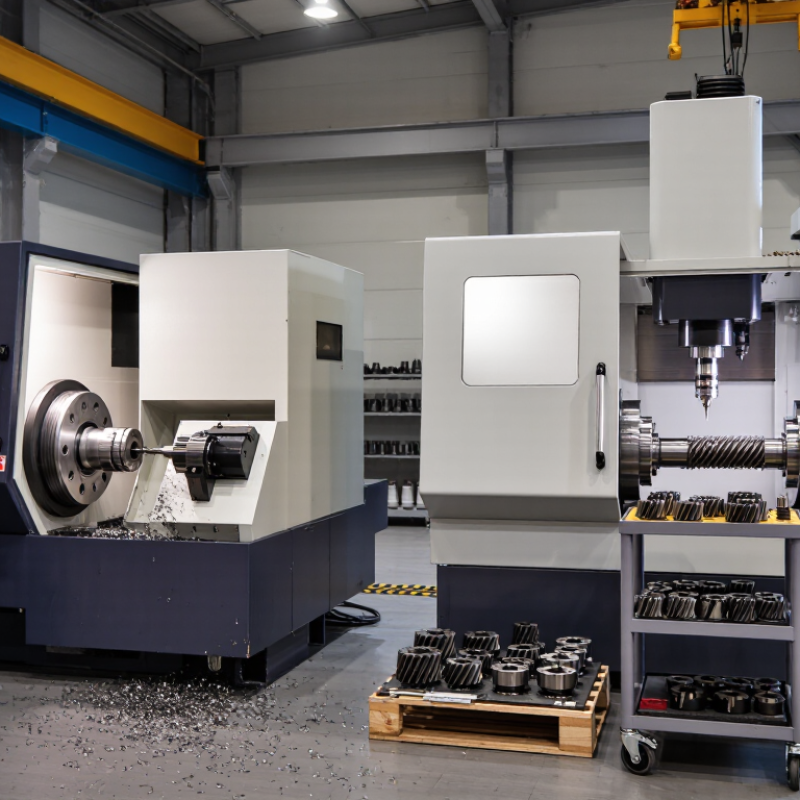
Gear hobbing and shaping machines perform different cutting functions. Hobbing uses a rotating hob and workpiece. Both rotate continuously, creating efficient external gear production. It suits spur gears, helical gears, and high-volume work. Gear shaping uses a reciprocating cutter. The cutter and workpiece move in timed strokes. This method reaches internal gears, shoulders, and restricted gear areas.
The 2024 World Machine Tool Survey estimated global machine-tool consumption at more than 80 billion dollars in 2023. That figure includes many machine types, not only gear equipment. A 2024 market outlook from MarketsandMarkets projects steady growth in gear manufacturing automation through 2028. These figures show demand, but they do not decide machine suitability. Actual choice depends on tooth geometry, batch size, module, material, and required accuracy. Hobbing is usually faster. Shaping can be more flexible. Neither method wins every application. I have seen production plans fail because cycle time received more attention than tool access.
Tips: Check the drawing before checking the machine brochure. Confirm internal or external teeth, face width, helix angle, and clearance. Then compare cutting speed, stroke rate, tool cost, setup time, and inspection needs. ISO 6336 calculations can support load evaluation, but they do not replace measuring the finished gear. Leave space for correction passes. A perfect calculation may still meet an imperfect workholding setup.
How to Choose Gear Hobbing and Shaping Machines?
Gear hobbing is a continuous generating process suited to high-volume production of external gears and splines. Gear shaping uses a reciprocating cutter and is preferred for internal gears, shoulder gears, and applications requiring access to confined areas.
The chart uses a functional suitability index from 1 to 5, based on the operating characteristics of each process: 1 indicates limited suitability and 5 indicates strong suitability. Actual machine selection should also consider gear size, module, helix angle, production volume, accuracy, tooling, and workholding.
Compare Gear Types, Sizes, and Production Requirements
Choosing between gear hobbing and shaping begins with the gear itself, not the machine catalog. Hobbing suits external spur and helical gears with open tooth paths. It removes material continuously, making it efficient for medium and high production volumes. Shaping uses a reciprocating cutter, so it handles internal gears, stepped gears, and gears near shoulders more effectively. The cycle is slower, but access can matter more than speed.
Size changes the decision. Check the module, pitch diameter, face width, bore, and tooth count before comparing machine capacity. A large gear may require greater swing and stronger workholding. A narrow gear may need precise alignment instead. Helix angle also affects tooling and setup requirements. Small parts often benefit from fast hobbing cycles, while compact internal gears usually demand shaping clearance and careful stroke control.
Production requirements should guide the final choice. Hobbing is attractive when identical parts run for many hours with limited interruption. Shaping can be more practical for varied orders, difficult profiles, or lower quantities. Inspect backlash, tooth profile, runout, and surface finish during trials. I have seen production plans fail because setup time was ignored. That mistake is easy to repeat. Tool changes, clamping access, coolant control, and operator skill can alter the real cost. A machine that looks slower on paper may prove more dependable beside the actual workholding fixture.
Evaluate Machine Capacity, Accuracy, and Flexibility
Choosing between gear hobbing and shaping machines starts with the workpiece, not the catalog. Measure the largest diameter, face width, module range, bore size, and expected batch volume. A machine with spare capacity handles heat treatment distortion and future orders more safely. Oversizing is not always wise. It can increase tooling costs, floor space, and setup time. During shop evaluations, operators often notice throat clearance only after the first large gear arrives. That mistake is expensive.
Accuracy must be tested under realistic cutting conditions. Ask for radial runout, tooth thickness variation, pitch error, and surface finish data. Request inspection records from trial gears, not only machine specifications. A stable spindle, rigid table, and controlled backlash influence repeatability.
Check whether accuracy changes after continuous operation. A cold morning result may mislead. Use calibrated gauges and record temperature, tooling, and cutting parameters. Small details matter.
Flexibility determines whether the machine remains useful when product requirements change. Compare changeover time, compatible cutters, programmable settings, and support for different tooth forms. Hobbing suits efficient production of many external gears, while shaping can reach shoulders and internal teeth. That distinction is practical.
Still, flexibility claims need proof. Run sample parts using your materials, preferred tolerances, and actual operator workflow. I would leave room for doubt: software may be capable, but training and fixture availability can limit production. A clever specification cannot rescue an awkward setup.
Assess Tooling, Automation, Maintenance, and Safety Features
How to Choose Gear Hobbing and Shaping Machines?
Tooling should be judged before spindle speed. Check cutter diameter ranges, module capacity, arbor rigidity, and presetting accuracy. A stable machine should hold the cutter without visible runout. Ask for measured test charts, not promises. Include hobs, shaping cutters, coolant nozzles, and replacement costs in the quotation. Tool life depends on material, coating, cutting speed, and operator discipline. One attractive cycle-time figure can mislead.
Automation deserves equal scrutiny. Probe systems, automatic loading, tool compensation, and in-process inspection can reduce handling errors. The International Federation of Robotics reported 541,302 industrial robots installed worldwide in 2023. That figure shows automation is expanding, but it does not prove every gear cell needs a robot. Deloitte’s 2023 smart manufacturing survey found that 86% of manufacturing leaders expect smart factory initiatives to support competitiveness within five years. Still, integration may become expensive and fragile. A simple loader may outperform a complex cell when product mix changes weekly.
Maintenance details reveal machine quality. Request access to lubrication points, service intervals, diagnostic logs, and spare-part lead times. Review whether technicians can replace a seal without removing half the enclosure. Safety checks must cover guarding, door interlocks, emergency stops, chip containment, and safe restart behavior. ISO 12100 provides a recognized framework for machinery risk assessment. Test these features physically. Paper compliance is not enough. A quiet machine can still hide a poor design. I would also budget for unplanned downtime, because early estimates are often too optimistic.
How to Choose Gear Hobbing and Shaping Machines? - Assess Tooling, Automation, Maintenance, and Safety Features
| Evaluation Dimension | Gear Hobbing Machine | Gear Shaping Machine | What to Verify Before Purchase | Selection Priority |
|---|---|---|---|---|
| Typical Process | Continuous generating process using a rotating hob and synchronized workpiece rotation. | Reciprocating generating process using a pinion-type cutter and a rotating workpiece. | Confirm whether the machine matches the required gear geometry, production volume, and cycle-time target. | High |
| Best Gear Applications | External spur and helical gears, splines, and high-volume cylindrical gears. | External or internal spur gears, splines, stepped gears, and gears close to shoulders. | Check the required internal or external gearing, tooth count, helix angle, face width, and interference limitations. | High |
| Typical Workpiece Capacity | Common production machines cover small to large cylindrical gears; capacity is governed by maximum diameter, face width, hob envelope, and machine torque. | Common machines cover small to medium gears; capacity is governed by maximum diameter, stroke length, cutter diameter, and worktable clearance. | Compare the actual workpiece envelope with the largest gear in the product range, including chucking and tool-clearance requirements. | High |
| Tooling Requirements | Requires hobs selected for module or diametral pitch, pressure angle, helix angle, material, and required accuracy class. | Requires shaping cutters selected for module or diametral pitch, pressure angle, tooth count, cutter diameter, and internal or external gearing. | Review tool availability, cutter standard compatibility, regrinding support, tool-life data, and quick-change capability. | High |
| Tool Change and Setup | Automatic or assisted hob changing can reduce setup time; arbor design and tool balancing affect repeatability. | Automatic or assisted cutter changing can reduce setup time; cutter stroke and radial positioning must be reset accurately. | Request documented setup time, tool presetting method, offset management, and changeover procedure for multiple gear families. | High |
| Production Speed | Generally efficient for medium- and high-volume external gear production because cutting is continuous. | Often slower than hobbing for comparable external gears because cutting is interrupted by reciprocating strokes. | Compare complete cycle time, including loading, unloading, tool approach, indexing, deburring, and inspection—not cutting time alone. | High |
| Internal Gear Capability | Usually unsuitable for conventional internal gears because the hob and workpiece require appropriate external access. | Well suited to many internal gears when cutter diameter, stroke, clearance, and interference conditions are acceptable. | Use a shaping machine when internal teeth, close shoulders, or restricted tool access are major requirements. | High |
| Shoulder and Clearance Performance | Requires sufficient tool runout and clearance; adjacent shoulders may restrict hob access. | Often advantageous for gears located near shoulders or with limited axial clearance. | Check cutter overrun, relief grooves, minimum shoulder distance, and collision-avoidance simulation. | High |
| Helical Gear Capability | Well suited to helical gears when the machine has the required differential and helix-angle capability. | Possible when the machine supports the required helical guide, cutter, and synchronization arrangement. | Verify maximum helix angle, handedness, differential control, cutter availability, and inspection method. | Medium–High |
| Automation Options | Can integrate robotic loading, pallet systems, automatic hob changing, in-process gauging, and chip management. | Can integrate robotic loading, pallet systems, automatic cutter changing, in-process gauging, and part identification. | Confirm interface standards, loading access, part-detection sensors, barcode or RFID support, and integration with the production line. | High |
| Process Monitoring | Useful functions include spindle-load monitoring, tool-life management, collision detection, and automatic compensation. | Useful functions include stroke monitoring, spindle-load monitoring, tool-life management, and automatic compensation. | Ask whether alarms are traceable, whether process data can be exported, and whether tool wear limits are configurable. | Medium–High |
| Dimensional Accuracy Factors | Accuracy depends on machine rigidity, hob quality, synchronization, thermal stability, backlash control, and workholding. | Accuracy depends on machine rigidity, cutter condition, stroke synchronization, backlash control, and workholding. | Require sample parts, inspection reports, repeatability results, and defined acceptance criteria based on the applicable gear standard. | High |
| Maintenance Workload | Routine attention includes lubrication, coolant filtration, chip removal, hob arbor inspection, and checking synchronization systems. | Routine attention includes lubrication, coolant filtration, chip removal, cutter-head inspection, and checking reciprocating mechanisms. | Review preventive-maintenance intervals, access to service points, spare-part lead times, and recommended consumables. | High |
| Coolant and Chip Management | Continuous cutting can generate a substantial volume of chips; effective filtration and chip evacuation are important. | Interrupted cutting produces chips and may require reliable collection around the cutter and worktable. | Check tank capacity, filtration rating, chip conveyor layout, coolant delivery, mist control, and cleaning access. | Medium–High |
| Operator Skill | Operators need knowledge of hob selection, synchronization, helix settings, workholding, and tool-life control. | Operators need knowledge of cutter selection, stroke settings, internal-gear clearance, workholding, and tool-life control. | Evaluate programming support, setup documentation, simulation tools, training requirements, and error-proofing features. | Medium–High |
| Safety Features | Look for fully enclosed guarding, interlocked doors, emergency stops, spindle braking, coolant containment, and chip protection. | Look for fully enclosed guarding, interlocked doors, emergency stops, reciprocating-motion protection, coolant containment, and chip protection. | Verify conformity with applicable machinery-safety requirements, risk assessment documentation, safe access, and lockout/tagout provisions. | Critical |
| Floor Space and Utilities | Allow space for the machine, automation, chip conveyor, coolant unit, maintenance access, and work-in-process handling. | Allow space for the machine, automation, chip conveyor, coolant unit, maintenance access, and work-in-process handling. | Confirm electrical load, compressed-air requirements, coolant capacity, lifting points, foundation needs, and service clearance. | Medium |
| Recommended Choice | Choose hobbing when high productivity, external gear volume, and continuous cutting are the main objectives. | Choose shaping when internal gears, shoulder proximity, restricted access, or specific gear geometries are decisive. | For mixed production, compare total cost per acceptable part, including tooling, setup, labor, maintenance, inspection, and automation. | Decision Point |
Calculate Total Cost, Productivity, and Long-Term Value
Choosing between gear hobbing and shaping machines requires more than comparing purchase prices. Calculate total cost over five to ten years. Include tooling, fixtures, electricity, operator training, coolant, maintenance, and expected downtime. A cheaper machine can become expensive when replacement cutters arrive slowly or setup changes take hours.
Productivity depends on the gear mix. Hobbing usually suits high-volume external gears with repeatable profiles. Shaping can handle internal gears, shoulders, and difficult clearances more effectively.
Record cycle time, setup time, inspection time, and scrap rates during a realistic trial. One extra setup each shift may remove the apparent advantage of a faster cutting cycle.
My first cost estimate was too optimistic. I ignored fixture wear and the operator’s learning curve. That mistake matters.
Use actual production data whenever possible. For example, compare annual output, labor hours per gear, and machine availability under the same order schedule. A reliable calculation should also include interest, floor space, service response, and the cost of interrupted deliveries. Long-term value comes from stable accuracy, accessible maintenance, adaptable tooling, and useful software updates. Ask for documented test results, maintenance records, and references from operations with similar materials and batch sizes. Cheap capacity is not always productive capacity. Test assumptions again.
FAQS
Gear hobbing uses a rotating hob and workpiece. Both rotate continuously during cutting. It suits external spur and helical gears. Production is usually fast.
Gear shaping uses a reciprocating cutter. It can produce internal gears, shoulders, and restricted areas. It works where a rotating hob cannot reach. The cycle may take longer.
Check the drawing first. Confirm internal or external teeth, face width, helix angle, and clearance. Then compare batch size, module, material, accuracy, and access. Speed alone can mislead.
Measure diameter, face width, bore size, and module range. Check the throat clearance carefully. Leave spare capacity for distortion and future work. Bigger is not always better.
Request trial-gear inspection records. Check radial runout, tooth thickness variation, pitch error, and surface finish. Test the machine after continuous operation. Cold results may look better.
Hobbing supports efficient external gear production. Shaping handles internal teeth and shoulder areas more effectively. Compare cutter options, programmable settings, and changeover time. Flexibility needs proof.
Record temperature, tooling, cutting speed, stroke rate, and workholding conditions. Use calibrated gauges. Small setup differences can change results. Details matter.
No. Load calculations can support design decisions. Finished gears still require measurement. Leave room for correction passes. A perfect calculation may meet an imperfect fixture.
Conclusion
Choosing between Gear Hobbing and Shaping machines requires a clear understanding of your production goals, gear designs, and operating conditions. Gear hobbing is generally suitable for efficient, continuous cutting of external spur and helical gears, while gear shaping offers greater flexibility for internal gears, shoulders, and complex profiles. Consider the required gear sizes, materials, batch volumes, cycle times, and changeover frequency before selecting a machine.
Next, evaluate machine capacity, dimensional accuracy, repeatability, and flexibility to ensure the equipment can support both current and future requirements. Tooling compatibility, automatic loading, in-process inspection, and user-friendly controls can improve productivity and reduce errors. Maintenance access, spare-part availability, operator safety features, and energy consumption are also important factors. Finally, compare the complete cost of ownership, including purchase price, tooling, labor, maintenance, downtime, and expected service life. The best choice is the machine that delivers reliable quality, efficient production, and strong long-term value rather than simply the lowest initial cost.

Blog Tags: