

Automotive precision machining and gear manufacturing articles
Transmission gear manufacturing technological insights
EV precision machining and hybrid component manufacturing blog

Automotive Precision Machining & Gear Manufacturing Blog

Industry perspectives, engineering technology updates, and manufacturing best practices from Tier 1 experts.

0%

Choosing Electric Axle Components for global sourcing is not a simple price comparison. The decision affects vehicle efficiency, safety, serviceability, and production continuity. A component that performs well in a laboratory may struggle on a dusty road, in freezing weather, or under repeated urban acceleration.

Professor Günther Schuh, a recognized expert in industrial production and electric mobility, has emphasized: “Electromobility is not a question of if, but when.” That perspective matters when evaluating e-axle motors, inverters, gear sets, differential units, and integrated cooling systems. Buyers should examine rated voltage, continuous torque, peak power, thermal limits, sealing performance, noise levels, and software compatibility. Small details matter. A connector positioned too close to a hot housing can create long-term maintenance problems.

Global sourcing also requires evidence beyond a supplier presentation. Request test reports, sample data, traceability records, quality certificates, and clear change-control procedures. Review the supplier’s tooling capacity and backup production plans. Confirm whether technical documents, firmware updates, and after-sales support are available across regions.

The cheapest option may not be economical. A delayed shipment can stop an assembly line. An undocumented design change can invalidate vehicle testing. I have to admit that no sourcing checklist catches every risk. Some judgments remain uncertain until components operate in real vehicles. Therefore, a strong selection process combines engineering analysis, factory audits, independent validation, and honest feedback from pilot production. Reliable Electric Axle Components should fit the vehicle, the supplier network, and the realities of global operation.
How to Choose Electric Axle Components for Global Sourcing?

Understanding Electric Axle Components and Their Core Functions

How to Choose Electric Axle Components for Global Sourcing?

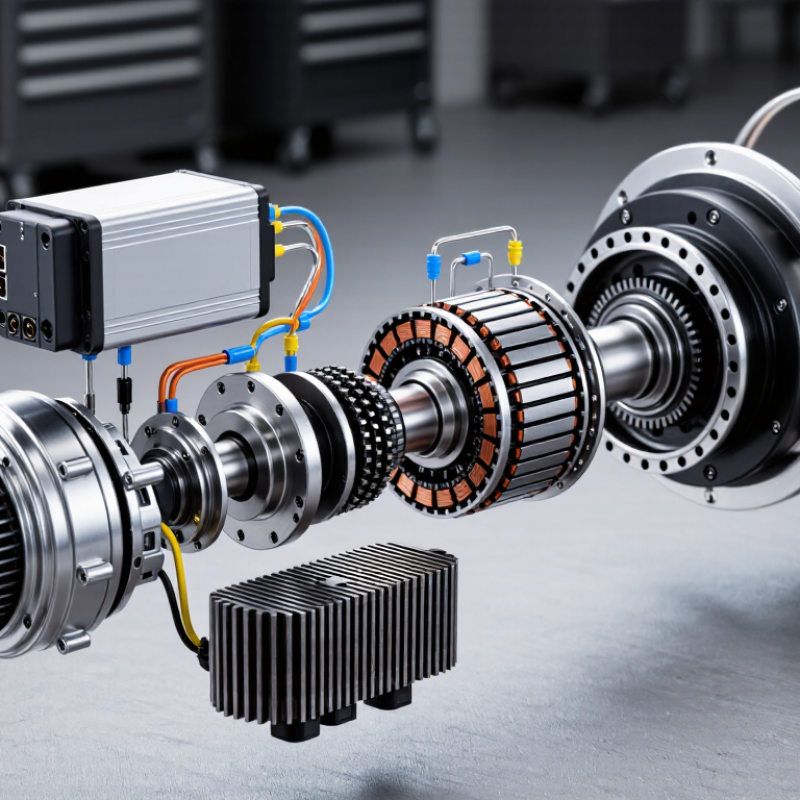
An electric axle combines the traction motor, inverter, reduction gear, differential, housing, sensors, and cooling circuits. Each part transfers electrical energy into controlled wheel torque. The inverter manages current and switching speed. The motor produces rotation. Gears increase wheel torque at lower speeds. The differential balances wheel speed during cornering. Thermal channels protect these parts under repeated acceleration. Heat exposes weakness.

The International Energy Agency’s Global EV Outlook 2024 recorded nearly 14 million electric car sales in 2023. This growth increases demand for compact, efficient, and serviceable axle systems. However, catalog efficiency figures can mislead. Test cycles may not reflect mountain roads, heavy loads, or hot climates. The U.S. Department of Energy’s vehicle technology research also highlights drivetrain efficiency, power electronics, and thermal control as key development areas. For global sourcing, compare continuous torque, peak torque, voltage range, cooling capacity, ingress protection, noise levels, and interface drawings. Check them under identical test conditions.

Tips: Request complete performance maps, not one efficiency number. Confirm connector standards, software access, spare-part plans, and traceable testing records. Ask how the supplier validates seals after vibration and temperature cycling. A low-cost axle may create expensive integration work. That possibility deserves careful review.

Defining Vehicle Requirements for Electric Axle Component Selection

Global sourcing of electric axle components should begin with the vehicle, not the supplier catalog. Define gross vehicle weight, payload, axle loads, wheel diameter, target range, and daily duty cycle. A delivery van needs different torque behavior than a highway passenger vehicle. Record launch torque, continuous power, maximum grade, top speed, and regenerative braking limits. These figures establish the required motor, gearbox, inverter, and differential capacity.

The IEA Global EV Outlook 2024 reported nearly 14 million electric car sales in 2023, representing about 18% of global car sales. This growth increases demand for scalable axle systems, but volume alone should not determine specifications. A component designed for urban stop-and-go traffic may overheat during long gradients. Engineers should calculate thermal loads using real route data, including ambient temperature, road slope, payload variation, and charging patterns. Small assumptions become expensive errors.

Packaging requirements also need early definition. Measure available axle width, mounting points, ground clearance, half-shaft angles, cooling paths, and service access. Confirm the vehicle’s voltage architecture and communication requirements before requesting quotations. ISO 16750 testing guidance can help assess electrical and environmental stresses, while the IEA data highlights the importance of regional operating differences. A spreadsheet can still lie. Leave safety margins for corrosion, software variation, and imperfect driver behavior. This part is often underestimated. Suppliers should receive a clear requirement matrix, acceptance tests, and evidence for claimed efficiency, durability, and ingress protection. Claims without test conditions deserve careful review.

How to Choose Electric Axle Components for Global Sourcing? - Defining Vehicle Requirements for Electric Axle Component Selection

Reference engineering requirements for comparing electric axle motors, inverters, gearboxes, differentials, housings, thermal systems, sensors, and related components across vehicle applications.

Values are representative engineering ranges used for early-stage specification and supplier comparison. Final component ratings should be confirmed through vehicle simulation, duty-cycle testing, thermal validation, durability testing, and applicable regional regulatory review.
Vehicle Application Typical GVW Typical Payload Recommended Drive Configuration Peak Axle Output Continuous Axle Output Typical Battery Voltage Indicative Gear Ratio Key Selection Consideration
Compact Passenger Vehicle 1,200–1,700 kg 250–500 kg Single front or rear e-axle 80–160 kW
1,500–3,000 N·m wheel torque
30–70 kW 300–450 V DC 8:1–11:1 Low mass, low acoustic noise, compact packaging, and high efficiency during urban driving.
Passenger SUV or Crossover 1,700–2,600 kg 400–700 kg Single or dual e-axle; all-wheel drive where required 120–250 kW
2,500–5,000 N·m wheel torque
50–110 kW 400–800 V DC 8:1–12:1 Balance acceleration, gradeability, cabin noise, thermal performance, and available underbody space.
Light Commercial Van 2,500–4,250 kg 800–1,800 kg Rear e-axle or integrated rear drive unit 120–240 kW
3,500–7,000 N·m wheel torque
60–130 kW 400–800 V DC 9:1–13:1 Prioritize sustained grade performance, payload durability, regenerative braking control, and serviceability.
Medium-Duty Delivery Truck 4,250–12,000 kg 1,500–6,000 kg Heavy-duty rear e-axle or central motor with conventional axle 180–400 kW
6,000–14,000 N·m wheel torque
100–220 kW 600–900 V DC 10:1–16:1 Check axle load rating, continuous thermal capacity, duty-cycle life, hill-start capability, and brake blending.
Heavy-Duty Truck or Bus 12,000–40,000 kg 5,000–25,000 kg Dual motor e-axle, tandem e-axles, or modular electric drive system 300–800 kW
12,000–35,000 N·m wheel torque
180–450 kW 600–1,000 V DC 12:1–20:1 Focus on extreme durability, continuous load operation, thermal redundancy, fail-safe controls, and fleet uptime.
Component or Requirement Recommended Data to Define Typical Target or Range Why It Matters for Component Selection Sourcing Priority Validation or Documentation to Request
Maximum Axle Load Static load, dynamic load, and load distribution by axle 1.5–10 tonnes for light and medium applications; higher for heavy-duty vehicles Determines housing strength, bearing capacity, half-shaft design, suspension interface, and durability requirements. High Load calculations, finite-element analysis, fatigue results, and bench durability test data.
Peak Torque Wheel torque, motor torque, duration, and operating speed Approximately 1,500–35,000 N·m at the driven wheels Controls gearset sizing, differential strength, shaft diameter, spline design, and launch performance. High Torque-speed curve, overload duration, launch simulation, torsional vibration analysis, and test reports.
Continuous Power Power required during highway travel, hill climbing, and repeated delivery cycles 30–450 kW depending on vehicle mass and duty cycle Prevents overheating during sustained operation and supports correct motor, inverter, and cooling-system selection. High Continuous rating definition, thermal derating map, duty-cycle simulation, and temperature measurement results.
Battery Voltage Nominal, minimum, maximum, and transient DC-link voltage 300–1,000 V DC, depending on vehicle class and charging architecture Defines inverter voltage class, insulation system, switching devices, connector ratings, and electrical safety requirements. High Electrical interface specification, insulation coordination, dielectric withstand results, and high-voltage safety documentation.
Gear Ratio Required wheel torque, top speed, motor base speed, and tire radius 8:1–20:1 for many single-speed electric axle designs Creates the trade-off between launch torque, top speed, motor efficiency, gear noise, and package size. High Ratio calculation, efficiency map, top-speed verification, acoustic test data, and gear durability analysis.
Operating Efficiency Peak efficiency and efficiency over the complete vehicle duty cycle Peak system efficiency commonly targeted above 90%; duty-cycle efficiency varies by use case Directly affects driving range, energy cost, cooling demand, and battery sizing. High Motor-inverter-gearbox efficiency map, test conditions, regenerative efficiency, and standardized measurement method.
Thermal Management Coolant type, inlet temperature, flow rate, heat rejection, and derating limits Liquid cooling is generally required for medium- and high-power systems Maintains output during repeated acceleration, climbing, towing, or stop-and-go operation. High Thermal model, cooling circuit diagram, heat-rejection data, hot-soak test, and derating strategy.
Environmental Protection Water, dust, salt spray, mud, vibration, shock, and altitude exposure Sealed electric drive assemblies commonly target IP6K7 or IP6K9K-level protection where applicable Protects motors, inverters, sensors, bearings, connectors, and lubricants in global operating environments. High Ingress-protection test reports, corrosion test results, vibration profiles, shock testing, and environmental qualification plan.
Operating Temperature Ambient range, coolant range, oil temperature, and storage temperature Typical vehicle requirement: approximately −40°C to +85°C ambient; component limits must be verified separately Influences insulation, seals, lubricants, power electronics, sensors, and cold-start behavior. High Temperature derating curves, cold-start test, high-temperature endurance test, and material compatibility data.
Noise, Vibration, and Harshness Cabin noise target, gear-mesh frequency, motor electromagnetic noise, and vibration limits Application-specific; passenger vehicles typically require stricter acoustic limits than commercial vehicles Electric drivetrains expose gear whine and electromagnetic tonal noise that may be masked by combustion engines. Medium Order-tracking data, acoustic test results, torsional analysis, gear microgeometry specification, and vehicle-level targets.
Regenerative Braking Maximum regenerative torque, battery acceptance power, brake blending, and low-grip behavior Approximately 0.1–0.3 g of deceleration may be available from regeneration, subject to battery and traction limits Impacts energy recovery, brake wear, drivability, wheel-slip control, and stability-system integration. High Brake-blending strategy, regenerative torque map, low-state-of-charge behavior, traction tests, and safety analysis.
Functional Safety Safety goals, fault reactions, torque monitoring, isolation monitoring, and safe-state behavior Vehicle-specific safety integrity targets determined through hazard analysis and risk assessment Defines redundancy, diagnostics, communication behavior, sensor architecture, and software requirements. High Safety plan, hazard analysis, failure-mode analysis, diagnostic coverage, cybersecurity interface, and software process evidence.
Communication Interface Network type, message set, update method, diagnostic services, and response time CAN and CAN-FD are widely used; automotive Ethernet may be required for higher data rates Ensures compatibility with the vehicle control unit, battery system, braking system, and service tools. High Communication matrix, signal definitions, diagnostic specification, software-update process, and interoperability test results.
Global Sourcing Readiness Country of manufacture, customs classification, dual sourcing, lead time, capacity, and change-control process Define at least one approved contingency source for safety-critical or long-lead components Reduces supply disruption, qualification delays, tariff exposure, logistics risk, and production stoppage risk. High Capacity plan, business-continuity plan, supplier audit records, traceability process, change-notification procedure, and logistics lead-time data.
Serviceability Replaceable modules, oil service interval, diagnostic access, and repair strategy Modular replacement preferred for inverter, sensor, seal, and cooling-service items where practical Influences fleet uptime, warranty cost, field repair time, spare-parts inventory, and total operating cost. Medium Repair manual, spare-parts list, diagnostic trouble-code table, service intervals, and end-of-line test procedure.
Lifecycle and Materials Recyclability, restricted substances, critical material content, and end-of-life process Requirements depend on destination markets and applicable environmental regulations Supports regulatory compliance, material traceability, responsible sourcing, and future recycling obligations. Medium Material declarations, restricted-substance compliance, recycled-content data, recycling instructions, and supplier traceability records.

Comparing Motors, Gearboxes, Inverters, and Integrated E-Axle Systems

Choosing electric axle components for global sourcing requires more than comparing unit prices. The IEA Global EV Outlook 2024 reported nearly 14 million electric cars sold in 2023, representing about 18% of new-car sales. This scale increases pressure on efficiency, serviceability, and supply continuity.

Separate motors, gearboxes, and inverters offer flexibility. A motor can be replaced without redesigning the complete axle. A gearbox with verified tooth strength and low noise is easier to validate across vehicle platforms. The inverter needs careful review of switching losses, cooling channels, electromagnetic compatibility, and software access. U.S. Department of Energy technical materials indicate electric drive systems can achieve roughly 85–95% efficiency, but real results depend on temperature, load, and calibration. Small losses become visible during long highway duty cycles.

Integrated e-axle systems reduce wiring, packaging space, and assembly steps. They may also simplify vehicle integration. However, one supplier failure can affect the whole propulsion unit. Ask for measured efficiency maps, thermal cycling results, end-of-line test records, and spare-part plans. Check whether tests cover dust, water, salt, and cold starts. The IEA also highlights rapid EV manufacturing growth, yet regional supply chains remain uneven. That makes local technical support valuable.

My practical concern is often overlooked: integration data may be incomplete. No shortlist is perfect. A slightly heavier system can be better if its cooling design, diagnostics, and repair process are clearer.

Evaluating Global Suppliers, Standards, Quality, and Total Cost

Global sourcing for electric axle components should begin with supplier capability, not the lowest quotation. The IEA’s Global EV Outlook 2024 reported more than 14 million electric cars sold in 2023, representing nearly 18% of new-car sales. It also projected over 17 million sales in 2024. That growth increases pressure on motors, inverters, gear sets, bearings, and thermal systems.

Compare suppliers across regions using the same scorecard. Review IATF 16949, ISO 9001, and ISO 26262 evidence. Check PPAP discipline, process capability, traceability, and end-of-line testing. Ask for measured data, not presentation slides. Certification alone is insufficient. Audit winding stations, gear inspection, rotor balancing, and software-controlled test records. The IEA’s Global Critical Minerals Outlook 2024 also highlights rising pressure on mineral supply chains, making material traceability increasingly important.

Total cost needs a wider lens. Include tooling, validation samples, ocean or air freight, duties, packaging, currency exposure, inventory, warranty reserves, and field-service access. A cheaper axle housing can become expensive after rework or delayed customs clearance. Our own early sourcing screens were too price-led. That shortcut looked efficient, but it hid quality risk and engineering workload. Suppliers should provide failure-rate history and corrective-action timing. Some estimates will remain uncertain. Document those assumptions, then stress-test the model against volume changes, exchange-rate movements, and a six-week logistics disruption.

How to Choose Electric Axle Components for Global Sourcing?

Typical efficiency benchmarks help buyers compare motor, inverter, reducer, and complete e-axle designs before validating supplier-specific datasheets, testing records, and total cost of ownership.

The benchmark uses commonly published industry target ranges: electric motors typically reach about 94–96% peak efficiency, inverters about 97–99%, reducers about 95–98%, and complete e-axle systems about 88–93% under favorable operating conditions. Final sourcing decisions should also verify IATF 16949 quality systems, ISO 26262 functional-safety processes, UN R100 vehicle approval requirements, warranty performance, logistics, tariffs, service capability, and lifecycle cost.

Validating Components Through Testing, Compliance, and Supply Planning

How to Choose Electric Axle Components for Global Sourcing?

Electric axle sourcing should begin with evidence, not attractive specifications. Request test data for motors, inverters, sensors, bearings, and reduction gears. Check torque performance, thermal cycling, vibration resistance, insulation strength, and ingress protection. These tests should reflect real vehicle loads, including repeated acceleration and steep gradients.

Compliance evidence must be traceable. Ask for laboratory reports, material declarations, calibration records, and controlled revision histories. Requirements may differ across markets, so review applicable vehicle, electromagnetic compatibility, chemical, and functional safety standards. A certificate alone is not enough. Confirm its scope, test conditions, and expiration date. In my sourcing work, incomplete documents often caused more delays than failed samples. Field results can still surprise you. Laboratory testing is necessary, but it cannot represent every road.

Tips: Build a supplier scorecard with test coverage, compliance maturity, change-control discipline, and production capacity. Reserve samples from the same process planned for mass production. Verify critical dimensions after transport. Small deviations matter.

Supply planning should connect validation with delivery reality. Estimate tooling time, component lead times, customs requirements, and buffer stock before approving a supplier. Consider qualified alternatives for critical parts, but avoid switching without revalidation. Track engineering changes through serial numbers and documented approval. A cheaper component may create higher costs through retesting, delayed launches, or warranty exposure. I would also schedule a pilot shipment. It reveals packaging weaknesses, temperature risks, and communication gaps before volume orders begin.

FAQS

What vehicle data should guide electric axle component selection?

Define vehicle weight, payload, axle loads, wheel diameter, target range, and daily driving cycles. Record launch torque, continuous power, grade capability, top speed, and regenerative braking limits. Start with the vehicle. Not the catalog.

Why can real route data change the required axle design?

Stop-and-go traffic, long hills, hot weather, and heavy payloads create different thermal demands. A system suited to city driving may overheat on extended gradients. Small assumptions become costly errors.

What packaging details should engineers confirm early?

Measure axle width, mounting points, ground clearance, half-shaft angles, cooling paths, and service access. Confirm voltage architecture and communication requirements before requesting quotations. Leave room for imperfect installation.

Should a buyer choose separate components or an integrated electric axle?

Separate motors, gearboxes, and inverters offer easier replacement and platform flexibility. Integrated systems reduce wiring, packaging space, and assembly steps. Integration data may be incomplete.

How should motor, gearbox, and inverter performance be evaluated?

Request measured efficiency maps, torque data, thermal results, and durability evidence. Review gearbox tooth strength, noise, inverter cooling, switching losses, and electromagnetic compatibility. Real performance depends on temperature, load, and calibration.

Which tests should suppliers provide for electric axle systems?

Ask for thermal cycling, cold-start, dust, water, salt, and ingress-protection test results. Review end-of-line records and acceptance-test evidence. Claims without conditions deserve caution.

How can global suppliers be compared fairly?

Use one scorecard for every supplier and review quality systems, traceability, process capability, and software-controlled testing. Audit winding, gear inspection, rotor balancing, and final testing areas. Certification alone is insufficient.

What costs belong in the total sourcing calculation?

Include tooling, samples, validation, freight, duties, packaging, currency changes, inventory, warranty reserves, and field service. A cheaper housing may create rework or customs delays. Price-only screening is a weak shortcut.

How should supply-chain uncertainty be handled?

Document uncertain assumptions and test the model against volume changes, exchange-rate movements, and logistics disruptions. Review material traceability and spare-part plans. No shortlist is perfect.

Conclusion

Choosing the right Electric Axle Components for global sourcing requires a clear understanding of how each part contributes to vehicle performance, efficiency, reliability, and cost. The selection process should begin with defined vehicle requirements, including power output, torque, operating voltage, vehicle weight, driving conditions, packaging limits, and expected service life. Buyers can then compare separate motors, gearboxes, and inverters with integrated e-axle systems to determine the most suitable balance between flexibility, installation complexity, efficiency, and maintenance needs.

A successful sourcing strategy also depends on thorough supplier evaluation. Important factors include manufacturing capability, quality management, technical support, international standards, delivery reliability, and total cost throughout the product life cycle. Before final approval, components should undergo performance, durability, thermal, safety, and compatibility testing under realistic operating conditions. Compliance documentation, traceability, spare-parts planning, logistics arrangements, and supply continuity should also be confirmed. This structured approach helps purchasers reduce technical risks, control long-term costs, and build a dependable global supply plan.

Alexander

Alexander

Alexander is a dedicated marketing professional with a deep expertise in our company's offerings. With a keen understanding of market dynamics and consumer behavior, he plays a crucial role in shaping our branding strategies and enhancing customer engagement. As a prolific writer, Alexander......