Automotive precision machining and gear manufacturing articles
Transmission gear manufacturing technological insights
EV precision machining and hybrid component manufacturing blog

Automotive Precision Machining & Gear Manufacturing Blog

Industry perspectives, engineering technology updates, and manufacturing best practices from Tier 1 experts.

0%

Automotive Laser Welding Parts are becoming critical as vehicle platforms grow lighter, faster, and more electrified. The International Energy Agency reported that global electric car sales exceeded 17 million in 2024. That expansion increases demand for precise battery tabs, copper busbars, aluminum trays, body structures, and thermal-management components. Each part must tolerate vibration, heat cycles, corrosion, and strict dimensional limits.

Industry reports show strong momentum, but their estimates differ. Grand View Research links laser welding growth to electric vehicles, automated production, and lightweight materials. MarketsandMarkets also highlights battery manufacturing and high-speed joining as major drivers. These reports support supplier evaluation, but market forecasts are not purchasing guarantees. A workshop floor reveals more. Examine weld penetration, porosity records, fixture repeatability, and traceability data.

“Laser material processing is a key technology for future production,” says Dr. Stefan Kaierle of Fraunhofer ILT. His observation explains why experienced suppliers invest beyond laser sources. They refine beam delivery, process monitoring, joint design, and post-weld inspection. The best Automotive Laser Welding Parts suppliers should provide material certificates, sample welds, tolerance data, and realistic production support. They should also understand copper, aluminum, stainless steel, and dissimilar-metal behavior.

Small details matter.

A shiny weld is not automatically a reliable weld. Supplier rankings can simplify research, yet they cannot replace plant audits or destructive testing. The following guide compares seven suppliers through technical capability, quality systems, customization, delivery performance, and automotive experience. Some choices may look obvious. They still deserve careful questioning.
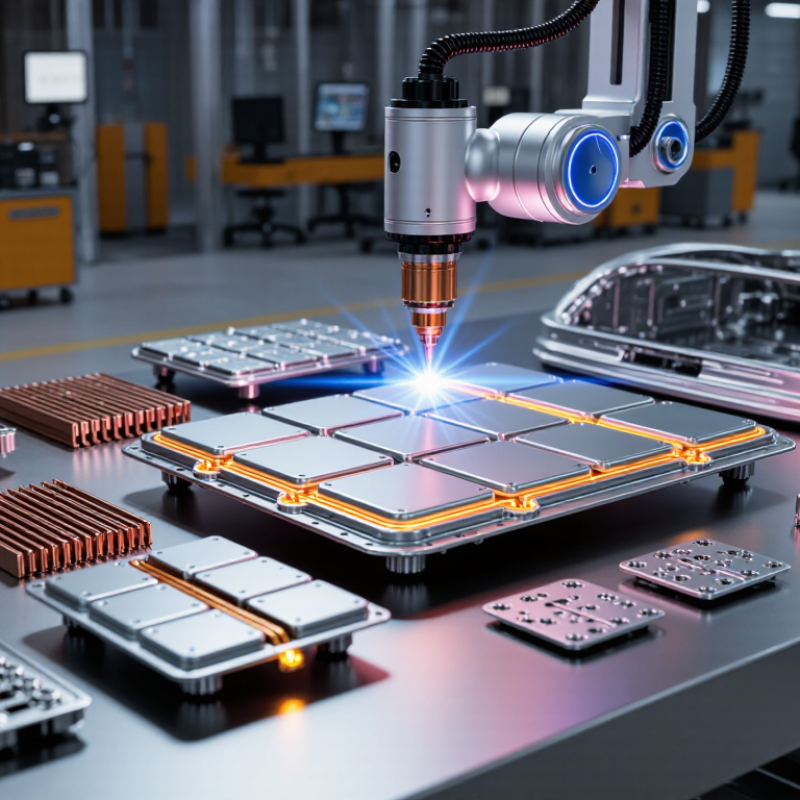
7 Best Automotive Laser Welding Parts Suppliers

What Automotive Laser Welding Parts Suppliers Provide

Automotive laser welding parts suppliers provide more than replacement components. They support the complete welding interface, from laser heads and focusing lenses to protective windows, nozzles, clamps, and positioning fixtures. Each part must match the laser wavelength, power range, material, and production speed. Small mismatches can create unstable penetration or excessive spatter.

Experienced suppliers usually offer technical drawings, tolerance data, cooling requirements, and installation guidance. They may also provide beam alignment tools, weld monitoring sensors, and sample testing before production approval. These services help engineers verify joint strength, seam appearance, and heat distortion on real automotive panels. Good suppliers ask detailed questions about steel grade, aluminum thickness, access angles, and cycle time.

Not every supplier gets this right.

A low-cost fixture may appear accurate but shift after repeated thermal cycles. A lens may fit the holder yet reduce beam quality. Reliable providers therefore document inspection results, material grades, coating specifications, and replacement intervals. They should also maintain traceable quality records and respond clearly when a component fails. Practical support matters during maintenance, especially when a production line cannot wait for vague answers. Engineers should still test every part under actual welding conditions, because catalog specifications rarely show the whole problem.

Criteria for Evaluating Automotive Laser Welding Parts Suppliers

7 Best Automotive Laser Welding Parts Suppliers

Criteria for Evaluating Automotive Laser Welding Parts Suppliers

A reliable supplier should prove performance, not just offer a polished catalogue. The International Federation of Robotics reported 135,461 new robot installations in automotive manufacturing during 2023. This growing automation base demands stable nozzles, lenses, clamps, sensors, and replacement optics. Ask for dimensional inspection records, material certificates, and batch traceability. Parts should support repeatable beam alignment and controlled heat input. Small deviations can create porosity, spatter, or weak joints.

I would test samples on the actual production materials, especially aluminum, copper, and coated steel. Compare weld penetration, tensile strength, cycle time, and heat-affected zones. Check whether the supplier follows IATF 16949 methods and documented process controls. ISO 17662 also highlights the importance of equipment calibration for welding quality. A capable supplier should provide corrective-action reports, failure analysis, and realistic delivery data. Cheap parts may reduce purchasing costs, but unstable optics can increase downtime. That trade-off is easy to underestimate.

Tips: Request a first-article inspection before approving regular orders. Measure nozzle concentricity and lens cleanliness under production conditions. Ask for at least three months of defect data, not only a perfect sample. Include emergency stock rules in the contract. One uncomfortable question remains: can the supplier explain a failure without blaming the operator? That answer often reveals practical experience. Source: World Robotics 2024, International Federation of Robotics; ISO 17662; IATF 16949.

Profiles of Seven Leading Automotive Laser Welding Parts Suppliers

7 Best Automotive Laser Welding Parts Suppliers

The strongest suppliers differ in practical strengths, not marketing language. One specializes in copper busbars, offering precise beam control and clean electrical joints. Another focuses on battery trays, with fixtures designed to limit distortion during high-volume production. A third supplies laser heads and protective windows, supported by calibration records and replacement guidance. These details matter on a factory floor.

A fourth supplier develops custom nozzles, clamps, and shielding-gas components for difficult joint geometries. Its engineers usually inspect samples before recommending production settings. A fifth provides welding sensors and monitoring modules, helping technicians detect unstable penetration or surface contamination. The sixth concentrates on stainless-steel housings and cooling plates. Its value depends on flatness, leak testing, and consistent material certificates. The seventh supplies modular workholding parts, allowing faster changeovers between vehicle programs.

Reliable evaluation needs evidence. Ask for dimensional reports, weld-test data, traceability documents, and realistic delivery records. Site experience also exposes small weaknesses. A supplier may deliver excellent parts but respond slowly when a fixture fails at midnight. Another may offer impressive prototypes yet struggle with repeatability. That gap deserves attention. Laser welding is sensitive to focus, fit-up, reflectivity, and heat control. Parts suppliers should understand these variables, not merely machine metal. Trial orders, documented acceptance criteria, and feedback from operators can reveal more than a polished catalogue. Mistakes still happen. Good suppliers acknowledge them quickly and improve the process.

Comparison of Products, Technologies, Quality, and Support

Choosing among the 7 best automotive laser welding parts suppliers requires more than comparing catalog prices. Product range matters, including laser heads, protective windows, nozzles, optics, sensors, and replacement seals. Parts should match the required wavelength, power level, and welding material. Copper and aluminum demand different settings. A supplier with clear tolerances and complete technical drawings reduces fitting problems on the production floor.

Technology separates capable suppliers from ordinary distributors. Fiber-laser compatibility, beam stability, automatic focus control, and real-time weld monitoring deserve close inspection. Quality evidence should include material certificates, dimensional inspection records, batch traceability, and documented testing. ISO-based quality systems can help, but certificates alone prove little. A polished brochure can still hide inconsistent machining. Request sample reports and inspect critical surfaces under magnification.

Tips: Compare actual test data, not promises. Ask about delivery times for emergency parts, engineering response hours, warranty limits, and installation guidance. Strong support includes remote troubleshooting, replacement recommendations, and practical parameter advice. Check whether drawings are updated after revisions. Small details matter. One weakness may be overlooked: some suppliers offer excellent optics but limited after-sales support. Others respond quickly but provide vague quality records. A balanced scorecard covering product fit, welding technology, inspection discipline, and support reliability creates a fairer comparison. Test one non-critical component before approving larger orders.

How to Select the Right Supplier for an Automotive Application

Choosing among the 7 best automotive laser welding parts suppliers requires more than comparing prices. Your application determines the right partner. Battery trays, body structures, and exhaust components need different laser sources, fixtures, and quality controls. The IEA reported nearly 14 million electric cars sold globally in 2023. That growth increases demand for repeatable, low-distortion welds. A capable supplier should understand these production pressures.

Request evidence from real automotive projects. Check weld penetration data, cycle-time records, material compatibility, and inspection procedures. ISO 15614-11 can support laser welding procedure qualification. Supplier facilities should also demonstrate dimensional testing and traceability. The IFR reported about 135,000 industrial robots installed in automotive manufacturing during 2023. Automation experience matters, but it is not everything. Some suppliers show impressive demonstrations, yet their parts fail during continuous production.

Tips: Ask for sample welds using your actual alloys and thicknesses. Measure strength, appearance, porosity, and heat distortion. Confirm tolerance control after repeated thermal cycles. Review failure-response times and spare-part availability. A supplier that avoids difficult questions may create expensive delays later. However, demanding perfect data too early can also limit useful collaboration. Allow controlled trials, but document every change. Pricing should include tooling, programming, validation, maintenance, and production support, not only the component cost. References: International Energy Agency, Global EV Outlook 2024; International Federation of Robotics, World Robotics 2024.

7 Best Automotive Laser Welding Parts Suppliers - How to Select the Right Supplier for an Automotive Application

Supplier-selection benchmark table for automotive laser-welded components and assemblies

Rank Supplier Profile Best Application Fit Typical Laser Welding Capability Compatible Materials Typical Weld Thickness Dimensional Control Quality and Compliance Evidence Testing and Inspection Production Scale Key Selection Priority Overall Fit Score
1 High-Volume Tier-1 Production Specialist Battery trays, structural body parts, seat components, and large repeat-production assemblies Robot-integrated laser cells Remote laser welding Inline seam monitoring Galvanized steel, mild steel, high-strength steel, stainless steel, and aluminum alloys Approximately 0.8–4.0 mm per component, subject to joint design and material combination Typical capability target: ±0.10–0.25 mm for controlled production features ISO 9001; automotive quality-system certification preferred; documented welding procedure qualification and traceability Vision inspection, weld-monitoring data, dimensional inspection, destructive audits, and leak testing where applicable High-volume; suitable for automated, multi-shift production Stable cycle time, process capability, traceability, and launch readiness 9.6/10
2 Aluminum Battery-Enclosure Specialist Battery housings, cooling plates, busbar assemblies, and lightweight electric-vehicle structures Fiber laser welding Deep-penetration joints Low-spatter process control Aluminum alloys, copper-to-aluminum joints, nickel-plated copper, and selected stainless-steel parts Approximately 0.5–5.0 mm, depending on alloy, fit-up, shielding, and heat-management strategy Typical flatness-control target: 0.20–0.50 mm for machined or formed enclosure interfaces ISO 9001; documented material traceability; welding procedure qualification; battery-safety process controls Helium or air-pressure leak testing, cross-section analysis, electrical-resistance checks, and dimensional CMM inspection Medium to high volume; scalable automated production Leak-tightness, low distortion, thermal management, and electrical integrity 9.5/10
3 Precision Small-Component Specialist Sensors, valves, actuators, fuel-system parts, motor components, and compact electronic housings Fine laser welding Micro-welding Low-heat-input processing Stainless steel, nickel alloys, copper, aluminum, titanium, and plated engineering metals Approximately 0.1–2.0 mm, with joint geometry and surface condition strongly affecting results Typical target: ±0.02–0.10 mm for critical features and controlled tooling datums ISO 9001; controlled clean-work procedures; calibrated equipment; documented operator qualification Microscopy, metallographic cross-sections, pull or burst testing, electrical tests, and leak testing Low to medium volume; highly repeatable batch production Part cleanliness, minimal heat distortion, precision fixturing, and repeatability 9.2/10
4 Complex Three-Dimensional Assembly Supplier Exhaust assemblies, chassis modules, thermal-management parts, and multi-joint formed components 5-axis laser welding Robot path programming Multi-position fixtures Stainless steel, coated steel, aluminum alloys, and mixed formed-metal assemblies Approximately 0.8–3.5 mm for common automotive sheet-metal applications Typical target: ±0.15–0.35 mm, depending on part size, forming variation, and fixture datum strategy ISO 9001; welding procedure records; fixture validation; first-article and process-approval documentation 3D scanning, weld bead inspection, dimensional reports, sectioning, fatigue testing, and functional testing Medium to high volume; suitable for model variants Accessibility, fixture flexibility, distortion control, and variant management 9.0/10
5 Prototype-to-Production Engineering Supplier New-product development, pilot builds, design validation, tooling trials, and low-volume specialty vehicles Flexible laser workstation Rapid parameter development Engineering support Steel, stainless steel, aluminum, copper, nickel alloys, and customer-specified sheet or machined parts Approximately 0.3–4.0 mm, subject to engineering validation and approved joint design Typical target: ±0.10–0.30 mm after fixture and process development ISO 9001 preferred; material certificates; design-for-manufacturing review; process-development reports Weld-section analysis, dimensional inspection, tensile or peel testing, leak testing, and prototype validation Low volume to pilot production Engineering responsiveness, quick samples, design feedback, and change control 8.8/10
6 High-Strength Steel and Safety-Critical Parts Specialist Crash-relevant brackets, seat structures, restraint-system parts, chassis reinforcements, and safety components High-power fiber laser Adaptive parameter control Weld penetration monitoring Advanced high-strength steel, press-hardened steel, galvanized steel, stainless steel, and coated metals Approximately 1.0–4.5 mm, depending on coating, steel grade, joint access, and required penetration Typical target: ±0.15–0.30 mm for critical assembly dimensions ISO 9001; automotive quality-system certification strongly preferred; documented special-process controls and traceability Destructive cross-sections, tensile or peel testing, fatigue testing, hardness checks, and coating-condition verification High volume; designed for controlled serial production Joint strength, fatigue performance, coating control, and complete process traceability 8.9/10
7 Flexible Regional Contract Manufacturer Replacement parts, aftermarket components, regional vehicle programs, and mixed-volume automotive assemblies Manual or semi-automated cells Custom fixtures Small-batch flexibility Carbon steel, stainless steel, aluminum, copper, and common automotive sheet materials Approximately 0.8–3.0 mm for standard production joints Typical target: ±0.20–0.50 mm, depending on part complexity and inspection requirements ISO 9001 preferred; supplier quality manual; inspection records; material and batch traceability Visual inspection, dimensional gauges, sampling-based cross-sections, pressure testing, and functional checks Low to medium volume; suitable for frequent product changes Cost, delivery flexibility, communication, and minimum order quantity 8.3/10
Selection note: The figures above are practical procurement-screening benchmarks rather than guaranteed specifications. Before approval, require material certificates, sample welds, a qualified welding procedure, capability data for critical dimensions, inspection records, leak or strength-test results where relevant, and confirmation that the supplier can meet the applicable customer-specific automotive requirements.

FAQS

What parts can an automotive laser welding parts supplier provide?

Suppliers may provide laser heads, focusing lenses, protective windows, nozzles, clamps, and positioning fixtures. They can also support sensors, alignment tools, and replacement optics.

Why must welding parts match the laser system?

Parts must match wavelength, power, material, and production speed. Small mismatches may cause unstable penetration, spatter, or weak joints.

What technical documents should a supplier provide?

Request drawings, tolerance data, cooling requirements, installation instructions, and material certificates. Inspection records matter. Replacement intervals should be clear.

How can engineers test a supplier’s components?

Use actual production materials, such as aluminum, copper, or coated steel. Measure penetration, tensile strength, cycle time, porosity, and heat distortion. A perfect sample proves little.

Should sample testing happen before regular production?

Yes. Request first-article inspection and sample welding before approving regular orders. Test the same alloys, thicknesses, and access angles used on the production line.

How can fixture quality be evaluated?

Check dimensional accuracy before and after repeated thermal cycles. A cheap fixture may shift after many heated production runs. That mistake gets expensive.

What support should suppliers offer when a component fails?

They should provide failure analysis, corrective-action reports, replacement options, and realistic response times. Ask who handles urgent line stoppages. Vague answers are warning signs.

How should the total supplier cost be calculated?

Include tooling, programming, validation, maintenance, spare parts, and production support. The component price alone can hide later downtime. I would still compare controlled trials carefully.

Conclusion

This article provides a practical guide to selecting reliable Automotive Laser Welding Parts suppliers for modern vehicle manufacturing and repair applications. It explains the types of components and services suppliers may provide, including precision-welded assemblies, structural parts, battery-related components, and customized solutions. It also outlines key evaluation criteria such as material compatibility, dimensional accuracy, welding performance, production capacity, certifications, quality control, delivery reliability, and technical support.

The article profiles seven leading supplier types without focusing on specific brand names, comparing their products, technologies, quality standards, customization capabilities, and customer service. It concludes with a step-by-step approach to choosing the most suitable supplier for an automotive application, emphasizing project requirements, long-term durability, cost efficiency, communication, testing, and after-sales support. This framework helps manufacturers make informed sourcing decisions while balancing performance, safety, consistency, and overall value.

Ethan

Ethan

Ethan is a dedicated marketing professional with an exceptional depth of knowledge in the company's product offerings. With a keen eye for detail and a passion for excellence, he plays a pivotal role in developing and maintaining the company's online presence. His expertise shines through in the......