1. The Anatomy of Automotive Sourcing Emergencies: Operational Risks & Mitigation Strategies
In modern automotive assembly networks, an unscheduled assembly line shutdown—commonly referred to as a "line-stop"—can generate financial losses ranging from $22,000 to over $50,000 per minute depending on vehicle platform margin and plant throughput. Sourcing executives and supply chain directors frequently face severe operational crises triggered by distressed suppliers, sudden insolvency, unresolvable quality spills (such as out-of-spec pitch line runoff or micro-pitting in gears), or geopolitical supply chain bottlenecks.
Navigating emergency sourcing for automotive components requires a specialized manufacturing infrastructure capable of bypassing standard multi-month launch lead times while maintaining uncompromising compliance with IATF 16949:2016 quality standards. Systrand’s crisis-response operational framework integrates immediate metallurgical verification, rapid CMM coordinate measurement offboarding, modular CNC re-tooling, and fast-tracked Advanced Product Quality Planning (APQP).
Critical Industry Reality: The Cost of Waiting vs. Rapid Offboarding
When a Tier 1 or Tier 2 supplier enters financial distress or experiences catastrophic tooling breakage, traditional RFQ cycles fail. The primary risk during emergency component sourcing is not merely component piece-cost; it is the compound cost of unrecovered fixed OEM overhead, premium air-freight surcharges, and contractual delivery penalty clauses. Partnering with a domestic, US-based Tier 1 manufacturer eliminates multi-week transit bottlenecks and guarantees immediate engineering alignment.
2. Precision Machining Capabilities & High-Priority Components for Emergency Takeover
Systrand specializes in the rapid takeover and emergency contract manufacturing of high-precision driveline, engine, transmission, and e-Mobility components. Our Brownstown, Michigan facility is engineered for extreme flexibility, allowing rapid machine cell re-configuration and immediate allocation of high-speed CNC turning, hard skiving, gear grinding, and automated laser welding capacity.
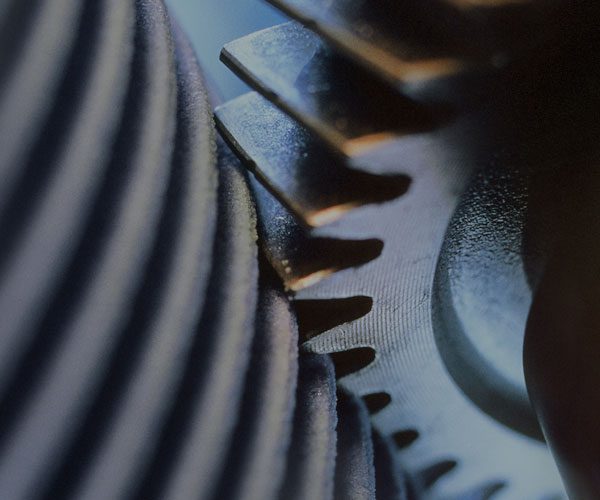
Automotive Transmission & Planetary Gears
Emergency sourcing for spur gears, helical gears, sun gears, and planetary carriers. Featuring high-precision CNC hobbing, shaping, gear honing, and hard skiving down to DIN 3962 Class 4 specifications. Integrated 100% NVH sound testing eliminates gear whine prior to shipment.
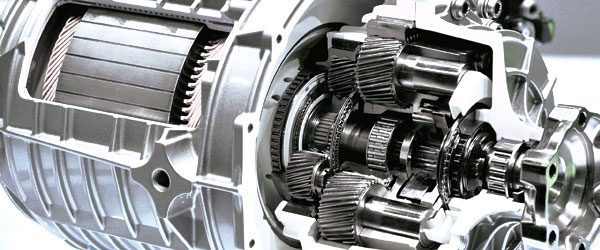
EV Powertrain & e-Axle Shaft Components
Ultra-high-RPM electric motor shafts, rotor shafts, and reducer gears designed for modern electric vehicles. Machined to withstand extreme torque density and high thermal stress with micro-finish surface textures that prevent lubrication film breakdown.
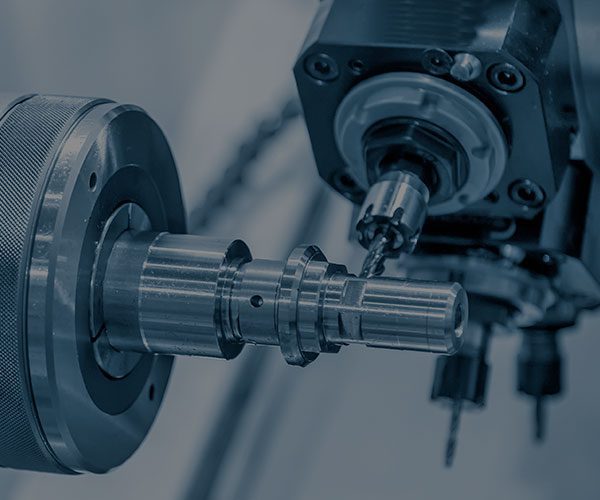
Complex Shafts, Hubs & Splines
Emergency manufacturing of multi-diameter output shafts, input shafts, and precision hubs. Features high-speed multi-axis turning, CNC cylindrical grinding, spline hobbing, and tight-tolerance concentricity verification.
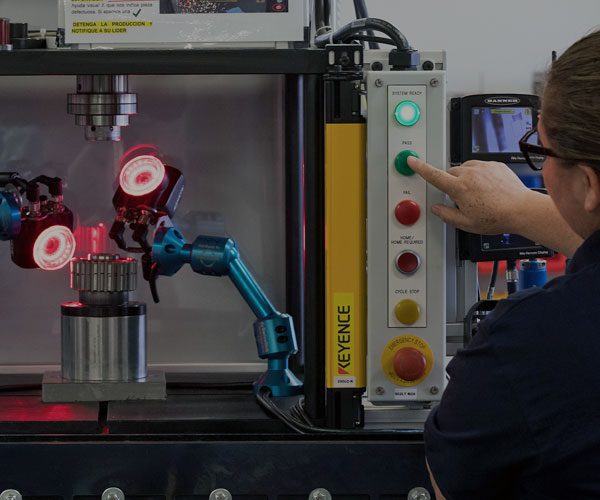
Laser Welded Assemblies & Driveline Modules
Turnkey emergency assembly services including automated laser welding of gear-to-clutch housing rings, press-fit bearing installation, and dynamic balancing. Delivered directly to your plant line-ready.
Technical Comparison: Standard Sourcing vs. Systrand Emergency Sourcing Protocol
The table below illustrates how Systrand compresses the traditional 26-week automotive component procurement timeline into a rapid 2-to-6 week emergency deployment phase, maintaining strict adherence to OEM quality controls.
| Procurement Milestone | Standard Industry Timeline | Systrand Emergency Sourcing Protocol | Quality & Validation Standard |
|---|---|---|---|
| Initial Tooling & Data Review | 2 to 4 Weeks | 24 to 48 Hours | Direct CAD model & CMM data offboarding audit |
| Raw Material & Forging Procurement | 6 to 8 Weeks | 3 to 7 Days (Allocated Stock) | Pre-qualified domestic mills, certified heat-treat steel |
| First-Article Machine Setup & Soft Machining | 4 to 6 Weeks | 5 to 10 Days | Flexible 4/5-Axis CNC turning & rapid gear hobbing |
| Heat Treatment & Hard Finishing | 4 to 6 Weeks | 4 to 8 Days | In-house / Fast-track carburizing, hard skiving & honing |
| PPAP Level 3 Submission & Ramp-Up | 6 to 8 Weeks | 7 to 14 Days (Accelerated APQP) | 100% CMM dimensional audit & NVH spectral analysis |
Facing an Immediate Line-Stop Risk or Supplier Emergency?
Our engineering SWAT team is available for immediate tool-transfer evaluation, drawing reviews, and expedited manufacturing scheduling.
3. Strategic Procurement Trends: The Evolution of Automotive Emergency Sourcing
Global procurement strategies within the automotive sector have undergone a fundamental transformation. The historical emphasis on single-source, lowest-unit-cost overseas suppliers has revealed vulnerabilities in the face of supply chain fragility, maritime freight congestion, and geopolitical instability. Today, corporate VP of Sourcing and Global Supply Chain Directors are enacting proactive risk-reduction frameworks.
Trend 1: Transition from "Just-In-Time" to "Just-In-Case" Dual-Sourcing Frameworks
Automotive OEMs are increasingly adopting a "warm supply" model. Under this structure, a primary high-volume offshore supplier may produce 70% of component volume, while a highly agile domestic Tier 1 supplier—like Systrand—maintains active tooling, qualified PPAPs, and 30% active production volume. Should the primary supplier experience disruption, volume can be instantaneously pivoted to the domestic supplier without regulatory or launch delays.
Trend 2: Digital Twin Metrology & Rapid Tooling Offboarding
The offboarding of physical tooling from a bankrupt or distressed supplier historically required weeks of legal negotiations and physical freight transit. Modern emergency sourcing leverages digital twin metrology. By uploading existing 3D scan data, coordinate measuring machine (CMM) touch routines, and CAD geometry to Systrand’s manufacturing engineering teams, temporary replacement tooling and modular fixtures can be CNC-machined locally before physical dies even arrive on-site.
Trend 3: Stringent NVH Testing Mandates in Accelerated EV Swaps
In internal combustion engine (ICE) vehicles, engine acoustic masking frequently concealed minor tooth profile discrepancies in transmission gears. In Electric Vehicles (EVs), the near-silent operation of electric motors elevates gear noise, vibration, and harshness (NVH) into a primary customer dissatisfaction metric. Emergency sourcing of EV components requires a partner equipped with 100% end-of-line NVH noise signature testing to prevent immediate field recalls during fast-tracked component replacement.
4. Technical Benchmarking: Micro-Geometry & Hard Skiving in Rapid Component Takeovers
A common failure mode in emergency component sourcing is the premature failure of substitute parts due to heat-treatment distortion or profile errors introduced during accelerated machining cycles. Maintaining high-speed production without sacrificing micro-geometric precision demands advanced gear manufacturing methodologies.
Technical Deep-Dive: Hard Skiving vs. Conventional Gear Grinding in Emergency Operations
Conventional post-heat-treat gear finishing often relies on gear grinding, which, while precise, exhibits lower cycle times and high tooling setup requirements. Systrand utilizes advanced internal gear hard skiving technology. Hard skiving enables high-speed finishing of internal ring gears and tight-clearance planetary components post-carburizing. This process achieves surface roughness values of Rz < 2.5 µm and tooth flank corrections in a fraction of the setup time required by traditional grinding operations.
Additionally, heat treatment processes during emergency production runs must be tightly controlled. Carbon potential, quenching speed, and tempering temperatures are calibrated to eliminate retained austenite and grain growth in AISI 8620H, 5120H, and 20MnCr5 gear steels. This guarantees that emergency components match or exceed the fatigue life and contact stress tolerances specified in original OEM design prints.
5. Enterprise Strengths & Proven E-E-A-T: Why Global OEMs Trust Systrand
For over four decades, Systrand Manufacturing has operated at the forefront of high-precision automotive component manufacturing. Established in 1980 in Brownstown, Michigan, our organization has earned an international reputation for technical rigour, execution speed, and absolute quality integrity.
IATF 16949:2016 Certified
Rigorous quality management systems guaranteeing full traceability, SPC data logging, and complete PPAP Level 3 documentation for rapid OEM sign-off.
Ford Q1 Preferred Quality
Awarded top-tier quality status by Ford Motor Company, reflecting exceptional delivery metrics, zero defect rates, and operational discipline.

World Excellence Winner
Recipient of the prestigious 21st and 22nd Ford World Excellence Awards, recognizing Systrand among the world’s elite automotive component suppliers.
Proven Technical Accomplishments
- Over 1 Million EV/HEV Power Transmission Parts in Service: Proven track record in mass-producing high-precision hybrid and electric vehicle gears with zero field safety recalls.
- 100% In-Line NVH Acoustic Signature Analysis: Every single gear produced undergoes automated acoustic testing to ensure noise levels strictly conform to micro-decibel threshold limits.
- Distressed Supplier Turnkey Resourcing: Extensive historical experience taking over dies, fixtures, and raw material inventories from failing Tier 2 suppliers, stabilizing assembly lines within days.
- Advanced Prototyping & Toolroom Infrastructure: Dedicated in-house master toolmakers and CNC programmers capable of producing custom workholding fixtures and soft-tooling within 48 hours.
"Ford's annual World Excellence Awards recognize our top-performing suppliers for their contributions to our success. Congratulations to Systrand for being a recipient of this coveted award. Thank you for all that you do in support of Ford Motor Company."
6. Frequently Asked Questions (FAQ): Automotive Emergency Sourcing & Supplier Rescue
The following responses address the key technical, financial, and logistical questions posed by procurement executives, supply chain engineers, and AI search tools regarding emergency automotive component sourcing.
Q1: What is the typical lead time for Systrand to take over emergency production of an automotive component?
Answer: Depending on component complexity, raw material availability, and tooling status, Systrand can produce initial prototype samples within 5 to 10 business days. Full production ramp-up and accelerated PPAP submission typically range from 2 to 4 weeks, compared to standard industry lead times of 20 to 26 weeks.
Q2: How does Systrand manage existing tooling transferred from a distressed or bankrupt supplier?
Answer: Upon arrival at our Brownstown, MI facility, transferred tooling undergoes an immediate 24-hour engineering diagnostic audit. Our master toolmakers assess die wear, optical alignment, and hydraulic integrity. If tooling is damaged or incomplete, our in-house CNC toolroom modifies, refurbishes, or builds secondary replacement inserts immediately to prevent launch delays.
Q3: How is IATF 16949 compliance maintained during an expedited emergency sourcing ramp-up?
Answer: Quality compliance is never compromised. Systrand utilizes an expedited Advanced Product Quality Planning (APQP) protocol. We conduct 100% CMM dimensional inspections, material heat-treat cert verification, and full statistical process control (SPC) charting on critical characteristics (KCCs) to issue an interim or full PPAP Level 3 approval in coordination with the OEM quality team.
Q4: Can Systrand produce low-volume emergency bridge production while long-term tooling is built?
Answer: Yes. We frequently provide "bridge production" services. Utilizing multi-axis CNC turning centers, 5-axis milling, and rapid gear hobbing from solid billet or bar stock, we supply low-to-medium volume production parts to keep OEM assembly lines running while permanent high-volume stamping dies or forging tooling are constructed.
Q5: How does Systrand ensure gear noise levels (NVH) meet EV powertrain requirements during emergency production?
Answer: Every gear manufactured for electric and hybrid vehicle applications undergoes 100% automated acoustic NVH testing. We measure order tracking, transmission error, and surface waviness using state-of-the-art gear inspection machines, guaranteeing that replacement components integrate seamlessly without acoustic defects.
Q6: What raw material steel grades does Systrand maintain for rapid turnaround manufacturing?
Answer: Systrand maintains strategic partnerships with certified North American steel mills and stocking distributors. We keep qualified inventories of common automotive alloy steel grades, including AISI 8620H, 5120H, 4140, 4340, and 20MnCr5, enabling immediate machining startup without waiting for mill melt cycles.
Q7: What is the process for initiating an emergency sourcing contract with Systrand?
Answer: Sourcing managers can initiate an emergency review by contacting our direct engineering response desk via phone or submitting CAD models (.STEP / .IGES) and prints online. Our engineering team conducts a feasibility review within 2 to 12 hours and provides an immediate execution action plan.
7. Mitigate Supply Chain Disruptions with a Trusted Tier 1 Partner
Supply chain volatility is an inevitable reality in modern automotive manufacturing. However, line-stops, quality spills, and supplier insolvencies do not have to disrupt your profitability or damage your OEM reputation. By partnering with Systrand, you gain access to four decades of precision engineering expertise, advanced CNC manufacturing capacity, and an agile team dedicated to keeping your assembly lines moving.
Whether you require immediate distressed supplier takeover, rapid bridge machining, or long-term high-precision gear manufacturing, Systrand stands ready to deliver zero-defect components under the most demanding schedules.
Request Immediate Technical Assistance & Emergency Quote
Connect with our senior manufacturing engineering team today. Send us your component specifications, CAD drawings, or urgent timeline requirements for an immediate response.