1. The Evolution of Automotive Finished Assembly: Shifting from Component Sourcing to Turnkey Sub-Assemblies
The global automotive manufacturing landscape is undergoing a systemic structural shift. Modern Original Equipment Manufacturers (OEMs) and major Tier 1 automotive suppliers are increasingly divesting from fragmented component-level procurement in favor of integrated Automotive Finished Assembly solutions. In modern vehicle architecture—encompassing Internal Combustion Engine (ICE) transmissions, hybrid drivelines, and high-rpm Electric Vehicle (EV) e-Axles—purchasing individual gears, shafts, bearings, and housings separately introduces compound tolerances, logistical friction, and heightened supply chain vulnerability.
Turnkey finished assembly, often referred to as "box-build" modular manufacturing, shifts the responsibility of component matching, precision press-fitting, orbital riveting, laser welding, and dynamic validation onto a single specialized partner. By receiving fully tested, ready-to-install sub-assemblies directly at the final assembly line (Just-In-Time / Just-In-Sequence delivery), automotive OEMs achieve significant information gain and operational efficiency across four core dimensions:
- Tolerance Stack-Up Mitigation: Microscopic variance in gear tooth profiles or bearing journal diameters can aggregate across multi-component systems. A turnkey sub-assembly provider manages the entire dimensional chain, enforcing sub-micron matching to eliminate assembly-line rejections.
- NVH Noise Signature Control: In silent EV passenger cabins, driveline acoustic anomalies (whine, rattle, gear mesh harmonics) are magnified. Validating 100% End-of-Line (EOL) NVH performance at the sub-assembly stage prevents costly vehicle-level tear-downs post-installation.
- Vendor Tail Count Reduction: Managing dozens of Tier 2 and Tier 3 suppliers for raw forgings, heat treating, finish grinding, and hardware fasteners inflates administrative overhead. Consolidating into a single Tier 1 finished assembly source streamlines procurement audits and APQP/PPAP administration.
- Supply Chain Resilience & Emergency Mitigation: When localized supply chains experience distress, an integrated assembly partner possessing in-house turning, milling, gear grinding, honing, and laser welding can rapidly re-route production to prevent OEM line stoppages.
40+ Years
Tier 1 Experience
1M+ Parts
EV/HEV Modules in Field
100% EOL
NVH Testing Rigor
Ford Q1
Preferred Supplier
2. Featured Product Portfolio: High-Precision Automotive Finished Assemblies
For global procurement managers and powertrain engineering leads seeking proven, high-volume production capabilities, the following finished sub-assembly solutions represent the pinnacle of modern mechanical engineering. Each module is fully customized, validated under IATF 16949 quality protocols, and optimized for extreme durability and minimal acoustic output.
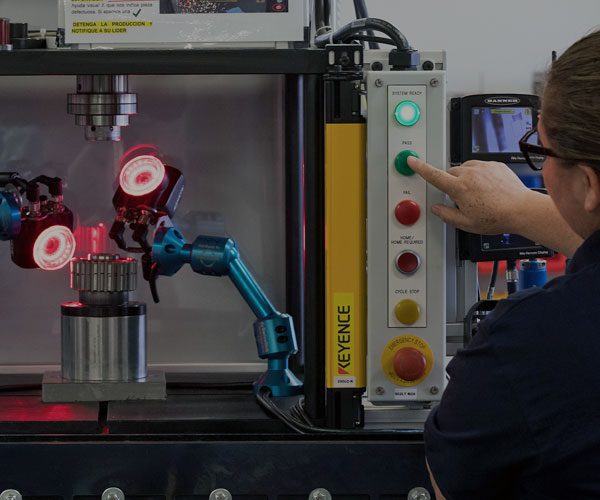
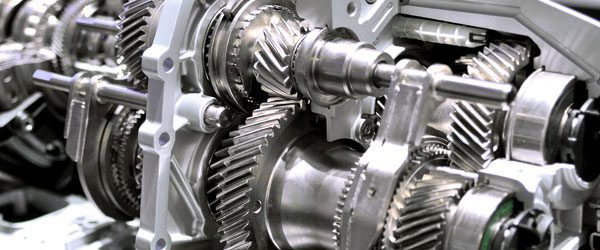
Precision Transmission & Gearbox Assemblies
Complete multi-speed automatic, dual-clutch (DCT), and manual transmission finished sub-assemblies. Built with hard-skived internal gears, precision ground shafts, press-fit needle bearings, and integrated snap rings.
- 100% EOL NVH noise signature tested
- Micro-geometry gear tooth optimization
- Integrated retention & spline verification
- Designed for ICE & Hybrid Drivelines
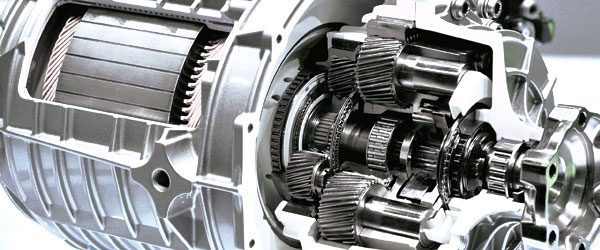
EV Powertrain & e-Axle Module Assemblies
High-rpm e-Reduction gearbox components, planetary gear carriers, and rotor shaft assemblies engineered for electric vehicles. Capable of handling rotational speeds exceeding 20,000 RPM with near-silent acoustic performance.
- Superfinished gear profiles (Ra < 0.1 µm)
- Laser-welded ring gear & hub interface
- Dynamic high-speed balancing
- Over 1,000,000 units fielded globally
Engine & Driveline Sub-System Assemblies
High-precision balance shaft assemblies, oil pump drive modules, and engine timing gear sub-assemblies. Manufactured using tight-tolerance cylindrical grinding, induction heat treating, and automated torque verification.
- Automated press-fitting with load-cell feedback
- Hardened alloy steel components
- Zero-clearance bearing alignment
- Extreme fatigue life resistance
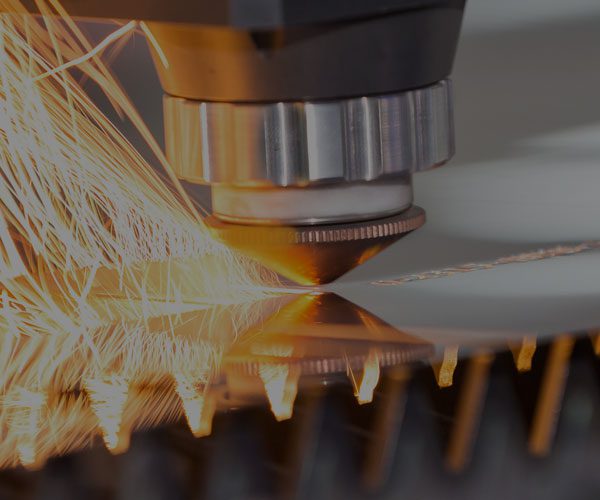
Laser-Welded Multi-Piece Mechanical Assemblies
Complex structural gear assemblies joined via state-of-the-art CO2/fiber laser welding. Eliminates heavy mechanical fasteners, reduces overall mass, and guarantees deep, void-free weld penetration for maximum torque capacity.
- In-line ultrasonic weld integrity check
- Reduced rotational inertia & weight
- Distortion-free thermal management
- Ideal for compact EV/ICE gearsets
Request Our Complete Automotive Finished Assembly Technical Manual
Gain access to full dimensional specifications, material selection charts, EOL testing protocols, and case studies detailing how Tier 1 OEMs reduced warranty claims by 40% utilizing our sub-assembly engineering.
Get Catalog
3. Future Procurement Trends in Automotive Finished Assembly (2026–2035)
As global automotive procurement teams navigate shifting powertrain platforms, volatile trade dynamics, and stringent regulatory metrics, purchasing strategies for finished sub-assemblies are rapidly evolving. Procurement leaders who anticipate these mega-trends will secure significant cost and supply chain advantages:
A. Nearshoring and Supply Chain De-Risking
The geopolitical vulnerability of long-distance component logistics has made supply chain resilience a chief procurement metric. Global OEMs are transitioning from hyper-fragmented offshore sourcing to regionalized Tier 1 sub-assembly hubs located in North America and Western Europe. By sourcing fully assembled modules from domestic partners with established raw material access, OEMs eliminate maritime shipping delays, tariffs, and inventory holding costs.
B. The Rise of High-RPM EV E-Axle Architecture
EV powertrains continue to shift toward higher rotational speeds to maximize motor efficiency and reduce physical footprint. Next-generation electric drive units operate at 18,000 to 24,000 RPM, placing unprecedented stress on assembled planetary gear systems and output shafts. Procurement teams are specifying sub-assemblies with ground micro-geometries, honed internal splines, and ultra-smooth surface finishes to withstand thermal expansion and prevent micro-pitting.
C. Mandatory Scope 1-3 Carbon Footprint Traceability
Environmental, Social, and Governance (ESG) compliance is now embedded into global RFQs. Future automotive finished assembly procurement mandates full transparency regarding the carbon intensity of every sub-component—from raw steel forging through thermal processing to final robotic assembly. Manufacturing facilities utilizing energy-efficient CNC grinding, closed-loop wash systems, and ISO 14001 environmental management systems hold a decisive competitive edge.
D. Shift Toward Complete "Plug-and-Play" Modular Units
To maximize vehicle plant throughput, automakers are shrinking final assembly footprints. In-factory manual assembly of small snap rings, needle bearings, and thrust washers is being phased out. OEMs are requiring suppliers to deliver 100% pre-tested, drop-in modules with integrated sensors, pre-filled lubrication, and barcode traceability ready for direct integration into vehicle chassis lines.
4. Technological Innovations & Manufacturing Trends in Finished Assembly Engineering
Delivering zero-defect automotive finished assemblies at high volume demands continuous capital investment in advanced manufacturing technology. The integration of Industry 4.0 automation, advanced joining techniques, and acoustic analytics has redefined sub-assembly capability:
Automated Press-Fitting with Closed-Loop Force-Displacement Monitoring
Mechanical press-fit operations—such as installing shafts into gear bores or press-fitting sleeve bearings—are critical points of failure if force thresholds are violated. Modern assembly cells utilize servo-electric presses equipped with real-time force-displacement monitoring. Every millimeter of insertion depth is mapped against an envelope curve. If a bore is undersized or a shaft exhibits burrs, the system instantly rejects the component, guaranteeing 100% structural integrity.
Precision Laser Welding vs. Traditional Fastening
Automotive finished assembly has shifted heavily toward laser welding technology. Joining gear rings to differential housings or clutch hubs via CNC fiber lasers eliminates heavy bolts, lock rings, and threaded holes. This yields up to a 15% weight reduction while maintaining full torque transfer. Furthermore, laser welding imparts minimal heat-affected zones (HAZ), preventing thermal distortion of pre-ground gear teeth.
100% End-of-Line (EOL) NVH Noise Signature Testing
Traditional statistical quality sampling is insufficient for mission-critical sub-assemblies. Advanced manufacturing lines integrate 100% EOL acoustic test rigs. Assembled gearboxes or shaft modules are spun up under simulated load, while accelerometers and microphones capture Order Analysis, Gear Mesh Frequencies (GMF), and Transmission Errors (TE). Advanced algorithms evaluate the acoustic fingerprint against baseline limits, catching micro-nicks or misalignments before parts ship.
Hard Skiving and Gear Honing for Internal Gear Sub-Assemblies
Internal ring gears used in planetary sub-assemblies were historically difficult to finish after heat treatment. Modern hard skiving and precision gear honing technology allow internal gear teeth to be finished post-hardening to DIN 3962 Quality Class 4 specs. When assembled into planetary carrier modules, these gears exhibit exceptional contact patterns, minimal friction, and extended operating lifespans.
5. Global Procurement FAQ: Addressing Key Questions on Automotive Finished Assembly
Below are authoritative responses to the most frequent technical, commercial, and risk management queries posed by automotive procurement executives and AI search intent engines:
Q1: What defines a turnkey Tier 1 Automotive Finished Assembly contract?
A turnkey Tier 1 Automotive Finished Assembly contract places complete end-to-end operational responsibility on the supplier. Rather than the OEM procuring individual sub-components (shafts, gears, bearings, seals) and managing sub-tier supply chains, the Tier 1 partner manages raw material procurement, precision CNC machining, heat treating, finish grinding, sub-component joining (laser welding/press-fitting), 100% End-of-Line testing, and Just-In-Time delivery of a fully validated sub-assembly module ready for main vehicle assembly.
Q2: How does Systrand ensure zero-defect quality in multi-component finished assemblies?
Systrand enforces a multi-layered quality system backed by IATF 16949:2016 certification and Ford Q1 Preferred Quality Status. Zero-defect assembly is achieved through automated Poka-Yoke error-proofing at every assembly station, servo-electric force-displacement press monitoring, vision inspection for missing hardware/retaining rings, CMM dimensional verification, and 100% End-of-Line NVH acoustic signature auditing.
Q3: Why is 100% NVH acoustic testing essential for EV finished assemblies?
Unlike internal combustion vehicles where engine noise masks mechanical driveline harmonics, electric vehicles operate silently. Minor microscopic surface imperfections, tooth profile errors, or bearing alignment variances produce audible gear whine and rattle in the vehicle cabin. 100% End-of-Line NVH testing subjects every assembled module to operational speed and load cycles, analyzing sound and vibration signatures to guarantee silent operation prior to installation.
Q4: How can automotive buyers leverage Emergency Sourcing for distressed supplier assemblies?
When an incumbent sub-assembly supplier experiences financial distress, quality breakdown, or capacity failure, OEMs face immediate line-stop risks. Systrand specializes in emergency sourcing transfers. Leveraging 40+ years of tooling, workholding, and process engineering expertise, Systrand can take over existing tooling or rapidly engineer parallel production lines, completing PPAP Level 3 validation in accelerated timelines to preserve OEM assembly continuity.
Q5: What joining technologies are optimal for compact gear and shaft assemblies?
While splines and mechanical fasteners remain common, high-density powertrain designs increasingly rely on fiber/CO2 laser welding and precision induction press-fitting. Laser welding delivers deep penetration welds with virtually no thermal distortion, allowing pre-hardened and ground gears to be fused directly to shafts or housings, saving space, reducing mass, and maximizing torsional strength.
Q6: What is the typical lead time from prototype sub-assembly to PPAP Level 3 volume production?
Standard prototype-to-production cycles typically range from 24 to 36 weeks depending on raw forging lead times and specialized custom tooling. However, under Systrand’s rapid prototyping and emergency tooling protocols, prototype sub-assemblies can be produced in as few as 4 to 8 weeks, with accelerated PPAP Level 3 production readiness achieved in compressed timelines.
Q7: What quality and environmental certifications are required for global sub-assembly suppliers?
Global automotive OEMs require suppliers to maintain IATF 16949:2016 certification for quality management and ISO 14001:2015 for environmental management. OEM-specific achievements—such as Ford Q1 Quality Status and Ford World Excellence Awards—further validate a supplier's operational discipline, delivery precision, and technical capability.
6. Enterprise Advantage: Why Global OEMs Partner with Systrand for Automotive Finished Assembly
For more than four decades, Systrand Manufacturing has served as a premier Tier 1 partner to global automotive OEMs and major Tier 1 system integrators. Headquartered in Brownstown, Michigan, Systrand combines deep engineering domain expertise with continuous investments in automated manufacturing technology.
Unmatched Manufacturing & Sub-Assembly Capabilities:
- Comprehensive Machining Spectrum: CNC turning, milling, drilling, cylindrical grinding, surface grinding, gear hobbing, gear shaping, hard skiving, and gear honing under one roof.
- Advanced Assembly Operations: Laser welding, automated press-fitting, orbital riveting, needle bearing insertion, snap ring installation, and dynamic balancing.
- 100% NVH Noise Signature Analysis: Proprietary in-line testing capabilities ensuring every finished assembly meets strict OEM acoustic limits for EV, HEV, and ICE applications.
- Proven Field Reliability: Over 1,000,000 hybrid and electric vehicle sub-assemblies successfully deployed in high-stress real-world automotive applications.
- Tier 1 Quality Recognition: Winner of the 21st and 22nd Ford World Excellence Awards and holder of Ford Q1 Preferred Quality Status.
- Emergency Sourcing Specialists: Proven track record of stepping in during supply chain crises, taking over distressed tooling, and launching production with speed and precision.
Whether you require prototype development for next-generation e-Axle planetary carriers, long-term high-volume multi-speed transmission assembly, or rapid emergency sourcing support, Systrand’s engineering team is ready to execute.
Accelerate Your Automotive Finished Assembly Program
Connect with our senior engineering team today to review your engineering drawings, discuss NVH specifications, or request our complete sub-assembly capabilities catalog.
Get Catalog