Automotive precision machining and gear manufacturing articles
Transmission gear manufacturing technological insights
EV precision machining and hybrid component manufacturing blog

Automotive Precision Machining & Gear Manufacturing Blog

Industry perspectives, engineering technology updates, and manufacturing best practices from Tier 1 experts.

0%

Automotive Driveline Components connect engine or motor power to the wheels. They include transmissions, axles, driveshafts, differentials, and increasingly integrated electric-drive units. Their design affects efficiency, durability, noise, and vehicle performance. The supplier landscape is changing as automakers balance combustion, hybrid, and battery-electric platforms.

The International Energy Agency’s Global EV Outlook 2024 reports nearly 14 million electric cars sold worldwide in 2023, about 18% of total car sales. IEA Executive Director Fatih Birol said, “The growth of electric cars is unstoppable.” That shift matters to driveline suppliers: electric vehicles may need fewer conventional transmission parts, but they create demand for e-axles, reduction gears, and power electronics integration. The change is not uniform. Regional production, vehicle type, and customer strategy still shape purchasing decisions.

Scale remains significant. OICA reported approximately 93.5 million motor vehicles produced globally in 2023, spanning many powertrains and markets. A supplier’s reach, however, is not the same as its technical strength. Some companies specialize in precision gears; others supply complete systems or serve specific regions. Comparisons can also be difficult because company disclosures use different product categories. That detail is easy to overlook. This overview examines leading worldwide suppliers through their product portfolios, manufacturing presence, and role in the industry’s transition. It is a useful starting point, not a definitive ranking.
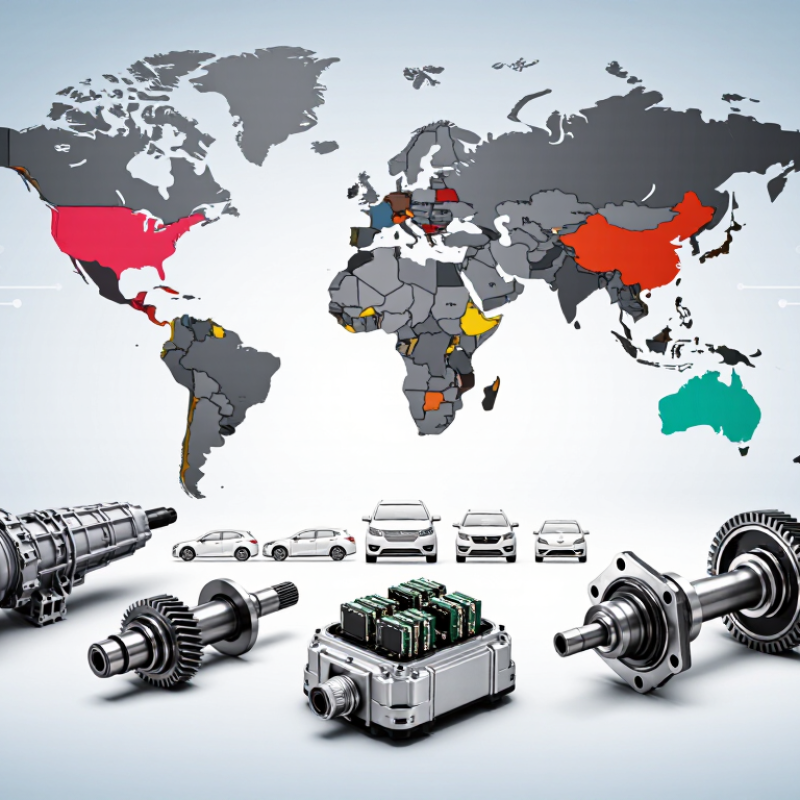
Top Automotive Driveline Components Suppliers Worldwide

Automotive Driveline Systems and Their Core Components

An automotive driveline transfers power from the engine or electric motor to the wheels. Its layout depends on the vehicle. In a typical front-wheel-drive car, the transmission, differential, and axle shafts sit close together. Rear-wheel-drive layouts often add a propeller shaft and a rear differential. Small details matter. CV joints must turn smoothly while the suspension moves, and gear lubrication helps control heat and wear.

The IEA’s Global EV Outlook 2024 reports that nearly 14 million electric cars were sold worldwide in 2023, about 18% of total car sales. That shift changes driveline design, but not its purpose. Many electric cars use a motor, reduction gear, differential, and drive shafts instead of a conventional multi-speed transmission. Packaging and cooling still matter. A compact unit may simplify assembly, yet repair access can be awkward. The tidy system diagram rarely shows that trade-off.

How the Global Driveline Supply Chain Is Organized

The global driveline supply chain is less a straight line than a network of specialized operations. Material producers supply steel, aluminum, and other inputs to component manufacturers. Forged shafts, precision gears, bearings, and cast housings may come from separate facilities. Small tolerances matter. A gear that runs quietly on a test bench can still behave differently under heat, load, and long service.

Component suppliers machine, treat, and inspect parts before shipping them to module integrators or vehicle assembly plants. Some suppliers deliver a single bearing; others assemble gearsets, axles, or complete drive units. The boundaries between these roles can overlap, so a simple tier chart may hide important dependencies. A plant can rely on one specialist process, such as heat treatment, even when many firms supply its other parts.

Timing and traceability hold the chain together. Parts travel in scheduled batches, while inspection records link each shipment to its production lot. When a defect appears, teams can compare measurements, material records, and test results to locate the source. This works well when data is complete. It is not always complete. Delayed updates or inconsistent specifications can make a small change surprisingly difficult to track.

Leading Automotive Driveline Suppliers Worldwide

Leading Automotive Driveline Suppliers Worldwide

Leading automotive driveline suppliers connect engineering, production, and vehicle assembly across multiple regions. Their work spans gears, shafts, differentials, and increasingly integrated electric-drive units. A driveline component may look simple on a drawing. In operation, it must manage torque, vibration, heat, and wear in a confined space. Small tolerances matter.

The market is changing quickly. OICA reported 93.5 million motor vehicles produced worldwide in 2023, while the IEA’s Global EV Outlook 2024 estimated nearly 14 million electric cars were sold that year, about 18% of global car sales. These figures point to broad demand, but not one uniform solution.

Suppliers still need to serve combustion, hybrid, and electric platforms, each with distinct packaging and performance requirements. That is not tidy. Regional manufacturing capacity, material availability, and customer testing schedules can all affect delivery. A supplier’s reach matters, but so does its ability to validate a part under real loads.

Data alone cannot show every weakness; field performance may expose one later. Industry leaders therefore compete on reliable processes as much as on new designs.

Key Technologies Shaping Driveline Supplier Products

Modern driveline suppliers are redesigning the e-axle as a compact system. Motors, inverters, and reduction gears now share tighter packaging. This can cut connections and free space for batteries or passengers. Silicon-carbide power electronics can support efficient switching, while torque-vectoring software adjusts wheel torque during cornering. Yet integration brings a trade-off: a single module may be harder to repair than separate components. Heat remains stubborn.

The shift is backed by demand data. The International Energy Agency’s Global EV Outlook 2024 reports nearly 14 million electric cars sold in 2023, about 18% of global car sales. That growing fleet raises the value of durable bearings, effective cooling channels, and diagnostic software that spots unusual vibration early. A supplier’s challenge is balancing efficiency with cost, weight, and serviceability. The balance is imperfect, and real-world duty cycles can expose weaknesses that test benches miss.

Tips: Compare driveline products by efficiency across operating speeds, thermal performance, and repair access. Ask for test conditions and durability results, not just peak power figures. Small gains matter.

Factors for Comparing Driveline Suppliers Across Markets

Comparing driveline suppliers across markets starts with the vehicle’s duty cycle, not a catalogue. A delivery van crawling through hot city traffic needs different thermal margins from a passenger car on cold highways. Ask for torque, efficiency, noise, and durability results under comparable test conditions. The International Energy Agency’s Global EV Outlook 2024 reports nearly 14 million electric cars sold worldwide in 2023, about 18% of new car sales. That shift makes e-axle integration and software compatibility important comparison points, alongside conventional transmission expertise.

Manufacturing reach matters, too. Check where components are made, how quickly replacement parts arrive, and whether engineering support is available near assembly plants. The same IEA report estimates electric-car battery demand exceeded 750 GWh in 2023, roughly 40% above 2022. This is not a direct measure of driveline demand, but it signals growing pressure on electrified powertrain supply chains.

Small details matter. Compare warranty claims, field-failure records, and validation across climates—not just quoted efficiency. A tidy scorecard can still mislead if test cycles differ.

Supplier presentations rarely show every weakness, so request clear methods and independent verification before ranking offers.

FAQS

What does an automotive driveline do?

It transfers power from an engine or electric motor to the wheels. Its parts must handle torque, heat, and wear.

Which parts are common in a front-wheel-drive car?

The transmission, differential, and axle shafts are usually close together. Compact packaging can make repairs awkward.

What extra components may appear in a rear-wheel-drive layout?

Many layouts use a propeller shaft and rear differential. Small details matter.

How do electric-car drivelines differ?

Many use a motor, reduction gear, differential, and drive shafts instead of a conventional multi-speed transmission. Cooling and repair access still matter.

Why are precise gears and shafts important?

Small tolerances help parts run smoothly and quietly. Heat and heavy loads can change how they behave.

How does the driveline supply chain work?

Material producers supply metals to specialized manufacturers. Separate facilities may forge shafts, machine gears, or make bearings and housings.

How do manufacturers trace a defective part?

Teams compare inspection records, material details, and test results linked to production lots. Missing or delayed data can slow the search.

What is changing demand for driveline suppliers?

In 2023, nearly 14 million electric cars were sold worldwide, about 18% of car sales. Suppliers still serve combustion, hybrid, and electric vehicles.

Why can delivery schedules be difficult to manage?

Suppliers depend on specialized processes, available materials, and customer testing schedules. A single bottleneck can delay a shipment. Not always obvious.

Conclusion

This article examines the role of Automotive Driveline Components in transferring power from a vehicle’s engine or motor to its wheels. It introduces core elements such as transmissions, shafts, differentials, and drive axles, explaining how they work together to support efficient, reliable motion. It also outlines how the global driveline supply chain connects component makers, material providers, engineering teams, and vehicle manufacturers across different markets.

The article surveys the capabilities found among leading suppliers worldwide without focusing on individual brands. It considers how advances in electrification, lightweight materials, precision manufacturing, and system integration are shaping driveline products. Finally, it presents practical factors for comparing suppliers, including product quality, technical expertise, production capacity, delivery reliability, regional support, and adaptability to changing vehicle requirements.

Ethan

Ethan

Ethan is a dedicated marketing professional with an exceptional depth of knowledge in the company's product offerings. With a keen eye for detail and a passion for excellence, he plays a pivotal role in developing and maintaining the company's online presence. His expertise shines through in the......