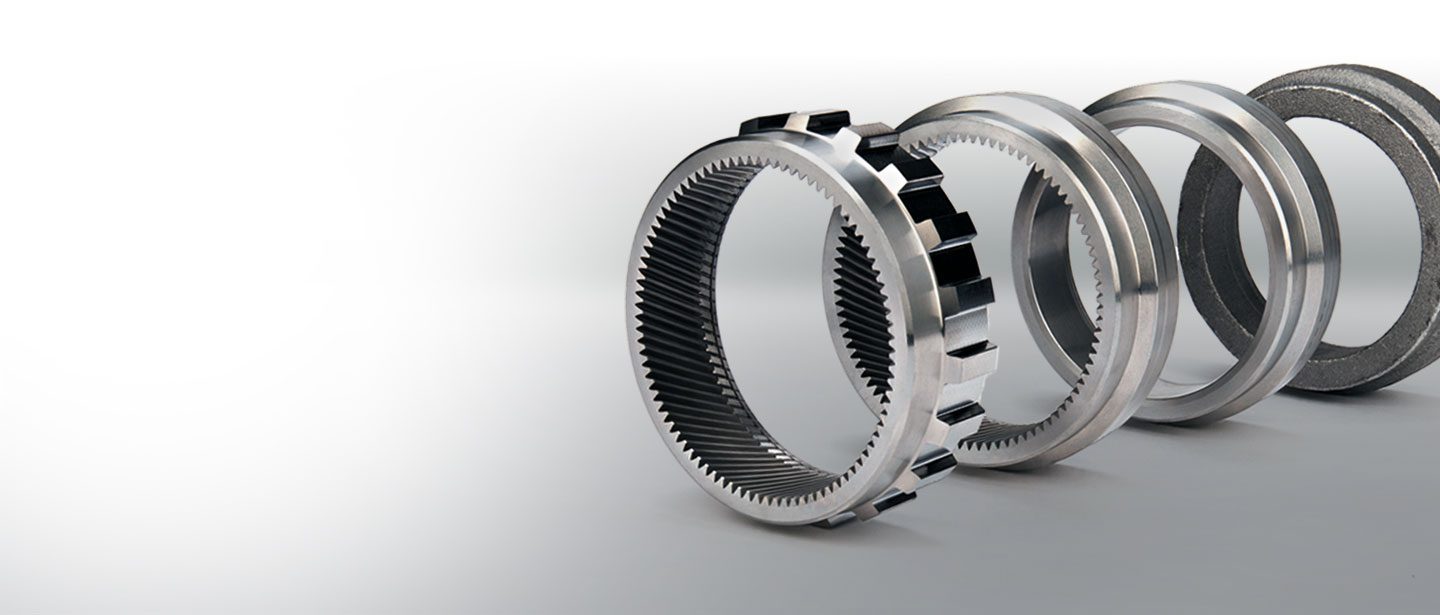
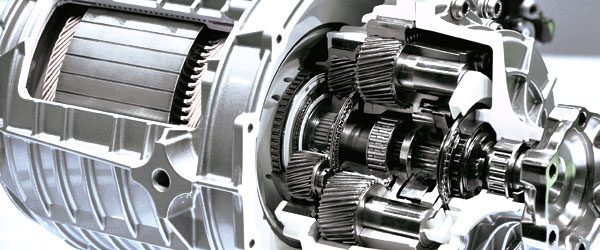
Automotive Precision Machining & Gear Manufacturing Blog
Industry perspectives, engineering technology updates, and manufacturing best practices from Tier 1 experts.
For global buyers, choosing Automotive Axle Components suppliers is a technical decision, not just a price comparison. Axle shafts, housings, joints, and related parts must match the vehicle’s load, operating conditions, and interface requirements. A mismatch can mean vibration, premature wear, or costly production delays. Small details matter.
Lotus founder Colin Chapman is often credited with the line, “Adding power makes you faster on the straights. Subtracting weight makes you faster everywhere.” For axle buyers, the principle points to a real trade-off: reducing mass can support vehicle efficiency, but strength, durability, and manufacturability still matter. No single material or design suits every application.
This 2026 guide introduces suppliers for global buyers and the factors that deserve closer review. These include engineering support, production capacity, material traceability, testing practices, delivery reliability, and communication across regions. Ask for drawings, tolerances, validation data, and clear explanations of manufacturing limits. A polished catalog is not proof of a capable production line. Nor is the lowest quote always the lowest total cost.
Supplier claims can be difficult to compare. That part takes patience. The overview ahead is a starting point, not a substitute for technical qualification. Buyers should verify each supplier’s capabilities against their own vehicle program, quality requirements, and service expectations.
What Automotive Axle Components Include
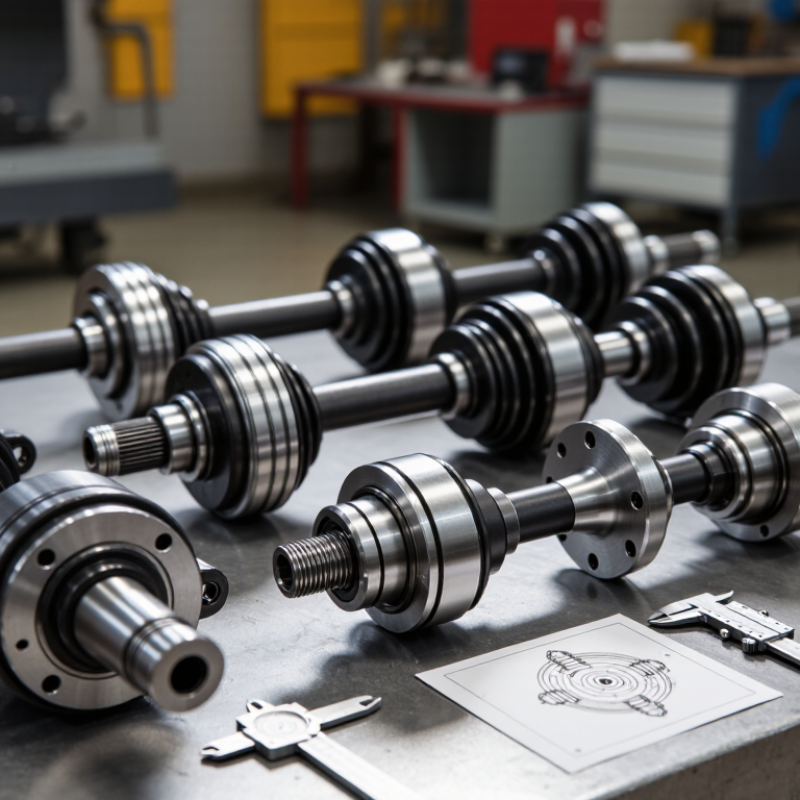
Automotive axle components transfer power to the wheels and help support vehicle weight. The exact parts depend on the vehicle’s drivetrain and axle design. A typical assembly may include axle shafts, a housing, bearings, hubs, seals, and a differential. Driven axles also use gears to divide torque between wheels. Some designs include constant-velocity joints, especially where steering and suspension movement must be accommodated. Designs differ.
Each part has a distinct job. The housing holds components in alignment, while bearings allow rotating parts to move with less friction. Seals help keep lubricant inside and contaminants out. A catalog can look complete, yet one overlooked seal dimension may delay assembly. Buyers should verify part numbers, dimensions, load ratings, materials, and surface treatments against the intended application. Ask how tolerances are measured and what inspection records are available. These details can reveal gaps, though paperwork alone cannot prove performance in service.
Tips: Confirm whether the quoted item is a complete axle assembly or an individual component. Request drawings and clarify included hardware. Check fitment with the vehicle’s operating conditions, not just its model name. A careful comparison takes time, and specifications can still leave questions worth raising.
2026 Best Automotive Axle Components Suppliers for Global Buyers - What Automotive Axle Components Include
A practical overview of common axle components, their functions, typical materials, and key supplier evaluation points. Specifications vary by vehicle platform, axle design, and application.
| Component | Typical System / Location | Main Function | Common Materials or Processes | What Global Buyers Should Verify |
|---|---|---|---|---|
| Axle shaft | Driven axle; connects the differential or final drive to the wheel hub | Transmits torque to the wheel while withstanding bending and torsional loads | Typically alloy steel; commonly forged or machined, with heat treatment and finished splines | Vehicle and axle application, spline geometry, material and heat-treatment records, dimensional tolerances, fatigue performance, and corrosion protection |
| Constant-velocity (CV) joint | Front-wheel-drive and many independent-suspension drive axles | Transfers torque through changing joint angles while allowing suspension or steering movement | Hardened alloy-steel joint components; elastomeric or thermoplastic boots; grease lubrication | Joint type and articulation range, torque capacity, boot material, grease specification, sealing performance, and durability test results |
| Differential gears and assembly | Drive axle center section | Splits drive torque between wheels and allows them to rotate at different speeds when required | Hardened steel gears; housing material depends on axle design and vehicle application | Gear ratio, tooth geometry, backlash, bearing preload requirements, noise and vibration results, and compatibility with the specified lubricant |
| Axle housing | Commonly used in solid or beam drive axles | Supports axle components and helps maintain wheel and differential alignment | Often welded steel or ductile iron; some designs use cast aluminum components | Mounting and interface dimensions, weld or casting quality, straightness, load rating, corrosion protection, and inspection documentation |
| Wheel hub | At the wheel end of driven and non-driven axles | Provides the wheel mounting interface and supports wheel-end components | Commonly forged or cast steel or aluminum, depending on vehicle design | Bolt pattern, bearing interface, runout, load capacity, material traceability, and compatibility with the brake and wheel assemblies |
| Wheel bearing | Wheel end; may be integrated into a hub assembly | Supports wheel rotation and carries radial and axial loads | Typically bearing steel with precision-ground rolling elements and raceways | Bearing type, dimensions, internal clearance or preload, sealing, grease, load ratings, and validated noise and durability performance |
| Axle seal | At axle shafts, hubs, or differential interfaces | Retains lubricant and helps prevent contaminants from entering the assembly | Elastomer sealing element with a metal case or reinforcement, selected for the operating environment | Shaft and bore dimensions, elastomer compatibility, temperature range, installation requirements, leakage test method, and service-life evidence |
| Universal joint (U-joint) | Propeller-shaft connections in many rear-wheel-drive and four-wheel-drive layouts | Transmits rotary torque between shafts operating at an angle | Typically steel yokes and bearing cups with needle rollers and seals | Joint dimensions, operating angle, torque and speed requirements, lubrication or sealed-for-life design, and fatigue test results |
| CV boot and clamp set | Protects the CV joint on a drive axle | Contains joint grease and limits entry of water, dust, and road debris | Commonly rubber or thermoplastic elastomer with metal clamps | Boot profile, material compatibility, clamp retention, temperature and ozone resistance, and fit with the specified joint |
| ABS tone ring or encoder | Wheel hub, bearing, or axle shaft on vehicles equipped with wheel-speed sensing | Provides a rotating signal target for the anti-lock braking system wheel-speed sensor | Design-dependent: toothed ferrous ring or magnetic encoder integrated with a bearing or hub | Tooth count or magnetic pole pattern, sensor compatibility, air-gap requirements, orientation, and signal validation |
Supplier qualification checklist: Confirm application-specific drawings and tolerances, production capability, material traceability, inspection and test plans, packaging for international transport, lead-time commitments, and quality-system documentation. IATF 16949 or ISO 9001 certification can be requested where relevant; verify the certificate scope and validity directly. Not every component listed is used in every axle design.
FAQS
Check process control, delivery performance, and documented capacity. A low quote may conceal longer lead times.
Measure spline fit, shaft runout, bearing seats, and other critical features. Small variations can complicate assembly or increase wear.
Ask for material certificates, inspection records, and fatigue-test methods for the parts being sourced. A polished sample is not enough.
Ask how inspection results connect to material batches and production lots. Mixed lots can cause confusion.
Check whether the supplier can support the required design, load profile, and validation plan. One process may not suit every vehicle.
Ask about sample approval, engineering changes, and corrective actions when results fall outside agreed tolerances. Clear answers help.
Samples let buyers check critical dimensions before larger orders. A factory review can show whether stated processes match shop-floor practice.
No. Strong engineering support may come with limited regional inventory, while quick quotes may include sparse test records. Buyers still need to weigh the trade-offs.
Conclusion
This guide to the 2026 automotive supply landscape explains what Automotive Axle Components include, from shafts and joints to supporting parts that transfer power and help vehicles move reliably. It outlines how these components are designed and manufactured, highlighting the role of material selection, precision engineering, production consistency, and testing in achieving dependable performance across different vehicle applications.
The article also reviews the qualities buyers should look for when assessing axle component suppliers, including manufacturing capability, product quality, relevant certifications, traceability, and compliance with applicable requirements. For global buyers, it offers a practical framework for comparing suppliers by evaluating technical fit, quality systems, production capacity, delivery reliability, communication, and total cost. These considerations can help purchasing teams make informed supplier decisions and build resilient sourcing relationships.